Peter Steinberger joins OpenAI - OpenClaw remains open source

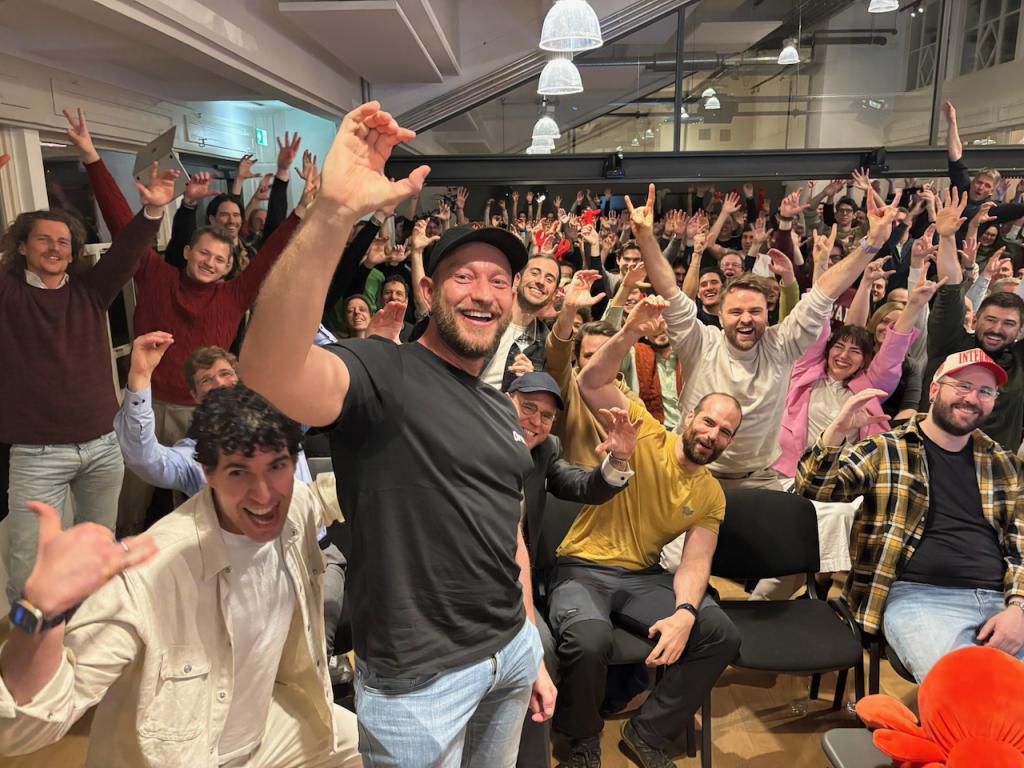
AI pioneer Sam Altman has announced that developer and entrepreneur Peter Steinberger will be joining the OpenAI team. His task: to drive forward the next generation of personal AI agents. This refers to systems that can independently perform tasks for users and cooperate with each other.
Strategic expansion of personal agents
According to the company, Steinberger will work in particular on concepts in which highly developed software agents interact with each other to solve complex tasks. Such multi-agent systems are seen as a possible next step in the development of the AI application layer: away from individual chatbots and towards networked digital assistants based on a division of labor.
OpenAI expects these technologies to "quickly become a core component" of its own products and open up new fields of application in everyday life and in companies.
OpenClaw will be transferred to a foundation and remain openly accessible
Alongside the appointment, it was announced that the OpenClaw project initiated by Steinberger will be transferred to an independent foundation. The software will remain an open source project and will continue to be supported by OpenAI in the future.
It's always been important to me that OpenClaw stays open source and given the freedom to flourish. Ultimately, I felt OpenAI was the best place to continue pushing on my vision and expand its reach.
Peter Steinberger
The company is thus deliberately focusing on a hybrid model: commercial product development on the one hand, open infrastructure for research, developers and ecosystems on the other. Interoperability plays a key role in the emerging market for AI agents in particular, which is why open standards are considered strategically important.
From the assistance function to the autonomous collaboration of AI systems
AI agents are software systems that can pursue goals independently, prepare decisions and adapt to new information. They combine functions such as planning, memory, contextual understanding and automation and therefore differ fundamentally from purely reactive chat interfaces.
The vision of many companies: several specialized agents working together, coordinating processes and increasingly taking on operational digital tasks. Industry observers are already talking about a "multi-agent era" in which AI not only responds, but actively acts.
Competition for the agent platforms of the future - Anthropic is losing out
The move of an experienced developer like Steinberger underlines the dynamics surrounding agent-based AI architectures. Companies are increasingly investing in technologies that go beyond generative models and can automate real-world workflows.
At the same time, the continuation of OpenClaw as an open source project shows that central building blocks of this new infrastructure should continue to develop in the open innovation space. It is particularly noteworthy that Openclaw was only created in November using Vibecoding and is now being transferred to OpenAI in February. Originally launched under the name Clawdbot, later renamed Moltbot due to Anthropics AI Claude's naming rights claims, it is now going to its direct competitor. Certainly not the happiest outcome for Anthropic, but more than understandable from Peter Steinberger's point of view.

Newsletter
Startups, stories and stats from the German startup ecosystem straight to your inbox. Subscribe with 2 clicks. Noice.
LinkedIn ConnectFYI: English edition available
Hello my friend, have you been stranded on the German edition of Startbase? At least your browser tells us, that you do not speak German - so maybe you would like to switch to the English edition instead?
FYI: Deutsche Edition verfügbar
Hallo mein Freund, du befindest dich auf der Englischen Edition der Startbase und laut deinem Browser sprichst du eigentlich auch Deutsch. Magst du die Sprache wechseln?