Germany has the oldest workers in the EU

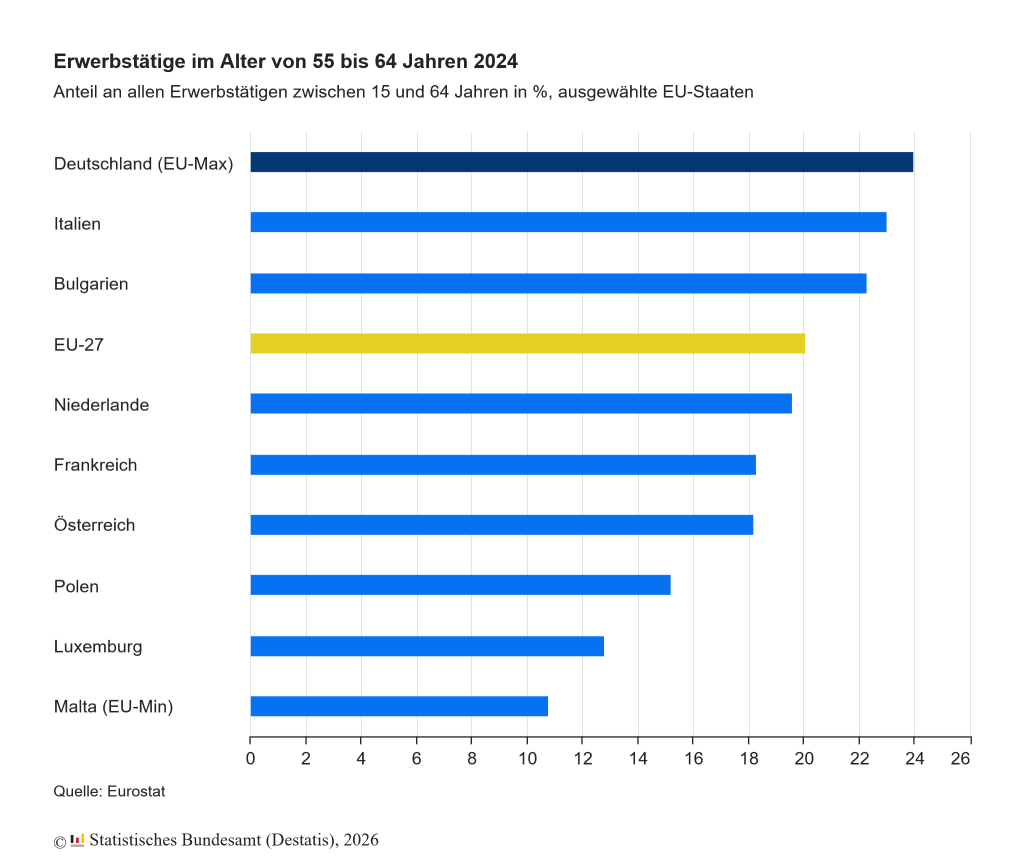
Germany has the oldest working population in the European Union. In addition, over 16% of the total population is at risk of poverty. According to the Federal Statistical Office (Destatis), based on Eurostat data, around 9.8 million of the 40.9 million people in employment were aged between 55 and 64 in 2024. This corresponds to a share of 24.0% and is therefore the highest figure among all EU member states. Across the EU, the proportion of this age group was 20.1%.
Italy (23.0 %) and Bulgaria (22.3 %) also recorded a high proportion of older workers. By contrast, this proportion was significantly lower in Malta (10.8 %), Luxembourg (12.8 %) and Poland (15.2 %).
Rising retirement age as a key driver
One of the main reasons for the high proportion of older workers is the ageing population. In addition, people in Germany are retiring later and later. The average retirement age in 2024 was 64.7 years. This is significantly higher than in 2004, when it was around 63.
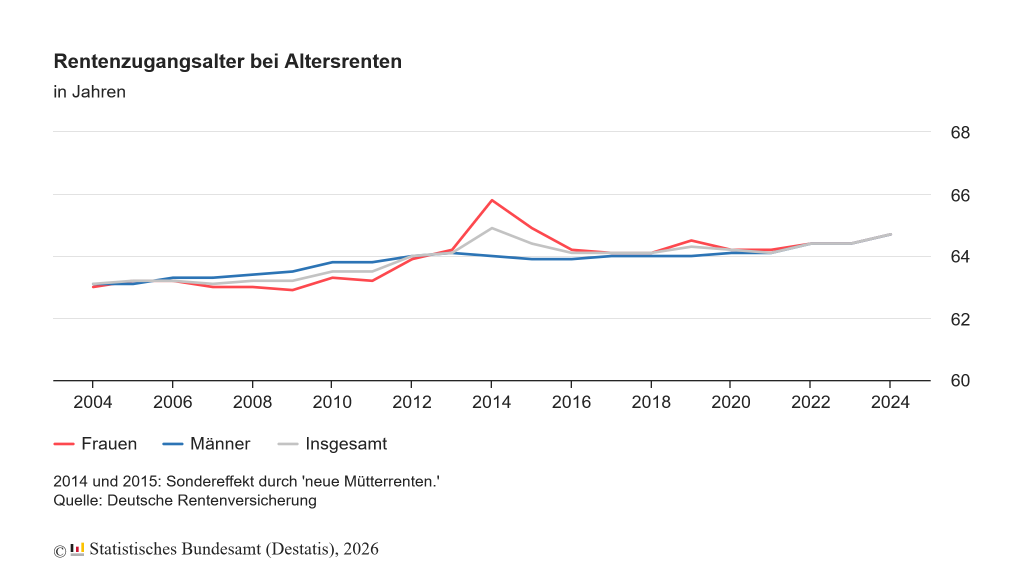
The reasons for this include the gradual increase in the statutory retirement age to 67 by 2029 and the phasing out of earlier models of early retirement, some of which were possible from the age of 60.
New Destatis special page on pensions and old-age provision
The Federal Statistical Office has published a new special page on the topic of pensions and old-age provision to help better understand these developments. It brings together data on demographics, employment, income, pension entitlement and state expenditure.
16.1% of the population at risk of poverty
Parallel to the demographic developments, the social situation is tense: 13.3 million people in Germany were recently considered to be at risk of poverty. This corresponds to 16.1% of the population, an increase on the previous year (15.5%).
According to the EU definition, people are at risk of poverty if they have less than 60% of the median equivalized income. In 2025, this threshold was €1,446 net per month for people living alone and €3,036 for a household with two adults and two children under the age of 14.
People living alone, single parents and the economically inactive are particularly affected
People living alone (30.9%) and people in single-parent households (28.7%) are particularly at risk of poverty. Looking at employment status, the unemployed have the highest at-risk-of-poverty rate at 64.9%. Other inactive people (33.8%) and retired people (19.1%) are also affected to an above-average extent.
In addition to income poverty, Destatis also looks at social participation. In 2025, 21.2% of the population (around 17.6 million people) were at risk of poverty or social exclusion. This proportion remained almost unchanged compared to the previous year. According to the EU definition, this applies if at least one of the following criteria is met: income below the at-risk-of-poverty threshold, significant material or social deprivation or very low labor force participation in the household.

Newsletter
Startups, stories and stats from the German startup ecosystem straight to your inbox. Subscribe with 2 clicks. Noice.
LinkedIn ConnectFYI: English edition available
Hello my friend, have you been stranded on the German edition of Startbase? At least your browser tells us, that you do not speak German - so maybe you would like to switch to the English edition instead?
FYI: Deutsche Edition verfügbar
Hallo mein Freund, du befindest dich auf der Englischen Edition der Startbase und laut deinem Browser sprichst du eigentlich auch Deutsch. Magst du die Sprache wechseln?