Green innovation on the edge of the republic with Wörner Bau

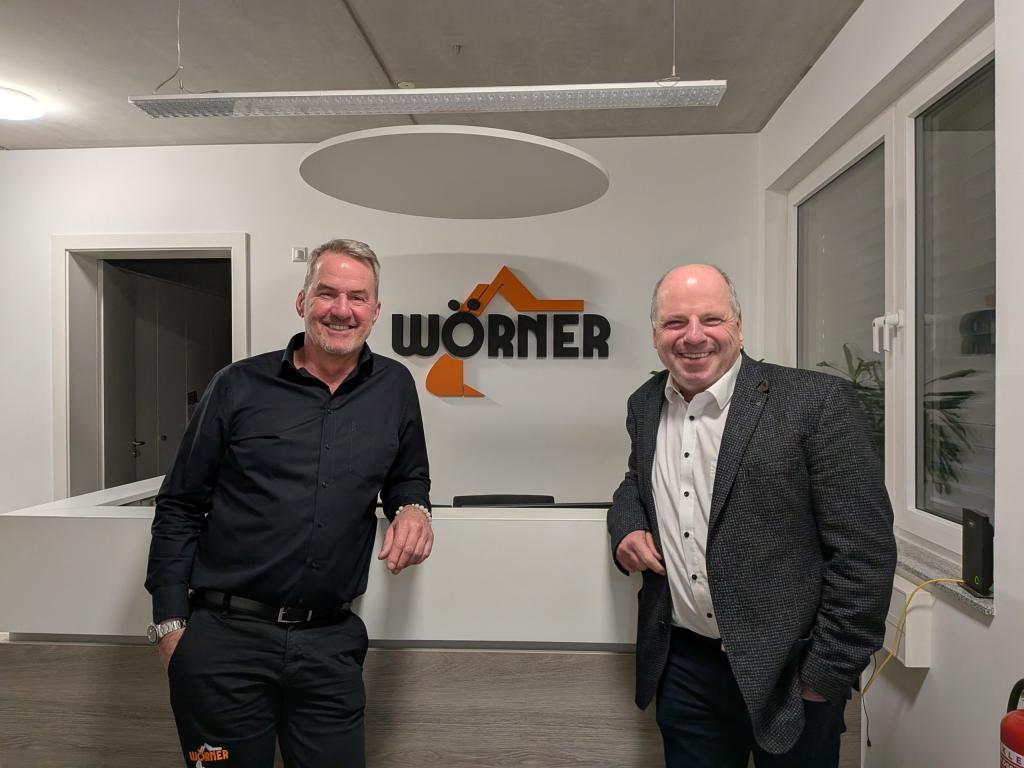
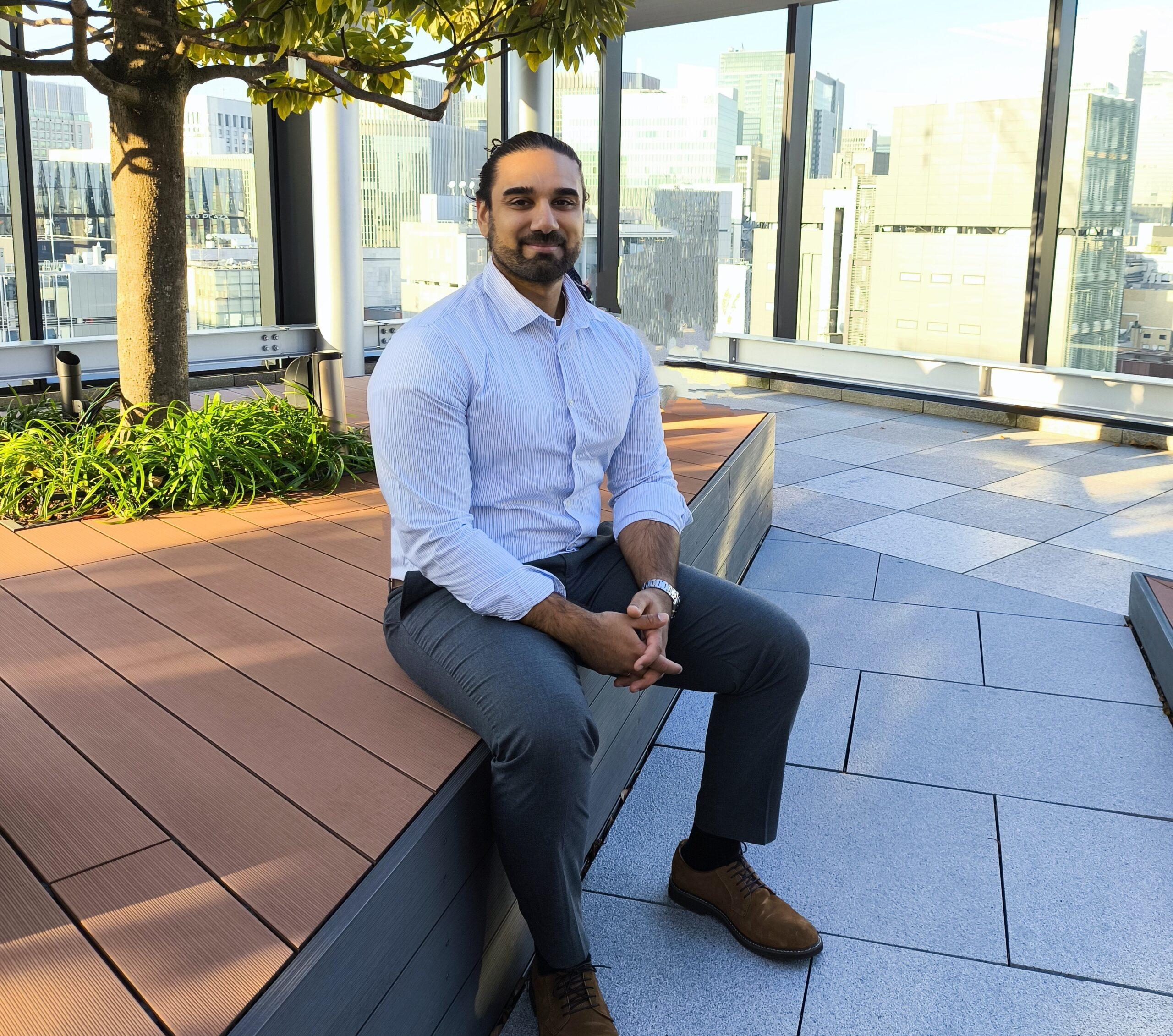
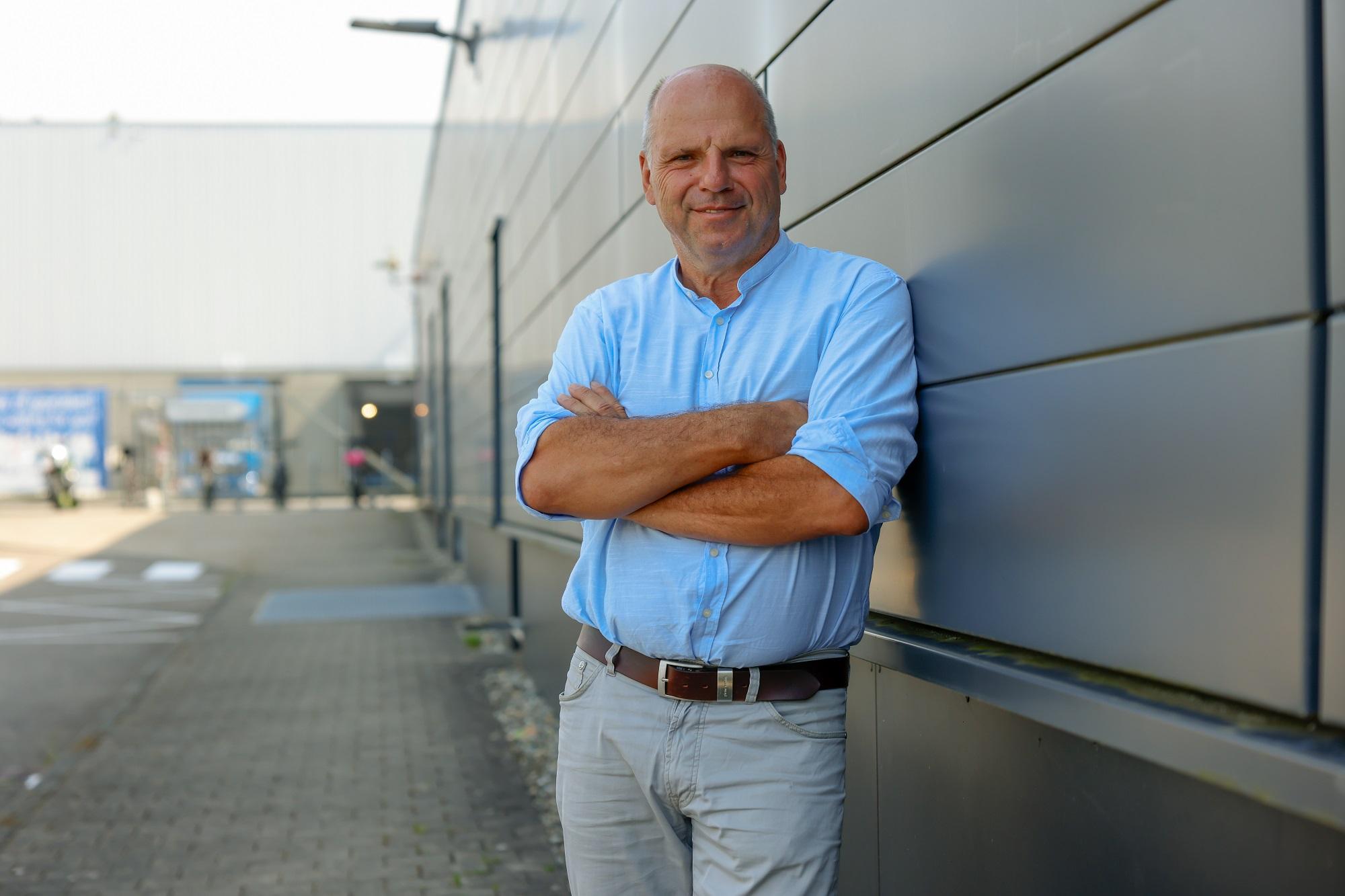
As part of our series on regional innovations on Lake Constance, we met Ingo Wörner for an interview. Together with his brother Oliver Wörner, he runs the Wörner Bau Group, a family-run group of companies based in Überlingen that has been shaping the region's construction development for decades.
In this interview, Ingo Wörner provides insights into his company's role in fiber optic expansion, from route laying and modern construction methods to sustainable approaches such as liquid soils and recycled materials. He talks about technical and organizational challenges in rural areas, the balance between profitability, sustainability and innovation as well as the central importance of an efficient construction industry for digitalization and the economic growth of the region.
Questions for Wörner Bau
1. what role does Wörner Bau currently play in the expansion of fiber optics in the Lake Constance region, and which projects are particularly influential?
We are not a global tech group, but a civil engineering company with regional roots. Our task in fiber optic expansion is to create the structural conditions: Creating routes, laying empty conduits and putting connections in the ground. In the Lake Constance region in particular, fiber optic expansion primarily means creating infrastructure where previously there was only earth. This is precisely where our strength lies. We started with fiber optic expansion over 12 years ago, our first project being the laying of fiber optic cables in the Überlingen industrial estate. To date, we have also pushed ahead with fiber optic expansion in the municipalities of Mühlingen, Beuron (Donautal), Heiligenberg, Herdwangen and Deggenhausertal.
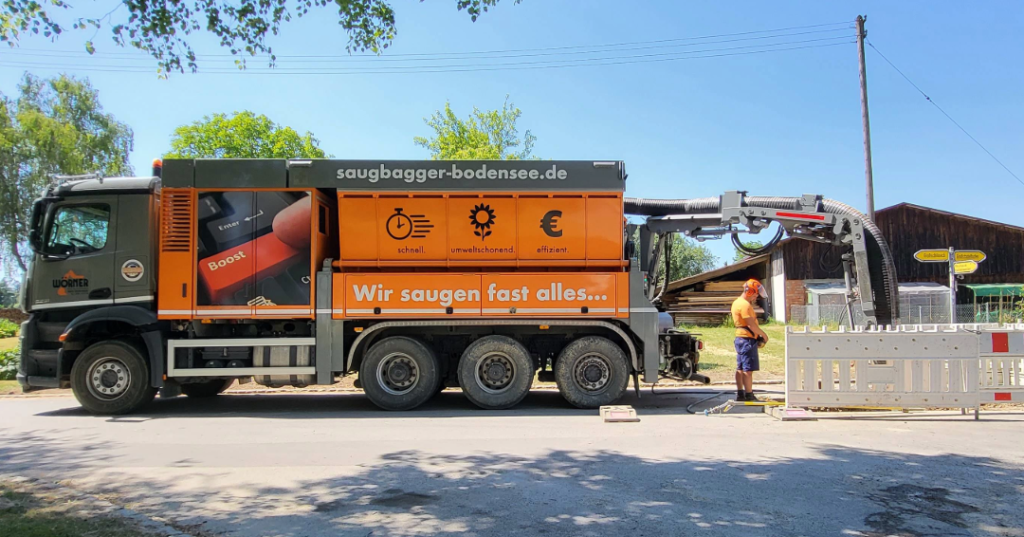
With modern construction methods such as the use of suction excavators or horizontal directional drilling, we try to shorten construction times, minimize interventions and implement projects economically. Our contribution remains in the background for many, but is indispensable for the expansion of the digital infrastructure in the region. Unsexy but systemically relevant.
2. Where do you see the biggest technical and organizational challenges in the expansion of fiber optics in rural areas around Lake Constance?
The biggest challenges in the expansion of fibre optics in rural areas around Lake Constance clearly lie in the combination of technical complexity and organizational effort. Technically, we often have to deal with narrow streets, established village centers, unknown or poorly documented existing lines and changing ground conditions. In rural areas in particular, modern infrastructure projects encounter networks that are decades old and where plans do not always correspond to reality.
Organizationally, the need for coordination is enormous. Many stakeholders have to be coordinated, from local authorities and utility providers to residents and landowners. At the same time, the projects run under high time and cost pressure, while the public space should be affected as little as possible. Fiber optic expansion is therefore less an individual construction project than a long-term coordination project. Anyone who underestimates this will quickly lose time and money.
3. what advantages do liquid soils offer over conventional backfill materials, especially when used in fiber optic expansion?
Liquid soils offer clear advantages over conventional backfill materials in fiberglass construction, especially in terms of construction time, quality and sustainability. The biggest advantage is the complete and void-free encapsulation of the cables. Empty conduits lie stress-free in the ground, subsidence is significantly reduced and reworking is avoided.
In urban and rural areas in particular, we save a considerable amount of time by using liquid soil, as there is no need to compact in layers and traffic areas can be reopened more quickly. In addition, the existing excavated material can be reused, which drastically reduces transportation, disposal costs and CO₂ emissions.
The fiber optic expansion project in Überlingen alone has already resulted in CO₂ savings of around 164,000 kg. This is a considerable amount for a single project and shows that there is still further potential here.
4 In your experience, in which applications have liquid floors proved particularly successful and where do they reach their limits?
Liquid soils have proved particularly successful in pipeline construction, narrow routes, house connections and inner-city areas, i.e. wherever space, time and compaction are critical. They ensure an even bedding of the pipes and significantly reduce subsequent subsidence. They reach their limits where high point loads have to be absorbed at short notice or where controlled production is not possible for construction logistics reasons. Liquid soils are not a panacea, but a tool that must be used sensibly.
5. how do liquid soils help to shorten construction times and reduce the impact on traffic and residents?
The greatest time saving is achieved by eliminating the need for layer-by-layer installation and compaction. Traffic areas can be reopened more quickly, construction pits remain open for less time and the overall construction time is noticeably reduced. At the same time, there is no need to transport the excavated material to the landfill, as the existing material can be reused. This means that no additional storage areas need to be provided, which is a considerable advantage, especially for inner-city projects, as suitable areas are often difficult to find. Overall, this means less noise, less dust, less truck traffic and fewer restrictions for residents and traffic. This is a real advantage, especially in residential areas.
6. what specific measures does Wörner Bau take to implement civil engineering projects in a more sustainable and resource-saving way?
We consistently focus on the reuse of excavated material, short transportation routes and the targeted use of alternative construction methods such as horizontal directional drilling, trenching, cable ploughs, suction excavators or, more recently, the use of liquid soil. We also optimize construction processes to reduce machine running times and continuously invest in modern, more efficient technology. For us, sustainability does not start with marketing, but with daily construction site organization.
7. how important are recycled materials, CO₂ reduction and regional value creation in your construction projects?
Recycled materials and CO₂ reduction are fixed components of our projects, not optional extras. Every avoided removal and every recycling saves resources and emissions. At the same time, we consciously rely on regional suppliers and partners because regional value creation makes economic sense and increases security of supply.
8. where do you currently still see conflicts of interest between economic efficiency, technical requirements and sustainability in civil engineering?
These conflicts of interest are very real. Sustainable solutions are not always the most cost-effective in the short term, and technically optimal solutions do not always fit in with tight budgets or traditional award criteria. It is crucial to take a holistic view of projects and pay more attention to life cycle costs. Those who focus exclusively on the lowest price often end up paying for it later.
With larger fiber optic expansion projects in particular, there is also the option of renewing other supply lines at the same time. We work closely with the relevant supply service providers in this area. Funding bodies expressly demand this coordinated approach in order to exploit synergies and avoid subsequent interventions. In practice, however, this potential is not yet being consistently exploited, even though it would make both economic and sustainable sense.
9 Why do you believe that an efficient construction industry is a key prerequisite for innovation, digitalization and economic growth in the Lake Constance region?
Without a functioning construction industry, there is no infrastructure, and without infrastructure there is no digitalization, no innovation and no growth. Roads, networks, cables and supply infrastructure are the basis for everything else. A strong region therefore also needs strong, capable local construction companies.
10 How can the interaction between construction companies, local authorities, research and industry help to strengthen Lake Constance as a location for innovation in the long term?
The key lies in closer and early cooperation between all parties involved. Municipalities, construction companies, industry and research still too often work separately from each other, although many decisive decisions are already made in the planning phase. If construction companies are involved at an earlier stage, technical, economic and sustainable solutions can be realistically evaluated and better implemented.
Research and industry should develop new materials, construction methods and digital solutions with greater practical relevance and test them in real pilot projects. Construction companies provide the necessary feedback from implementation. If approval processes and award procedures enable this exchange, the Lake Constance region can use its strengths as a medium-sized company and continue to develop as an innovative, efficient location in the long term.
Mr. Wörner, thank you for the interview.
We would like to thank Ingo Wörner for the in-depth discussion and the valuable insights into the work of the Wörner Bau Group. If you would like to find out more about what the Wörner Group has to offer, you can find further information on the homepage Wörner-Bau.net. It is clear that efficient, locally anchored companies form the basis for digital infrastructure, innovation and economic growth in rural areas. It becomes clear how crucial a competent, regionally rooted SME sector is for the expansion of fiber optics, the digital infrastructure and the economic future of the Lake Constance region. In the fourth part of our series Innovation on the edge of the republic: the Lake Constance district, we look at how other regions can learn from the close cooperation between the construction industry, local authorities, industry and research. Could the Lake Constance district serve as a kind of blueprint for the entire DACH region or are there certain pitfalls to watch out for? Part 4: Innovation on the edge of the republic: the Lake Constance district as a role model
The individual parts of the series:
Part 1: Green innovation on the edge of the republic, but in the middle of Europe: the Lake Constance district Part 2: Green innovation on the edge of the republic: Interview with Martin Hahn, MdL Part 3: Green innovation on the edge of the republic with Wörner Bau Part 4: Innovation at the edge of the republic: Learnings Bodenseekreis

Newsletter
Startups, stories and stats from the German startup ecosystem straight to your inbox. Subscribe with 2 clicks. Noice.
LinkedIn ConnectFYI: English edition available
Hello my friend, have you been stranded on the German edition of Startbase? At least your browser tells us, that you do not speak German - so maybe you would like to switch to the English edition instead?
FYI: Deutsche Edition verfügbar
Hallo mein Freund, du befindest dich auf der Englischen Edition der Startbase und laut deinem Browser sprichst du eigentlich auch Deutsch. Magst du die Sprache wechseln?