Innovation on the edge of the republic: Learnings Bodenseekreis

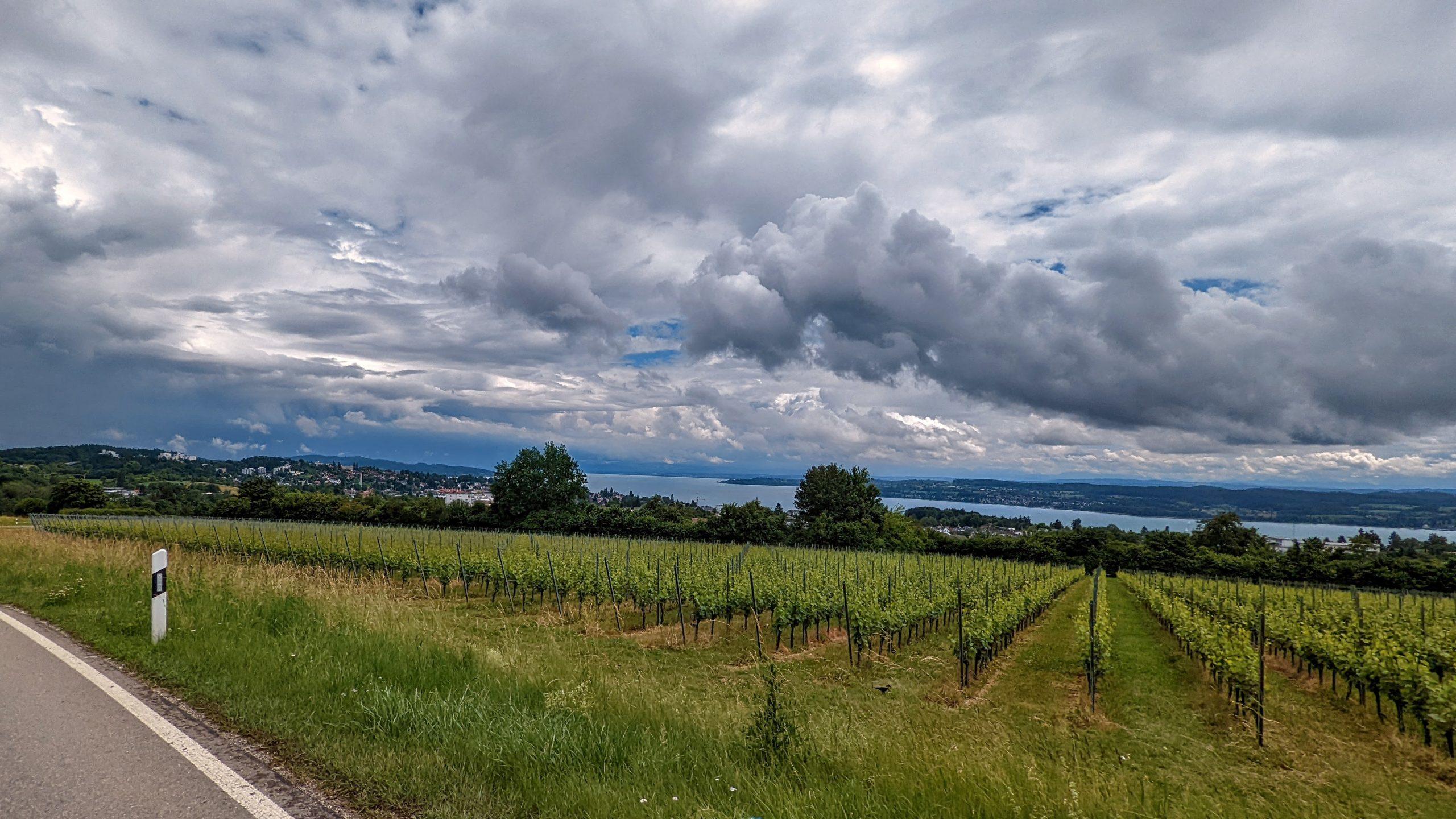
The Lake Constance district is not a model that can be copied one-to-one. But it functions as a real-life laboratory for how industrial tradition, SMEs and green transformation can go together, especially outside the metropolitan areas.
What the German business location can learn from the Lake Constance district
1. proximity instead of network rhetoric: cooperation actually happens here
While many places talk about clusters, projects on Lake Constance are often the result of direct cooperation. Companies, municipalities, research and suppliers literally sit at the same table. Learning point: Innovation policy must focus more on functioning regional ecosystems instead of abstract funding architectures.
2. take SMEs seriously as drivers of implementation
Major transformations are not driven by corporations alone, but by highly specialized SMEs that quickly put new technologies into practice. Learning point: Funding programs should focus more on implementation capability. Not just on research, but on scaling in existing companies.
3. infrastructure is seen as the basis for innovation and not as a sideshow
Whether energy, fiber optics or heat supply: First we build, then we digitize. This sequence is accepted both politically and economically. Learning point: Without efficient construction and supply structures, any innovation strategy remains theoretical.
4 Cross-border thinking is part of everyday life, not a funding project
Internationalization does not come about through programs, but through geographical reality. Markets, skilled workers and cooperation are automatically thought across borders. Learning point: European economic integration should be organized more regionally, not just controlled nationally.
5. transformation is communicated as an economic opportunity, not as a sacrifice
Whether sustainable building materials, renewable energies or new mobility solutions: The ecological transformation is seen as a business model. Learning point: Successful regions consistently link climate policy to value creation.
Where the Lake Constance district can hardly serve as a blueprint
Many of the structural strengths that characterize the Lake Constance district today are the result of decades of development, in some cases spanning generations. The close integration of internationally successful industrial companies with a predominantly medium-sized, rural economic structure has not been planned politically, but has grown historically. Company settlements, technological specializations and established supplier networks have reinforced each other over long periods of time. This industrial density can therefore not simply be reproduced through development programs or structural policy. It is an expression of continuous, organic growth.
The same applies to the frequently cited high quality of life as a location factor. Landscape, cultural identity, social stability and the strong ties of many people to the region act as an invisible locational advantage, especially when it comes to attracting and retaining skilled workers. However, such soft factors are not created at the push of a button. They are the result of historical continuity, functioning municipal structures and a social self-image that does not see economic success and living environment as opposites. Other regions can draw inspiration from this, but these conditions can neither be imposed nor created in the short term.
In addition, many of the often praised short distances are largely made possible by the manageable spatial dimension of the region. Decisions are often the result of direct exchanges between companies, administration, research institutions and suppliers. These are often based on personal knowledge and established relationships of trust. Such informal networks work particularly well in a clearly defined area, but lose their effectiveness as soon as structures become significantly larger, more complex or more anonymous. What works locally through proximity cannot therefore be easily transferred to large countries or metropolitan areas.
In this respect, Lake Constance is less a model to copy and more an example of how economic success depends on regional coherence, established relationships and long-term development.
Opportunities for the Lake Constance district
The Lake Constance district has a strong industrial base, committed SMEs and numerous sustainable individual initiatives. The task in the coming years will be to translate these existing strengths more consistently into scalable value creation.
Industrialize green technologies more strongly
Many green technologies and sustainable solutions are already being developed in the region today - be it in energy applications, construction or industrial transformation. However, these innovations often remain anchored in successful pilot projects or regional applications instead of making the leap into larger markets. In order to have a greater impact here, stronger bridges are needed between SME practice, scientific development and growth-oriented financing. It is not the idea that is in short supply, but the structure that turns good solutions into industrial standards.
Thinking more systemically about energy and infrastructure projects
Another starting point lies in even stronger systemic planning of energy and infrastructure projects. To date, many projects have been thought of in sectoral terms - electricity, heat, mobility and data infrastructure each follow their own logic. However, integrated approaches could enable significant efficiency gains, particularly in a region characterized by technology, for example if grid expansion, renewable generation, storage solutions and digital control are considered together from the outset. This would not only make the transformation more sustainable, but also more economically robust.
Developing greater visibility as a European model region
Finally, the region has the opportunity to define its role in the European context more strongly than before. The Lake Constance region is often more successful economically and technologically than its public perception would suggest. A clearer international positioning as a model region for industrial transformation in rural areas could attract additional investment, retain highly qualified specialists and intensify research cooperation. The prerequisites for this are in place. They just need to be made more visible and used strategically.
The next development phase is therefore less about reinventing and more about consciously thinking ahead. Scaling existing innovative strength, overcoming sectoral boundaries and anchoring our own role more confidently in the European innovation structure.
The individual parts of the series:
Part 1: Green innovation on the edge of the republic, but in the middle of Europe: The Lake Constance district Part 2: Green innovation on the edge of the republic: Interview with Martin Hahn, MdL Part 3: Green innovation on the edge of the republic with Wörner Bau Part 4: Innovation at the edge of the republic: Learnings Bodenseekreis

Newsletter
Startups, stories and stats from the German startup ecosystem straight to your inbox. Subscribe with 2 clicks. Noice.
LinkedIn ConnectFYI: English edition available
Hello my friend, have you been stranded on the German edition of Startbase? At least your browser tells us, that you do not speak German - so maybe you would like to switch to the English edition instead?
FYI: Deutsche Edition verfügbar
Hallo mein Freund, du befindest dich auf der Englischen Edition der Startbase und laut deinem Browser sprichst du eigentlich auch Deutsch. Magst du die Sprache wechseln?