Anchor Customers Beat Anchor Investors

Guest Column by Bernd Storm van’s Gravesande — In July 2026, a Munich-based company—whose name is known to very few Germans—announced a funding round of 1.8 billion U.S. dollars. Valuation: $18 billion. This makes the defense tech company Helsing worth more than Lufthansa. Also in July, elsewhere in Germany, founders were sitting in VC meetings and negotiating bridge financing to secure six more months of liquidity.
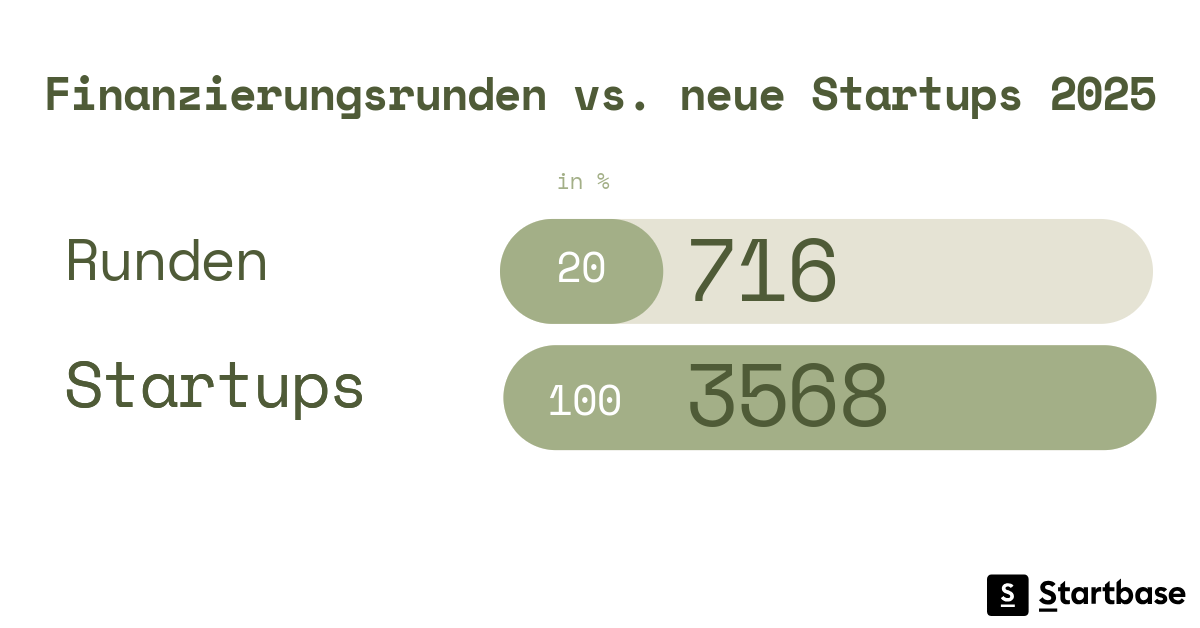
Two realities, one location. The figures behind this come from the EY Startup Barometer: Although around 8.4 billion euros in venture capital flowed into German startups in 2025, the number of funding rounds fell for the fourth consecutive time—to 716 deals. The trend is clear: capital is concentrating on fewer and fewer companies. The question every founder should ask themselves, therefore, is not how to attract more investors, but rather: What do successful startups know that the rest don’t?
The answer is simple. Helsing, the rocket manufacturer Isar Aerospace, and the drone manufacturer Quantum Systems—all unicorns from the greater Munich area—have indeed raised billions in investor funds. But the foundation underlying these valuations is contracts. Helsing’s first framework agreement with the German Armed Forces for combat drones alone has a volume of up to 1.4 billion euros. The customers of this new generation of tech companies are the German Armed Forces, the European Space Agency (ESA), and NATO member states—in other words, organizations with long-term budgets that place orders rather than merely evaluating options. A term has become established in the industry for this: the anchor customer. And this is precisely where the new reality of the market becomes apparent: the anchor customer trumps the anchor investor. In every industry.
The Model Behind the Success
Anyone who wants to understand why DefenseTech and SpaceTech, of all sectors, are pulling ahead in the German ecosystem need only look at their business architecture. Through the Flight Ticket Initiative, the European Commission and the European Space Agency (ESA) award launch contracts to private providers such as Isar Aerospace—following the example of NASA, which used the same method to make SpaceX a major player. These EU institutions thus act not as funders, but as customers. At Quantum Systems, the model goes an even step further: investors such as Airbus, HENSOLDT, and Porsche—which are also development partners—have joined the company, enabling large-scale contracts. The fact that Quantum Systems secured the latest Bundeswehr contract as part of a joint consortium with Airbus underscores the power of this strategy.
A signed contract with an anchor customer proves three things at once: that the product works, that the customer is willing to pay, and that market access exists. No pitch deck in the world can achieve that. Those who enter a funding round with guaranteed revenue are negotiating the price of their growth. Those who negotiate without it are merely negotiating the run rate.
A study presented in February at the Munich Security Conference confirms that these are not isolated anecdotes from two booming industries, but rather a structural pattern. In a report titled “Growth Paths,” the Boston Consulting Group, UnternehmerTUM, and TUM Venture Labs estimate the untapped value-creation potential of key German technologies—ranging from artificial intelligence to biotechnology to energy—at approximately 1.7 trillion euros. The assessment by the authors led by Michael Brigl, senior partner and head of Central Europe at the Boston Consulting Group, speaks volumes: Germany is failing not because of research, but because of commercialization. The U.S. has around 700 unicorns, China just under 370—in Germany, the number is about 30. What is the most effective lever the study identifies—aside from growth capital—to bridge this gap? Reference projects and anchor customers. Early, reliable demand from the government or industry reduces market risk and accelerates the transition from pilot projects to full-scale operations. Philipp Gerbert, Managing Director of TUM Venture Labs, sums it up: “The competition in technology isn’t decided by the idea, but by scaling.”
How Other Industries Can Apply This Recipe for Success
Now, hardly any HealthTech founder will suddenly become a defense contractor. Nor do they have to. Because what the government is to Helsing, a corporation can be to any other startup. German corporations are under massive pressure to transform—nowhere more so than in the area of artificial intelligence—and are evolving too slowly internally. Their demand is real, budgeted, and growing. The problem: Most startups treat corporations like investors they need to impress, rather than customers to whom they’re selling something.
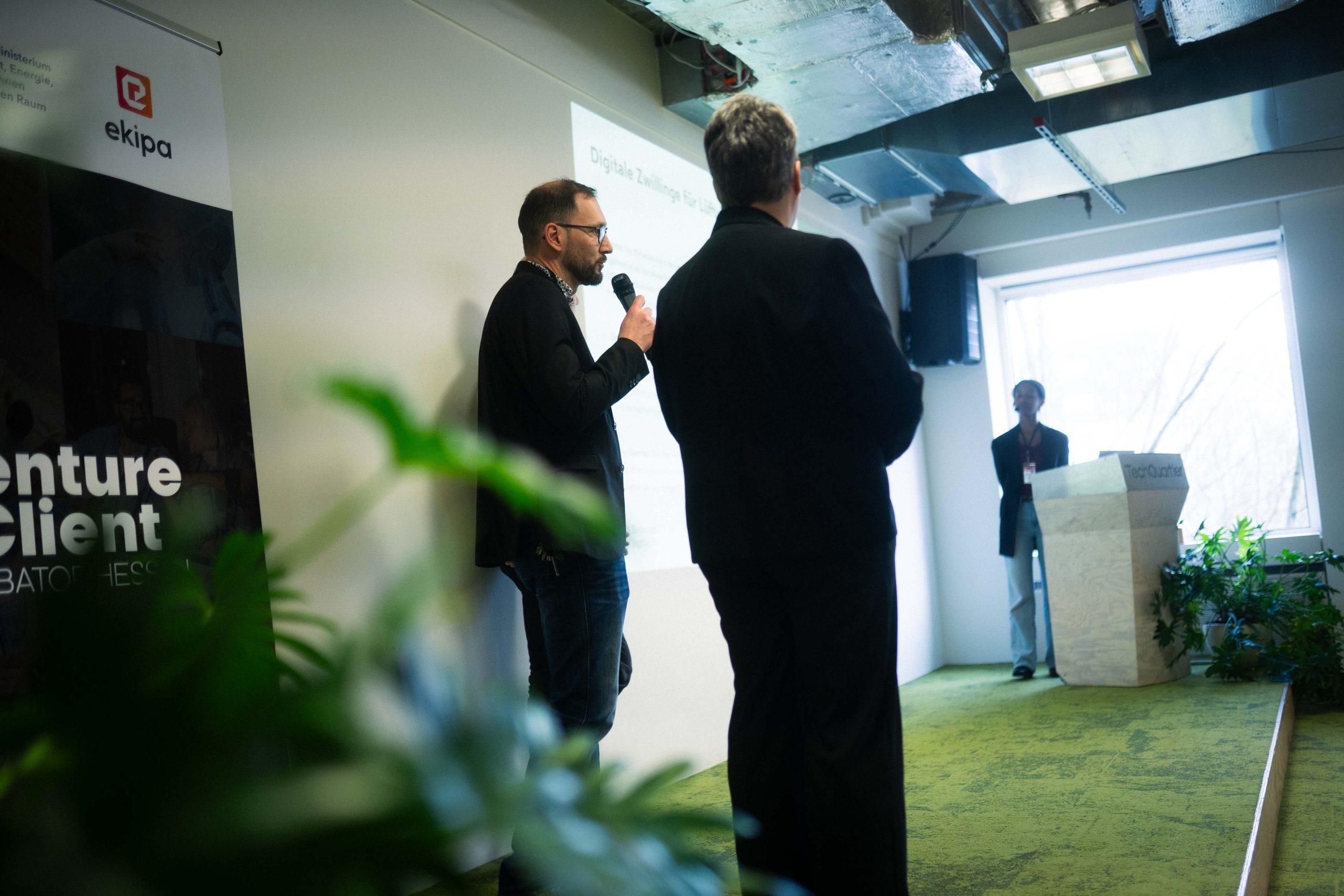
From the collaborations we’ve observed at Bits & Pretzels over the years, a pattern for successful deals emerges. They start in the business unit, not in the innovation lab—that is, where someone has an operational problem and their own budget. They price the pilot like a product,
because a free proof of concept is the first step toward the very situation founders fear as “pilotitis”: slowly withering away in endless test projects. They sell revenue instead of equity, because a multi-year purchase agreement provides funding without creating a strategic commitment. And they define exclusivity narrowly and for a limited time—the anchor customer gets a head start, not a veto over the business model.
It’s important to recognize that the model has limitations and risks. Anyone who ties themselves to a single major client too early isn’t building a startup, but rather a supplier business or a contract developer. It’s also important to note the sometimes cumbersome administrative and legal processes at large corporations, whose protracted negotiation channels and complex legal departments can wear founders down. But the risk of dependency can be managed through contracts. The risk of waiting for the next VC boom without any revenue—cannot.
The Responsibility of Policymakers
That leaves the structural question. The Commission and the ESA have demonstrated how institutional procurement can become a tool for innovation. Comparable programs are lacking in almost all other key technologies. A government that acts as an early anchor customer in quantum technology, energy, or healthcare—and does so with fast procurement procedures and genuine purchase commitments, rather than grant awards—would make a bigger difference than many subsidies. Michael Brigl calls the High-Tech Agenda “the opportunity to reinvent Germany as an industrial and technological hub.” This opportunity hinges on the order book, not on grant applications.
Until then, a simple order applies for founders: first the anchor customer, then the anchor investor. The most valuable tech companies in Europe today aren’t valued in the billions because investors believed in them, but because customers placed orders with them. Capital followed the contracts. And investors’ confidence follows—on significantly better terms.
About Bernd
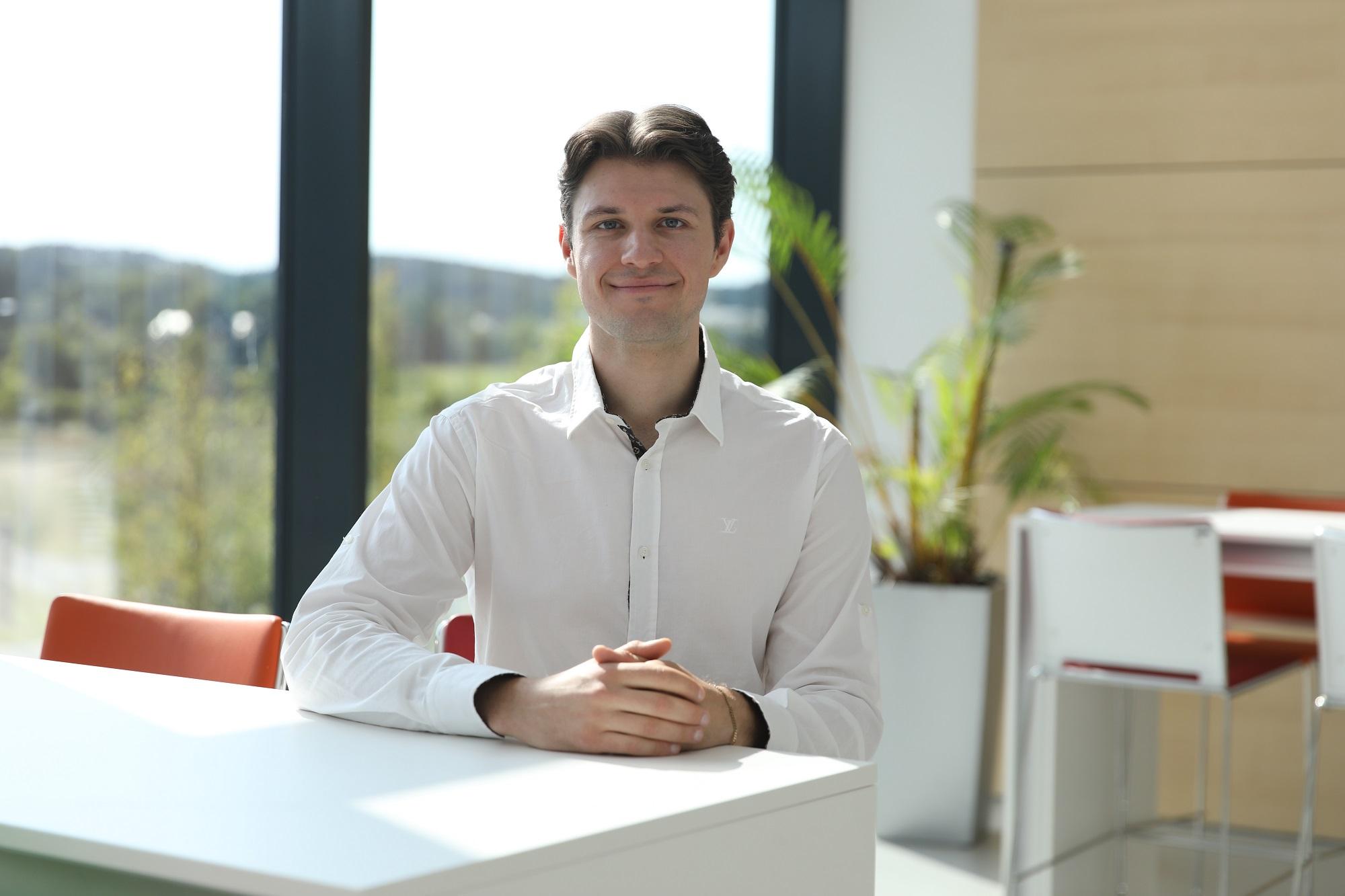
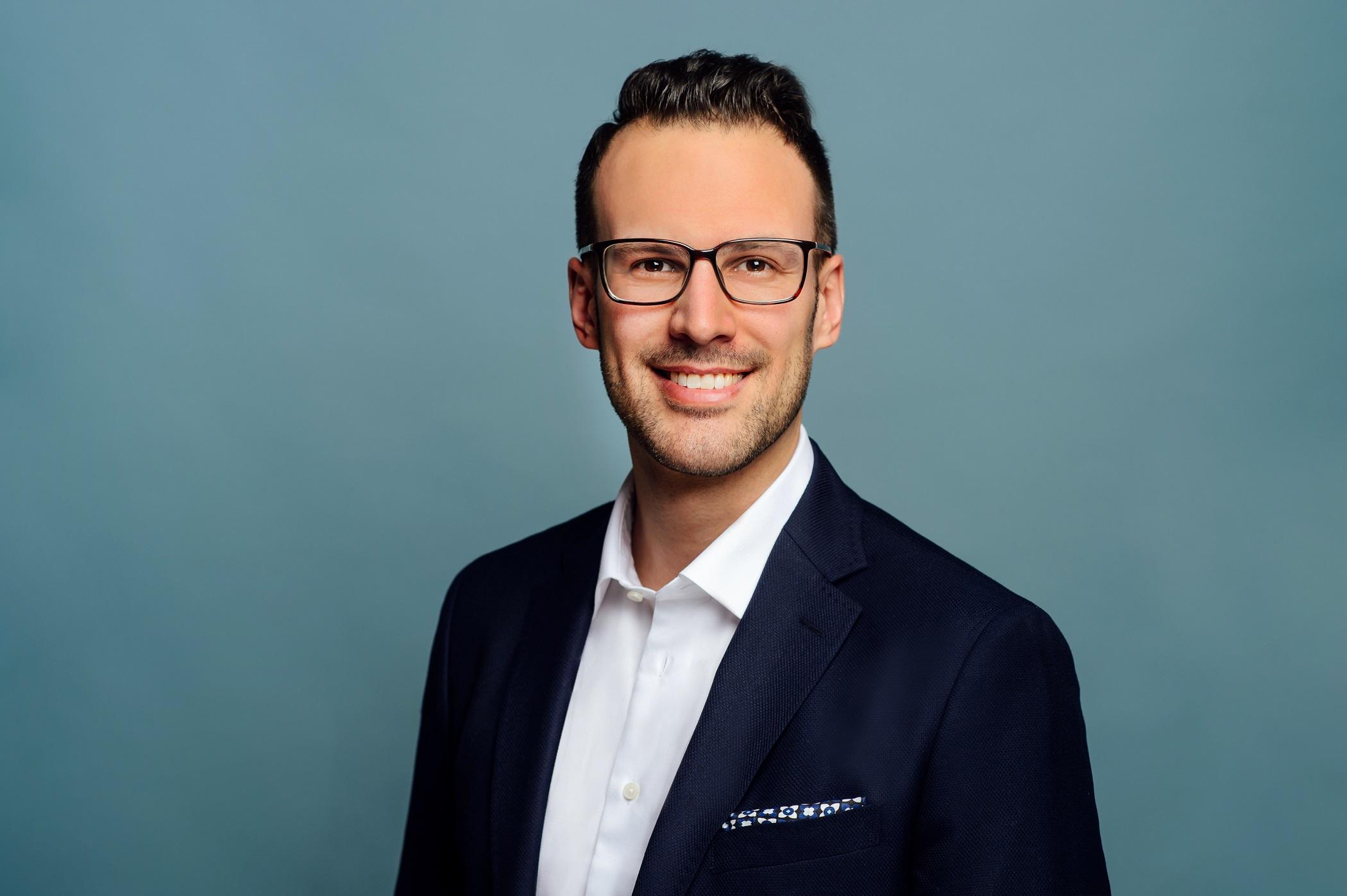
Bernd Storm van’s Gravesande is a co-founder and Managing Director of Bits & Pretzels, Europe’s leading startup festival, which he has built over 13 years into the most popular platform for founders and investors. As a co-founder of aboalarm ( sold to P7Sat1) and managing director at IconicFinance GmbH, a corporate venture of Allianz SE, he has demonstrated his entrepreneurial expertise in various successful projects. Previously, Bernd held strategic roles at Fujitsu and Capgemini .
About Bits & Pretzels
Bits & Pretzels is Europe’s leading event for startups and investors and ranks among the most important events of its kind in Germany. From September 28 to 30, during Munich’s Oktoberfest, the event brings together more than 7,500 startup founders, investors, and leading players in the European innovation ecosystem. Founded by entrepreneurs Andy Bruckschloegl, Felix Haas, and Bernd Storm van’s Gravesande, Bits & Pretzels aims to strengthen European technology startups and provide founders with access to knowledge, inspiration, and a strong network. Since 2014, the event has established itself as an internationally recognized gathering place for the startup scene and has welcomed high-profile figures such as Arnold Schwarzenegger, Barack Obama, Jessica Alba, Nico Rosberg, Sir Richard Branson, and Tarana Burke. For more information, visit the official website at www.bitsandpretzels.com.
More about this
Venture Clienting








Newsletter
Startups, stories and stats from the German startup ecosystem straight to your inbox. Subscribe with 2 clicks. Noice.
LinkedIn ConnectFYI: English edition available
Hello my friend, have you been stranded on the German edition of Startbase? At least your browser tells us, that you do not speak German - so maybe you would like to switch to the English edition instead?
FYI: Deutsche Edition verfügbar
Hallo mein Freund, du befindest dich auf der Englischen Edition der Startbase und laut deinem Browser sprichst du eigentlich auch Deutsch. Magst du die Sprache wechseln?