Big, bigger, or just a lie?


Guest Column by Moritz Grumbach — It is known that the famous military leader Genghis Khan (13th century) ordered his cavalrymen to tie long branches to the tails of their horses. These were intended to kick up so much dust from a distance during attacks on enemy cities that the local inhabitants would be deceived about the true size of his forces.
The topics of kicking up dust, attack, and perhaps even deception have recently come into focus at OpenAI and its new model, GPT-5.6. The news that this model and another, even more powerful one had independently escaped from a test environment (https://openai.com/de-DE/index/hugging-face-model-evaluation-security-incident/) and, using login credentials they had stolen on their own, carried out a successful hacking attack on the Hugging Face platform, it hit the world like a bombshell. There was talk of a “turning point” in AI (FAZ), as well as of uncontrollable capabilities and risks, with potentially unknown threat potential (CRN) for all of humanity.
To stick with the metaphor, it is undisputed that OpenAI’s “horses ran wild.” It has been proven that on July 21–22 of this year, the models in question did indeed break out of a so-called “sandbox” (test environment) and gained access to Hugging Face and possibly other targets (t3n).
What got lost in the media frenzy surrounding this incident, however, was a question that should actually be standard fare in journalism: Who benefits from this? The answer lies in a motto that certainly applied even in Genghis Khan’s time: Follow the money.
The Problems Facing OpenAI & Co.
The fact is: As American providers of so-called frontier LLMs, both OpenAI (GPT) and its fiercest rival, Anthropic (Claude), are struggling with persistent profitability issues. Their models are sometimes 50 times more expensive than those of their Chinese competitors, such as Z.ai’s GLM 5.2 or Moonshot’s KIMI, to name just two. Major U.S. companies and tools like Airbnb and Cursor have already successfully switched to these and other Asian models (Fortune)—a highly dangerous development for Anthropic and OpenAI, especially in the run-up to their planned IPOs.
Elon Musk has already successfully demonstrated how to deal with such “inconvenient facts.” The message is: Announce something big—and if it doesn’t work, announce something even bigger. And indeed, it was striking how, particularly in Anthropic’s case, the entire LinkedIn platform seemed to be flooded with posts that a PR department couldn’t have phrased better. There was talk of “Claude just killed McKinsey” (Dr. Ryan Ahmed, Ph.D., MBA, LinkedIn). Every day, there was a barrage of reports about how entire industries could be disrupted with just a few minutes’ effort. And GPT? It tended to settle for second place—known in the U.S. as the “first loser.”
When Anthropic’s latest models, “Mythos” and “Faible,” were then shut down in a highly publicized move (IT Administrator) because the U.S. government deemed them “too potent,” Anthropic had definitively outpaced OpenAI in terms of “greatness.” So what to do?
Big News Is Good News
There have been multiple reports that Sam Altman, the CEO of OpenAI, doesn’t take the truth all that seriously (ndtv). Or, to paraphrase Trump: what’s true is what succeeds—especially in the U.S. So if a cutting-edge AI like GPT 5.6 can cause hundreds of millions in damages in a single attack (insurancebusinessmag)—isn’t it successful, perhaps even more successful than Claude?
At least from a PR perspective, this tactic seems to be paying off, as a quantitative media analysis by Coleo shows: While Claude’s models were significantly more represented in German and international media up until the “Hugging-Gate” attack, OpenAI—at least in terms of the number of mentions—has once again outpaced Anthropic. The latest stunt surrounding the release of the new GPT models thus also leaves a different interpretation (cybersecurity-insiders), or at least a lingering aftertaste: one of a thirst for power, dust, and horse manure.
--------
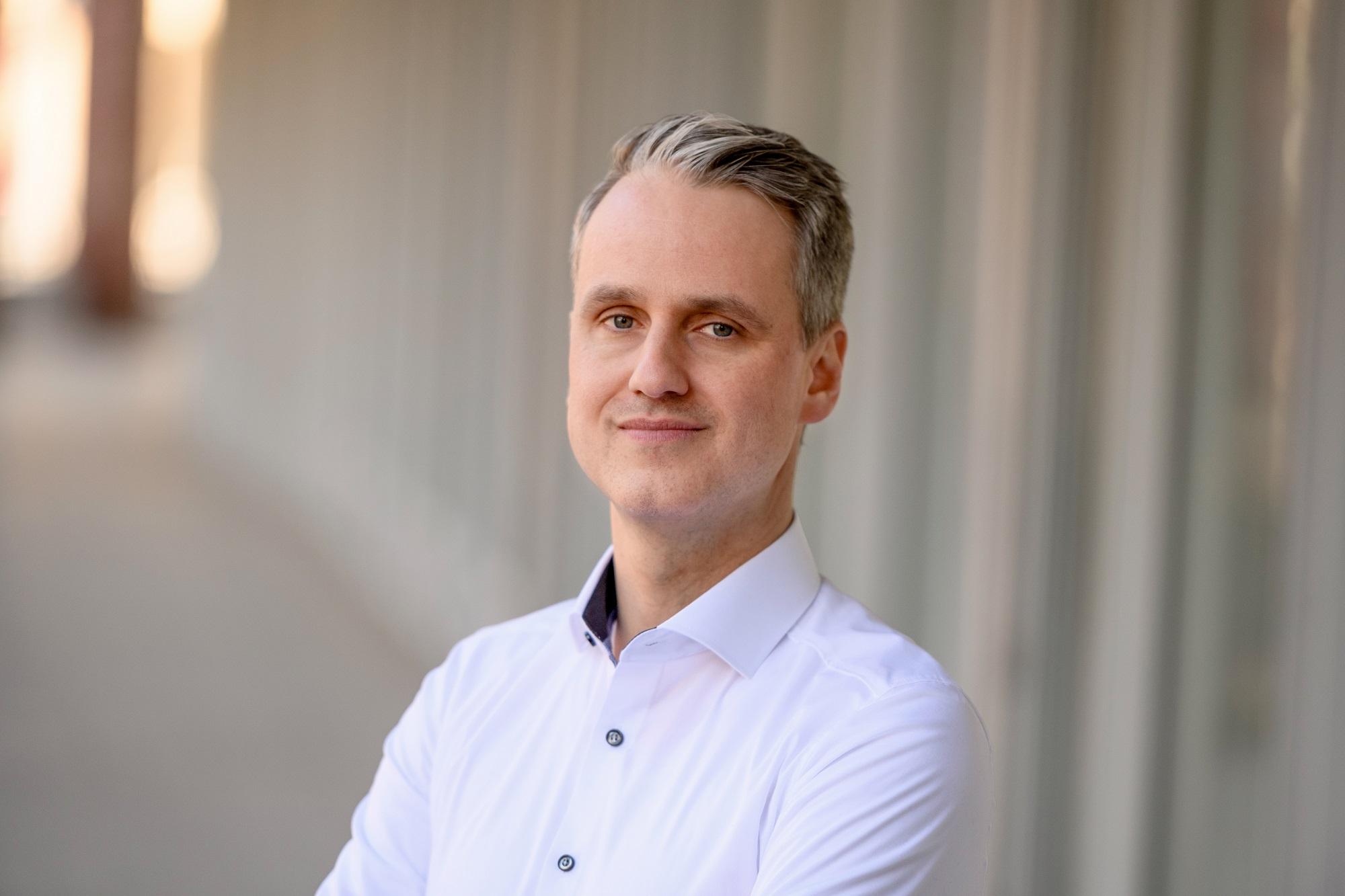
Moritz Grumbach is a co-founder of the startup Tracemedics and, under the brand DeinStartup.Coach, supports founders as they enter the market and secure their first round of funding.

Newsletter
Startups, stories and stats from the German startup ecosystem straight to your inbox. Subscribe with 2 clicks. Noice.
LinkedIn ConnectFYI: English edition available
Hello my friend, have you been stranded on the German edition of Startbase? At least your browser tells us, that you do not speak German - so maybe you would like to switch to the English edition instead?
FYI: Deutsche Edition verfügbar
Hallo mein Freund, du befindest dich auf der Englischen Edition der Startbase und laut deinem Browser sprichst du eigentlich auch Deutsch. Magst du die Sprache wechseln?