One Year at FUTURY Startup Factory

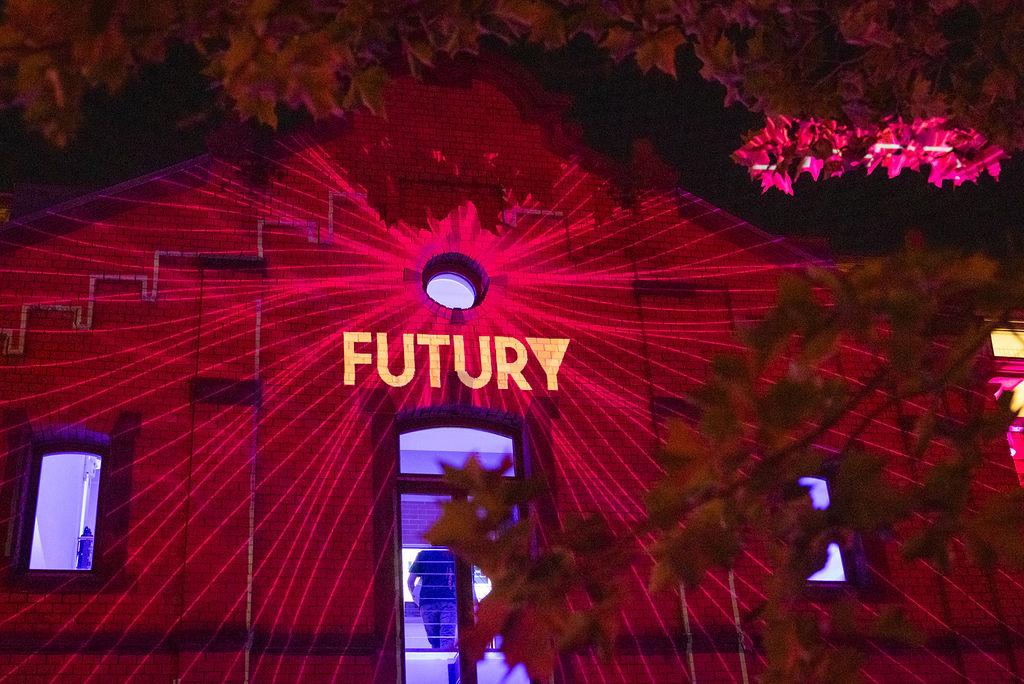
One year after the launch of the FUTURY Startup Factory, the Rhine-Main ecosystem is taking stock. In the first half of 2026, Hesse recorded a total of 270 new startup launches—an 82 percent increase compared to the same period the previous year. Rhineland-Palatinate also saw significant growth. FUTURY attributes this development, among other things, to more concentrated startup offerings, new communities, additional industry partners, and improved conditions for spin-offs from universities.
However, the rise in startup numbers cannot be attributed to a single initiative. It comes during a phase in which startup formations are surging across Germany. In the first half of 2026, 3,053 startups were founded nationwide—52 percent more than in the second half of 2025.
Hesse Sees an 82 Percent Increase in Startup Foundings
Hesse experienced particularly dynamic growth. Between January and June, 270 startups were founded there. In the first half of 2025, the figure was 148—representing an 82 percent increase. Rhineland-Palatinate saw a 62 percent increase compared to the same period the previous year.
Frankfurt is also improving its position. With 17.9 new startups per 100,000 residents, the city jumped from twelfth to fifth place in the national ranking. Frankfurt and Darmstadt are thus among Germany’s top 20 startup locations. Of a total of 346 new startups in Hesse and Rhineland-Palatinate in the first half of 2026, 252—or 73 percent—were located in the Rhine-Main region, according to FUTURY.
Supporting More Than 300 Startups in a Single Year
FUTURY is one of the top ten startup incubators nationwide and aims to bring together different stages of startup development under a single structure. The initiative’s flagship programs are now up and running, covering everything from early-stage startup ideas to further business development.
According to FUTURY, the organization has worked with more than 300 startups over the past twelve months. At the same time, it reached approximately 23,000 students at the four partner universities (Frankfurt School of Finance & Management, Goethe University Frankfurt, Johannes Gutenberg University Mainz, and TU Darmstadt). About 8,000 participated in startup programs, which yielded around 400 concrete ideas.
This means the Startup Factory gets involved at a relatively early stage. It aims to support not only companies that have already been founded, but also students and researchers who are just beginning to develop a business idea.
Six communities and about 3,000 startups in the network
At the same time, FUTURY has built six communities within a year. They are aimed at investors, corporations, startups, female founders, mentors, and potential co-founders.
The network now includes more than 70 investors, over 150 mentors, around 3,000 startups, and 50 ecosystem partners. About 800 of the startups are based in the Rhine-Main region. This has given rise to initiatives such as matching events and investment camps. A physical hub of the network is the Bertramshof. More than 60 startups are now based there. Together with Q and AI, FUTURY also operates an event space and a showroom for AI and quantum computing there.
STATION and ryon are being more closely integrated
At the same time, FUTURY is seeking to more closely integrate existing structures in the region. This includes the Frankfurt-based news and networking platform STATION. Co-founder Carolin Wagner has now joined the FUTURY team as Startup Ecosystem Manager and is focusing in particular on the female founder community. The activities of ryon, a green and deep tech accelerator established in 2022, are also being integrated. Its expertise is set to be transferred to the corresponding FUTURY cluster. The goal is to reduce parallel structures within the ecosystem.
The number of corporate partners rose from 30 to 34 last year. Among the most recent additions are KfW Capital, EintrachtTech, the Information Technology Service Center of the Statutory Health Insurance System, and the Frankfurt Economic Initiative. Three foundations are also part of the partner network.
FUTURY Capital has raised 47 million euros
In addition to consulting and networking, access to capital plays an important role. To this end, FUTURY collaborates with the early-stage investor FUTURY Capital. FUTURY Capital has raised 47 million euros for its third fund. Investments range from 250,000 euros to three million euros and cover stages from pre-seed to Series A. More than 30 percent of the fund’s capital is earmarked for startups in the region.
In June, FUTURY also co-hosted the Capital for Innovation Summit together with the Federal Ministry for Economic Affairs and UnternehmerTUM. Around 150 representatives from family offices, foundations, venture capital funds, companies, politics, and academia, as well as the ten German startup factories, came together for the event.
IP4Shares Aims to Facilitate University Spin-offs
Another key factor is technology transfer from universities. To this end, the IP4Shares model was developed at TU Darmstadt. Instead of immediately charging licensing fees or asking for purchase prices for intellectual property derived from research, the university receives equity in the companies. This is intended to ensure that young spin-offs retain more liquidity during the capital-intensive early phase.
A new startup policy at TU Darmstadt complements this approach. It recognizes spin-offs as academic achievements and provides, among other things, leave-of-absence options and permanent access to laboratories. FUTURY cites the fusion energy startup Focused Energy as a prominent example. The TU Darmstadt spin-off raised a Series A round of $240 million in June 2026.
Other startups from the academic community are also set to highlight this trend. NUVOTIS, formerly Modulux3D and spun off from Goethe University, is working on AI-powered 3D bioprinting and received a grant of one million euros. The TU Darmstadt spin-off Genow has raised more than 1.6 million euros in venture capital for its AI-powered centralization of corporate data. LigniLabs, a Max Planck spin-off from Mainz, is developing a bio-based microencapsulation technology and has received grants and business angel capital totaling more than 2.2 million euros.
The goal is 1,000 new startups
For FUTURY, the first year is thus just a stepping stone. Under the banner “Road to 1,000 Startups,” the ecosystem is set to be further expanded. Plans include an expanded company-builder program with investment opportunities of up to 450,000 euros, a new maker space in Darmstadt, and a lab space in Mainz.
The central challenge here lies less in creating additional individual programs. The key will be whether universities, investors, industry partners, and existing startup initiatives can actually form a sustainably functioning
Greater influence beyond the Rhine-Main region is needed
In the long term, what matters more than mere startup numbers is how many of today’s startups grow, attract capital, create jobs, and remain in Hesse or Germany permanently.
A possible next step for FUTURY is to significantly increase its visibility beyond its own “Frankfurt bubble.” In the Rhine-Main region, the Startup Factory has quickly become a key player and can draw on a dense network of universities, companies, investors, and startups. In the rest of the DACH region, however, its influence is more limited and has so far been driven in no small part by FUTURY’s role as one of the ten startup factories selected by the federal government. The challenge becomes even greater at the European level. Although international partnerships already exist—for example, with RestartIL and La French Tech Frankfurt—there is not yet a correspondingly strong level of international brand recognition. If the Rhine-Main region is to compete with leading innovation hubs in the long term, FUTURY must therefore also increase its visibility in the places where a significant portion of international venture capital, technology companies, and global startup networks are based: in Silicon Valley as well as in the major Asian innovation hubs.




FYI: English edition available
Hello my friend, have you been stranded on the German edition of Startbase? At least your browser tells us, that you do not speak German - so maybe you would like to switch to the English edition instead?
FYI: Deutsche Edition verfügbar
Hallo mein Freund, du befindest dich auf der Englischen Edition der Startbase und laut deinem Browser sprichst du eigentlich auch Deutsch. Magst du die Sprache wechseln?