Qodia Secures 1.2 Million Euros for AI-Powered Private Billing


The Healthtech company Qodia has closed a funding round totaling 1.2 million euros. The startup plans to use the additional capital to advance the automation of private medical billing in Germany. Last year, Qodia had already raised approximately 400,000 euros in capital. This brings the total funding announced to date for the company—which is only about a year old—to 1.6 million euros.
An investor from the medical industry is participating in the current round. Further details regarding the investor’s identity, the specific ownership structure, or other terms of the funding round have not yet been disclosed.
From Market Launch to Million-Euro Funding
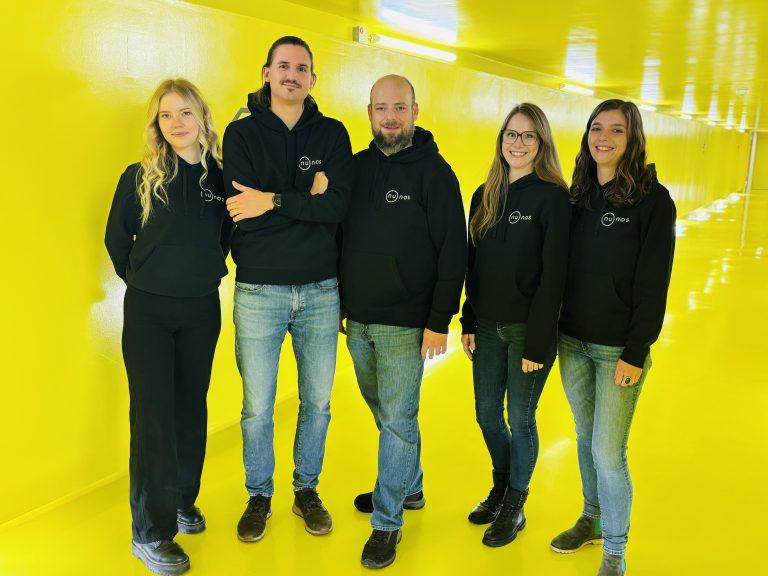
For Qodia, the new funding comes during an early growth phase. The company was founded by Ole Reinpold, Lasse Reinpold, Nicolas Riegger, and Stephan Lenert and now employs a team with expertise in software, AI, and medicine.
The startup launched its first product as recently as December 2025. According to the company, the technology is now integrated into eleven billing centers. Qodia also reports a sharp rise in demand for its solutions.
Driven by this growth is a market where numerous tasks have traditionally been performed manually. Billing companies must process, review, and, where necessary, optimize large volumes of private medical invoices on a daily basis. As the volume of invoices grows, so does the associated labor cost. At the same time, the industry is facing an increasing shortage of skilled workers.
AI Aims to Automate Private Medical Billing
The company develops software for private medical billing and focuses in particular on processes related to the German Scale of Medical Fees (GOÄ). The goal is to automate recurring and complex verification steps using artificial intelligence and a structured set of rules.
Qodia now offers three solutions for this purpose. The invoice verification feature analyzes existing billing documents and is designed to identify, among other things, exclusions, missing codes, and potential adjustments to surcharge rates. PAD and PADnext files can be imported directly into the system. Another solution starts one step earlier. Treatment documentation is evaluated and translated into billable GOÄ codes. With this, Qodia aims to significantly shorten the path from medical documentation to the final bill.
The offering is complemented by a GOÄ assistant. This assistant answers questions about exclusions, surcharge rates, or permissible code combinations. Unlike a standalone AI chatbot, the answers are additionally validated against the stored set of rules.
Proprietary GOÄ Core Forms the Technological Foundation
The technological foundation of the products is the GOÄ Core developed by Qodia. Within it, the company has structured the ruleset for private medical billing and made it machine-readable. According to the company, the database includes more than 2,800 codes as well as exclusions, surcharges, and analogous services.
Built on top of this is a rules engine that takes into account, among other things, combination rules, plausibility checks, and escalation rates. An additional customization layer makes it possible to define rules for individual physicians.
This is relevant for practical billing, as procedures can vary from doctor to doctor. What one physician might treat as an error could be a deliberate part of another’s billing practice. With Qodia, such specifications can be defined once and then automatically applied to subsequent invoices.
Eleven Billing Centers Since Market Launch
With eleven integrated billing centers to date, Qodia reports that it has acquired its first customers for its technology within just a few months. For the startup, this development is particularly significant given that the market launch did not take place until December 2025.
The business model addresses not only the costs of manual billing processes but also the complexity of the GOÄ. Even experienced professionals must take into account a large number of codes, exclusions, possible combinations, and individual specifics. Automated systems can provide significant support here, particularly when dealing with high invoice volumes.
Qodia’s invoice verification service is therefore primarily aimed at billing centers and billing service providers that process large volumes of private medical invoices.
Medical Expertise Meets Software Development
The company also relies on a combination of technical and medical expertise when building its team. In addition to the four founders, the team includes developers as well as specialists in AI and medical knowledge.
In this way, Qodia seeks to address one of the key challenges in developing specialized AI applications in the healthcare sector internally: software development and medical or billing-specific expertise must be brought together so that technical models can be transformed into practical solutions.
A Total of 1.6 Million Euros Raised
The new funding round now gives Qodia additional leeway for its next phase of growth. In total, the startup has raised approximately 1.6 million euros in capital during its still-young history.
For Qodia, the key question now is whether the momentum seen since its market launch can be sustained. Eleven integrated billing centers established within just a few months provide initial indications of demand for more automated billing processes. With this new funding, the company now has the financial resources to further expand its technology and market presence.



Newsletter
Startups, stories and stats from the German startup ecosystem straight to your inbox. Subscribe with 2 clicks. Noice.
LinkedIn ConnectFYI: English edition available
Hello my friend, have you been stranded on the German edition of Startbase? At least your browser tells us, that you do not speak German - so maybe you would like to switch to the English edition instead?
FYI: Deutsche Edition verfügbar
Hallo mein Freund, du befindest dich auf der Englischen Edition der Startbase und laut deinem Browser sprichst du eigentlich auch Deutsch. Magst du die Sprache wechseln?