A Record Year with Two Billion Euros in Funding for STATION F

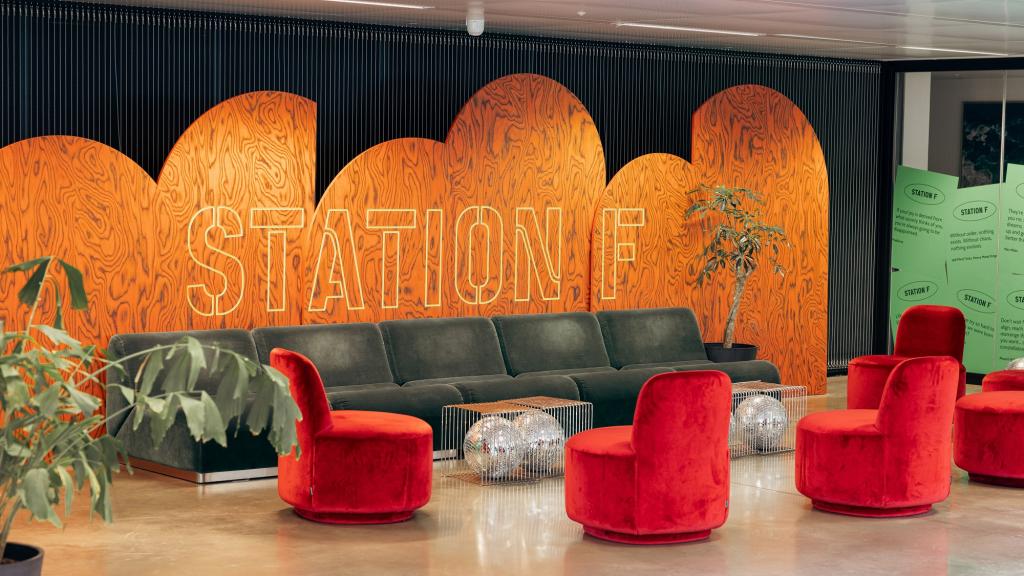
The Paris-based startup campus STATION F has unveiled its “Future 40” for 2026. The annually published list features 40 particularly high-growth and promising companies selected from more than 1,000 startups on the campus. Collectively, the selected companies have already raised 110 million euros. Notable features include the high proportion of experienced founders, the strong focus on artificial intelligence, and the growing importance of industrial technologies. At the same time, STATION F is reporting a record year. According to the campus, its startups and alumni have already raised more than two billion euros in capital in 2026.
40 Startups Selected from More Than 1,000 Companies
Since 2019, STATION F has published an annual selection of particularly successful and promising startups from its own ecosystem. With the Class of 2026, the number of companies recognized to date rises to 320. According to the campus, the startups from all eight cohorts have collectively raised approximately 1.2 billion euros.
For the current selection, 40 companies were chosen from more than 1,000 startups on campus. This places them among the top four percent based on STATION F’s selection criteria. Key factors included financial metrics, demonstrable market progress, and significant milestones. There was no upper limit on the amount of capital already raised.
The Future 40 come from various programs, including F/AI, CentraleSupélec, Microsoft, TotalEnergies, Entrepreneur First, and HEC. The selection is a curated list by the campus and not an independent ranking of all European startups.
110 million euros in funding for the current cohort
The 40 selected companies have collectively raised 110 million euros in funding. Among the largest known funding rounds are Arlequin AI with 28 million euros, CURA with 10 million U.S. dollars, Cleavr with 8 million euros, and Lemrock with 7 million euros.
Most of the companies are still in an early stage of development. According to STATION F, 31 startups are in the pre-seed or seed phase, two have already secured Series A funding, and five are growing without external funding so far. The publication does not specify a clear funding phase for the remaining two companies.
The selection thus brings together young technology companies, previously funded growth projects, and self-funded startups. In terms of focus, the spectrum ranges from artificial intelligence and robotics to energy and biotechnology to digital infrastructure.
75 percent of the teams have prior startup experience
The founders’ experience is particularly striking. A total of 98 people are behind the 40 companies. At 30 startups—or 75 percent—at least one member of the founding team has previously founded a company. In 15 cases, the team even includes someone who has already sold a company. Examples include Romain Mazeries of Weflayr, who previously co-founded Mangopay. Sid Kouider of Noïa Labs founded NextMind, which was later acquired by Snap. François-Guillaume de Lichtervelde of Timper sold Greenomy 2025 to Position Green. STATION F sees this as a sign of the growing maturity of the European startup ecosystem. Founders with experience from previous companies are leveraging their knowledge and networks to build new technology projects.
The Future 40 2026 at a Glance
The complete selection includes the following 40 startups:
Industry, Robotics, and Infrastructure: AICE, Allude, Alouette AI, BioSky, Bleu Robotics, Ethylowheel, Invertix, Prior Foundry, Stellar, and SYNRA.
Energy and Climate Technology: CURA, ExtraJool, and Norma.
Healthcare, Biotechnology, and Education: Bending Words, Coforix, Deepeye Medical, Marble, RainPath, and Youngr Labs.
AI, Enterprise Software, and Digital Business Models: AIM Intelligence, Arlequin AI, Blynt AI, Cleavr, Coach, GetMint, Kuli, Lemrock, Lineshift AI, NuMind, Oguste, Ooak Data, Revox, Shiplog, Smalk, Timper, Topograph, Weflayr, and ZKAI Labs.
Still in stealth mode: Noïa Labs and Onbox.
Artificial intelligence is becoming increasingly industrial
A key focus of the Future 40 is artificial intelligence. Many companies are concentrating on specific industrial applications. Bleu Robotics is developing AI models for humanoid industrial robots. Allude is working on infrastructure that enables the deployment of AI agents and robots in factories. AICE is developing swarms of cost-effective underwater drones to protect fleets and critical infrastructure. SYNRA uses camera technology to detect and analyze vibrations in machinery and structures. Alouette AI develops AI agents for industrial engineering processes, relying on verified digital design principles. These companies exemplify the growing importance of Physical AI, in which AI systems are connected to machines, sensors, and other physical applications to support or automate industrial processes.
Digital Sovereignty and Critical Infrastructure
In addition to industrial AI, technologies for government applications and critical infrastructure are gaining importance. Stellar is developing a control layer for various telecommunications networks to improve their resilience and independence. Prior Foundry is working on AI infrastructure for decision-making processes in government agencies. AIM Intelligence focuses on the security and controllability of generative AI. Companies such as AICE and Alouette AI also address areas where reliability, data security, and control over technical systems are particularly important. This selection illustrates that European startups are increasingly focusing on technologies that go beyond traditional enterprise software and pertain to strategically important infrastructure.
Energy and Climate Technologies Strongly Represented
Several Future 40 companies are developing solutions for the energy and climate transition. CURA is working on an electrochemical process for CO₂ capture in cement production that is designed to be integrated into existing plants. ExtraJool is developing technologies to convert industrial waste heat into electricity. Norma is focusing on a CO₂ capture process using supercapacitive materials. BioSky combines satellite data and artificial intelligence to analyze power grids, while Invertix develops AI applications for energy infrastructure. These companies demonstrate that, in addition to digital business models, technologies for existing industrial facilities and physical infrastructure also play an important role.
Medical AI and Biotechnology
The healthcare sector is represented in the selection. Deepeye Medical develops AI applications designed to assist doctors in planning treatments for eye diseases. RainPath combines optical technologies with artificial intelligence to accelerate tissue diagnostics. Coforix develops data infrastructure that enables hospitals to use AI in clinical care. Youngr Labs is working on a virtual cell lab platform for research into age-related diseases and longevity. The companies pursue different technological approaches but focus on leveraging complex medical and biological data. Inclusion in the Future 40 does not constitute confirmation of clinical efficacy or regulatory approval.
AI Agents Automate Business Processes
Another area of focus is specialized AI applications for businesses. Cleavr is developing AI-powered accounts receivable management, while Lemrock is building infrastructure for AI-powered trading. Revox relies on phone-based AI agents to handle sales inquiries. Shiplog develops AI-powered customer analytics, Oguste automates parts of the legal due diligence process for real estate transactions, and Timper is working on an AI-based software partner for real estate developers. AI is also transforming marketing and digital visibility. GetMint helps companies analyze and expand their presence in AI search systems. Smalk is developing an advertising network that connects brands with media providers in the context of AI-powered search. These examples illustrate the trend toward specialized AI solutions designed to handle specific tasks within existing business processes.
An International Cohort with 24 Nationalities
According to STATION F, the Future 40 is among the initiative’s most international cohorts. The 98 founders represent a total of 24 nationalities. About 30 percent come from countries outside France, including Germany, Italy, South Korea, Japan, and Morocco. At least ten founders hold a Ph.D. In addition, six of the selected startups have participated in the Y Combinator accelerator program. These figures underscore the international focus of the Paris campus, which brings together founders from diverse backgrounds with investors, technology partners, and funding programs.
STATION F Reports Record Funding of Two Billion Euros
Alongside the release of the Future 40, STATION F reports a new funding record. According to the organization, current and former campus companies have already raised more than two billion euros in 2026. This surpasses the previous record set in 2025.
Particularly large funding rounds from alumni contributed to this achievement. Multiverse Computing raised 500 million euros, and Alan raised an additional 480 million euros. The total of two billion euros refers to the entire STATION F ecosystem, including former campus companies. This should be distinguished from the 110 million euros attributable to this year’s Future 40.
Previous Future 40 companies have also been able to establish themselves in the European technology market. Among those selected so far are Fintecture, Tomorro, Spore.bio, WhiteLab Genomics, Biolevate, and Qevlar AI. STATION F also points out that Hugging Face and Mistral AI have already acquired companies from previous Future 40 cohorts. According to the report, Mistral AI acquired two of these startups.
Future 40 as a Barometer for Europe’s Startup Development
The Future 40 2026 highlights several trends within the European technology sector. Experienced founders are gaining prominence, AI is increasingly being used in industrial applications, and topics such as energy, health, and digital sovereignty are taking center stage. For investors, STATION F offers an online Demo Day as well as the opportunity to request contact with companies from all eight cohorts via the platform future40.stationf.co.
The current selection brings together 40 startups that have already secured 110 million euros in funding. Combined with the campus’s record-breaking year, this highlights the growing importance of the Paris startup ecosystem. Which companies will establish themselves as successful European technology providers in the long term remains to be seen in the coming years.





Newsletter
Startups, stories and stats from the German startup ecosystem straight to your inbox. Subscribe with 2 clicks. Noice.
LinkedIn ConnectFYI: English edition available
Hello my friend, have you been stranded on the German edition of Startbase? At least your browser tells us, that you do not speak German - so maybe you would like to switch to the English edition instead?
FYI: Deutsche Edition verfügbar
Hallo mein Freund, du befindest dich auf der Englischen Edition der Startbase und laut deinem Browser sprichst du eigentlich auch Deutsch. Magst du die Sprache wechseln?