Ubitium Secures $14 Million for Universal AI Processor from Düsseldorf

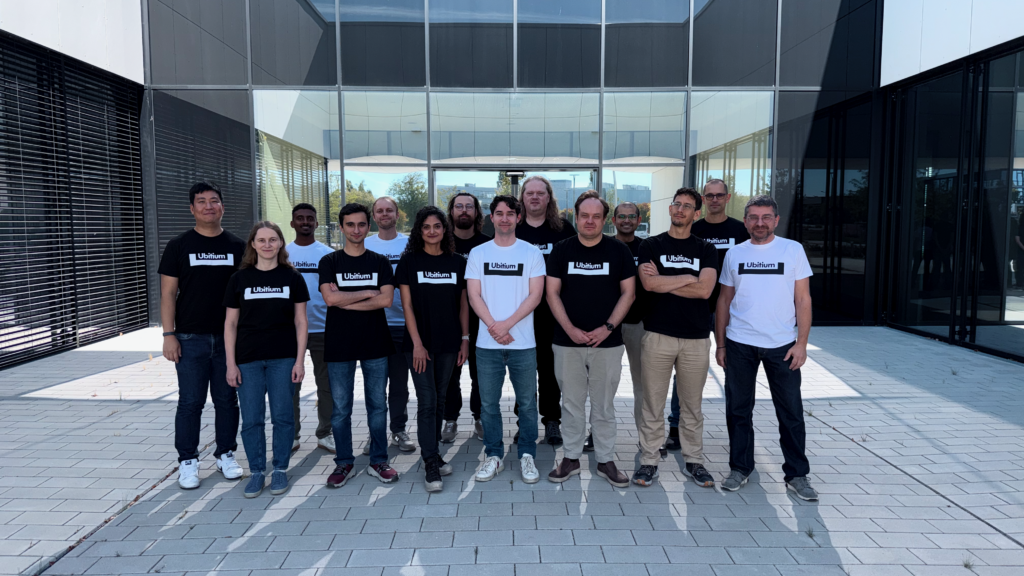
The Düsseldorf-based semiconductor startup Ubitium has closed a seed funding round totaling $14 million. The round was led by Ibex Investors, with additional funding coming from OpenOcean and existing investors, among others. Florian Seibel, co-founder and co-CEO of drone manufacturer Quantum Systems, is also participating as a private investor. Ubitium is developing a reconfigurable processor designed to combine signal processing, AI computations, and real-time control on a single chip. An initial prototype has already been successfully tested.
Total Funding Rises to $18 Million
With this new funding round, the seed capital raised since the company’s founding in 2024 has increased to a total of $18 million. In addition to lead investor Ibex Investors, OpenOcean and previous investors KBC Focus Fund, Runa Capital, and Inflection are participating. Among the new investors is Florian Seibel, co-founder and co-CEO of the Munich-based DefenseTech company Quantum Systems. He is investing as a private individual. The fresh capital is intended to help Ubitium transform the processor architecture it has developed so far into a commercially viable product. The company plans to release the first evaluation units of its new chip in 2027.
Physical AI Places New Demands on Processors
Ubitium focuses on the field of Physical AI. This refers to AI systems that sense their environment, make decisions, and then execute physical actions. Potential applications include autonomous drones, industrial robots, vehicles, and other intelligent machines. Such systems must handle different computational tasks simultaneously. Sensors continuously deliver data, AI models interpret this information, and control systems translate the results into movements or other actions. Until now, multiple specialized processors have often been used for this purpose. For example, digital signal processors (DSPs) handle the processing of sensor data, neural processing units (NPUs) accelerate AI computations, and CPUs handle control tasks. Communication between these components can result in additional energy consumption, data transfers, and development effort. Ubitium therefore aims to consolidate these tasks into a unified processor architecture.
Reconfigurable Architecture Instead of Multiple Specialized Chips
At the heart of the technology is an array of programmable computing elements that can be dynamically deployed for different tasks. The available resources are designed to be allocated during operation among signal processing, AI inference, and real-time control. This allows the processor to adapt to a machine’s changing requirements without requiring a separate specialized processing unit for each task. The architecture is based on RISC-V and is designed to work with a shared memory structure and standardized development tools. For manufacturers of intelligent machines, this could reduce the effort involved in integrating different chips and developing software. Whether this will actually result in lower costs or reduced energy consumption depends on future applications and the performance specifications of the commercial products. Ubitium has not yet published any comparative figures.
First Chip Manufactured Using an 8-Nanometer Process
The company has already achieved an important milestone in its development. Its first test chip, designated UB108, was manufactured using Samsung’s 8-nanometer process. The processor features 256 programmable computing elements. According to Ubitium, this demonstrated that signal processing, AI inference, and real-time control can be executed on the same reconfigurable architecture. The so-called “first silicon” was completed approximately one year after the company was founded. For Ubitium, this represents a proof of technological feasibility. However, the test chip is not yet equivalent to a market-ready processor. The next step is the UB410. It is expected to feature 4,096 computing elements, making it significantly more powerful than the first prototype. The completion of the chip design for manufacturing—known as “tape-out”—is scheduled for 2027. Ubitium plans to make the first evaluation units available that same year.
Initial Applications in Radar and Audio Systems
In its commercialization efforts, Ubitium will initially focus on applications with high demands on signal processing and AI analysis. These include, in particular, high-resolution radar and audio systems. According to the company, initial customers are already developing corresponding applications based on the technology. In these areas, the previously separate tasks of sensor data processing and AI analysis are to be consolidated onto a single processor architecture. In the long term, Ubitium also aims to address fully autonomous systems in which perception, decision-making, and control must occur simultaneously. Drones are a key target market in this regard. For such applications, low power consumption, light weight, and the ability to process data directly on the device are particularly crucial.
Founder Team with Experience in the Semiconductor Industry
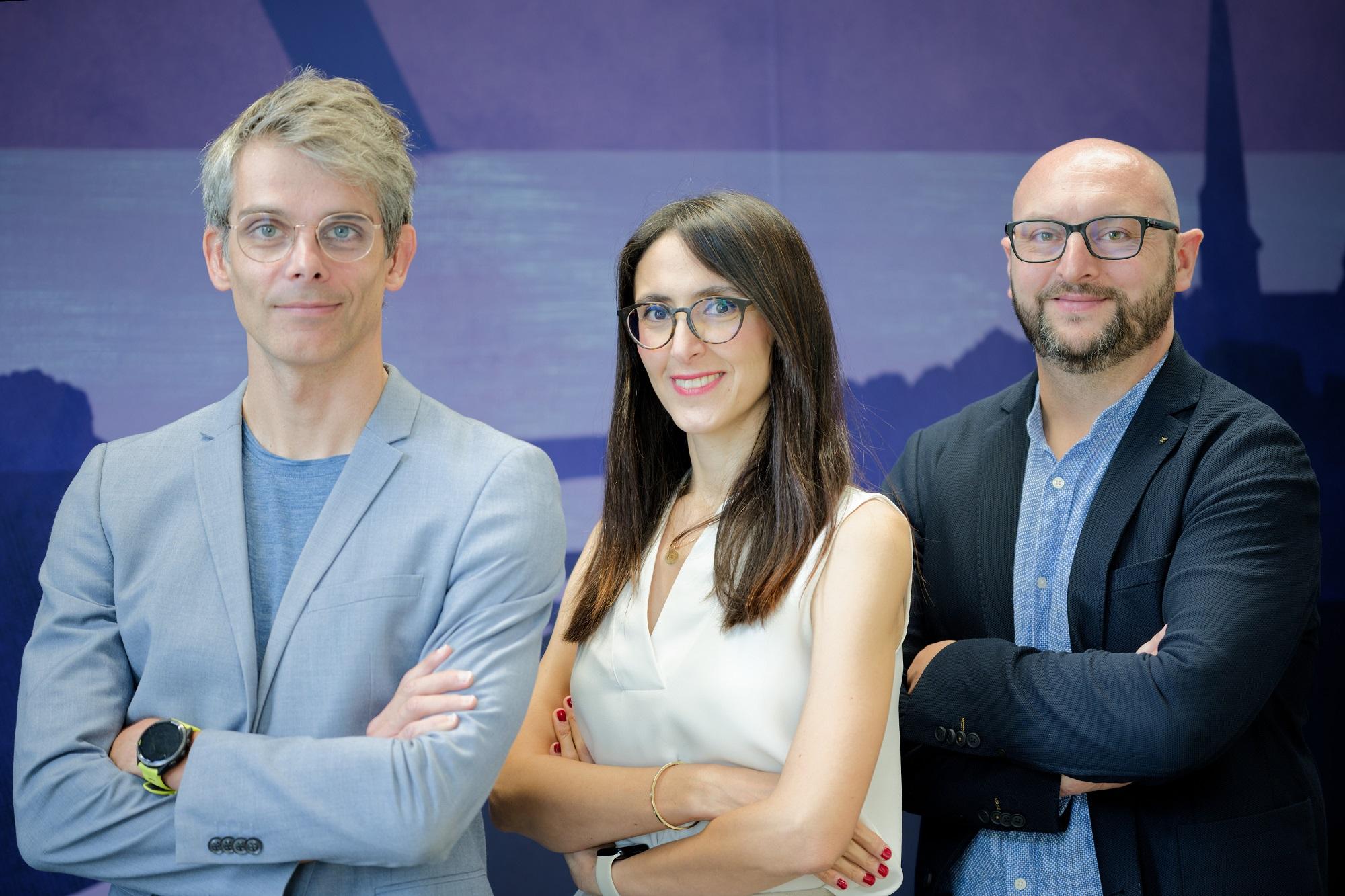
Ubitium was founded in 2024 by CEO Hyun Shin Cho and CTO Martin Vorbach. The company is headquartered in Düsseldorf. Vorbach has been working on reconfigurable computing architectures for more than three decades and has extensive experience in semiconductor development. According to the company, Ubitium holds 17 granted patents on its core technology. Additional patent applications are pending. The team also brings together experience from companies such as Intel, Nvidia, Apple, and Texas Instruments. In total, Ubitium cites more than 250 patents from its employees’ previous careers, as well as over 350 scientific publications. With the new funding, the startup plans to leverage this technical expertise to develop a commercial processor family.
Investors See Potential in Autonomous Systems
Florian Seibel’s investment underscores the importance of autonomous applications to the company’s strategy. The Quantum Systems co-founder points in particular to the requirements for drones, which must independently sense and process their environment even without a stable communication connection. Ibex Investors and OpenOcean also see the reconfigurable architecture as a way to adapt hardware development to the increasing demands of AI-based machines. However, whether Ubitium can commercialize its technology on a larger scale will only become clear with the next generation of chips and their deployment with customers. With $14 million in fresh capital, a test chip already manufactured, and the UB410 scheduled for 2027, the Düsseldorf-based company has a solid foundation for the next phase of development. The goal is to establish a universally applicable processor architecture for various applications in the field of Physical AI.

Newsletter
Startups, stories and stats from the German startup ecosystem straight to your inbox. Subscribe with 2 clicks. Noice.
LinkedIn ConnectFYI: English edition available
Hello my friend, have you been stranded on the German edition of Startbase? At least your browser tells us, that you do not speak German - so maybe you would like to switch to the English edition instead?
FYI: Deutsche Edition verfügbar
Hallo mein Freund, du befindest dich auf der Englischen Edition der Startbase und laut deinem Browser sprichst du eigentlich auch Deutsch. Magst du die Sprache wechseln?