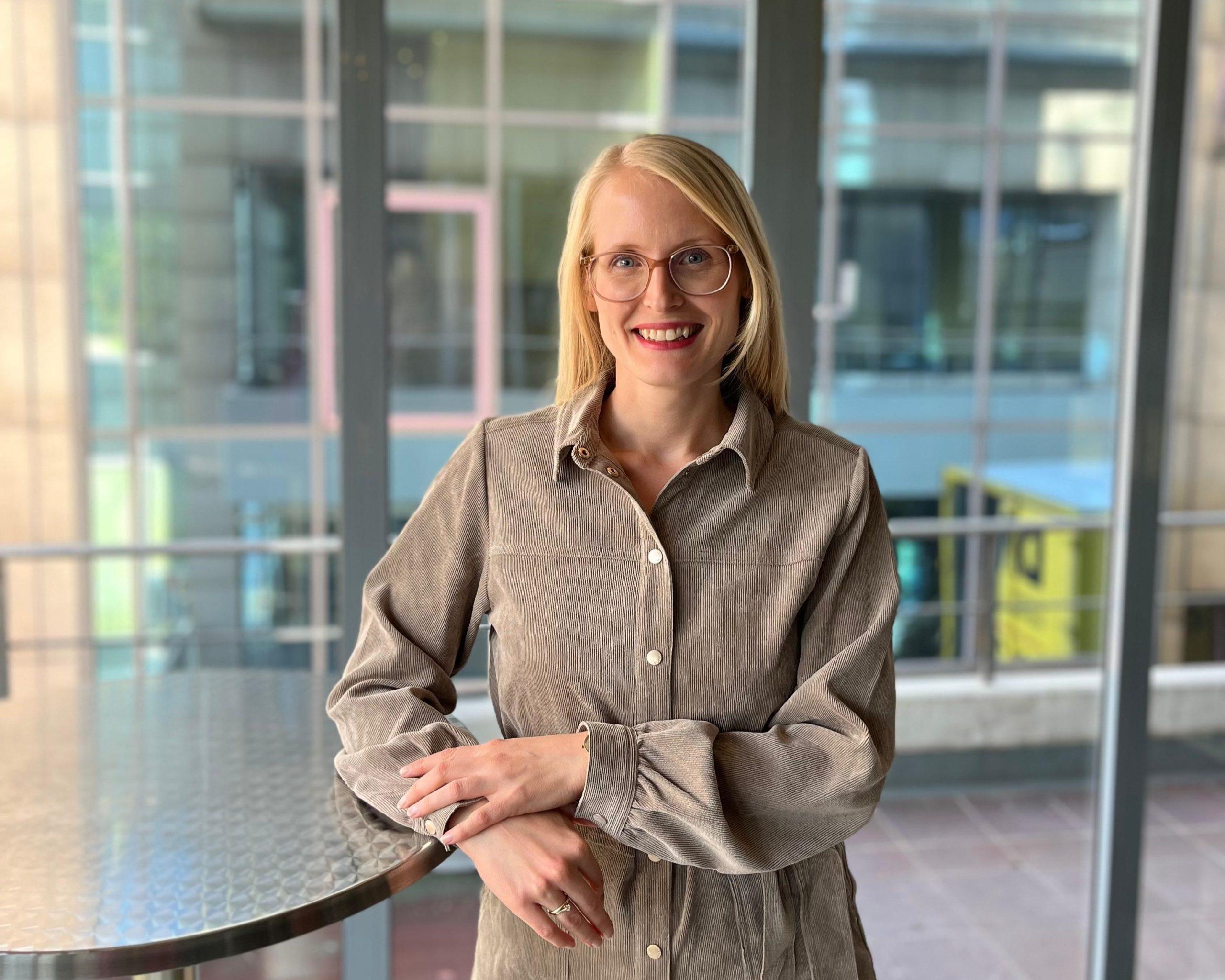
BIN – An investor network for Brandenburg’s next generation of entrepreneurs

The network, which is currently being established, aims to connect experienced entrepreneurs, business angels, family offices, and corporations with ambitious startups—with a particular focus on the early stages of a company’s development and on the entire state of Brandenburg.
The problem lies right at the beginning
Anyone starting a business often needs capital long before traditional venture capital funds get involved.
It is precisely this initial financing that is difficult to secure. Moreover, this phase is about more than just money. Young companies need people who have entrepreneurial experience themselves, who can open doors, scrutinize business models, help attract their first customers, and make their networks available.
This is precisely the traditional role of a business angel.
At the same time, there are numerous successful entrepreneurs in Brandenburg for whom investing in a startup could be of interest—but who have had little to no exposure to this form of investing so far.
BIN aims to lower this barrier to entry. The goal can be deliberately stated simply:
Every successful entrepreneur in Brandenburg should seriously consider investing in a startup at least once.
Not everyone will go on to become a business angel. Not everyone has to invest regularly. But significantly more people should learn about the opportunity to contribute capital and entrepreneurial experience to the next generation of companies.
It’s not just startups that need to be prepared
In doing so, BIN deliberately focuses on both sides.
Startups are, of course, expected to be “investor-ready.” They must know their numbers, be able to explain their business model, and understand the implications of an investment.
But an investor must also be “startup-ready.”
After all, traditional business experience cannot automatically be applied to startup investments.
Taking too large a stake in an early funding round can complicate subsequent VC financing. The combination of being an investor, a lender, and the most important customer at the same time can create problematic dependencies. And an angel investor who constantly interferes in day-to-day operations for a small investment can do more harm than good to a young company.
BIN is therefore designed to provide knowledge about equity structures, contracts, funding rounds, and the role of a business angel.
This is explicitly not just about seminars.
Investing Together and Learning Together
Peer learning is intended to be a central principle of the network.
New investors should have the opportunity to invest in companies alongside experienced angels and thus learn from real-world cases.
Such syndicated investments have another advantage: Not every investor has to be an expert in everything.
One angel investor might bring industry knowledge, another might have contacts with customers, and a third might have access to skilled workers or universities. Other investors tend to participate more passively because they are convinced by the team and the technology.
These diverse skills can form a consortium that offers a startup far more than just capital.
BIN therefore sees itself not merely as a matching platform between capital and startups, but as a network where investors complement one another and learn from each other.
A Closer Look at All of Brandenburg
Another focus is on the region.
Brandenburg’s startup ecosystem isn’t limited to Potsdam and the immediate Berlin area. Innovative companies are also emerging in Cottbus, Wildau, Frankfurt (Oder), Brandenburg an der Havel, and other parts of the state.
At the same time, there are small and medium-sized businesses and successful entrepreneurs in these areas who are sometimes barely visible outside their respective regions.
BIN therefore aims to establish local contacts at Brandenburg’s university campuses in the future. These contacts are intended to connect universities, startup initiatives, startups, and investors while ensuring that promising companies are not overlooked.
BIN expressly does not see itself as the sole actor in this effort.
Universities, colleges, startup centers, existing investor networks, and other ecosystem players should be able to become part of this structure.
The idea behind this: Brandenburg does not need one magnifying glass, but many magnifying glasses that bring to light what is emerging in the state.
Thinking of Brandenburg and Berlin as a Unit
At the same time, the concept does not end at the state border.
Berlin boasts an internationally visible startup and investor scene. Brandenburg, on the other hand, offers, among other things, industrial sites,
manufacturing expertise, universities, research centers, and a strong small- and medium-sized business sector.
Combining these two elements can become a particular strength of the capital region.
After all, Brandenburg doesn’t have to try to copy Berlin.
Perhaps one of the state’s strengths lies precisely in fostering companies that do not necessarily aim to become the next unicorn, but rather, with 100 or 200 employees, become highly specialized market or technology leaders.
Such companies can be attractive investment opportunities while simultaneously creating long-term jobs, expertise, and value in their regions.
Science + Entrepreneurship + SMEs + Capital
In doing so, BIN also forges an important connection within FUSION 2026.
Under the guiding principle “Connecting the Dots,” FUSION will bring together four areas on September 17 in Wildau:
Science + Entrepreneurship + SMEs + Capital.
Science gives rise to technologies. Entrepreneurs turn these into business models. SMEs become development partners, pilot customers, and gateways to the market. And capital enables growth.
BIN is intended to create a new structure, particularly at the last connection point—while also ensuring that capital is more closely linked to the other three areas.
The Brandenburg Investors Network will be officially unveiled at FUSION on September 17, 2026 . There, interested entrepreneurs and existing business angels can make initial connections with the network and with one another.
After that, the real work begins.
After all, in the long term, the goal isn’t simply to add another logo to Brandenburg’s startup ecosystem.
It’s about inspiring more people to work together to build the next generation of companies.
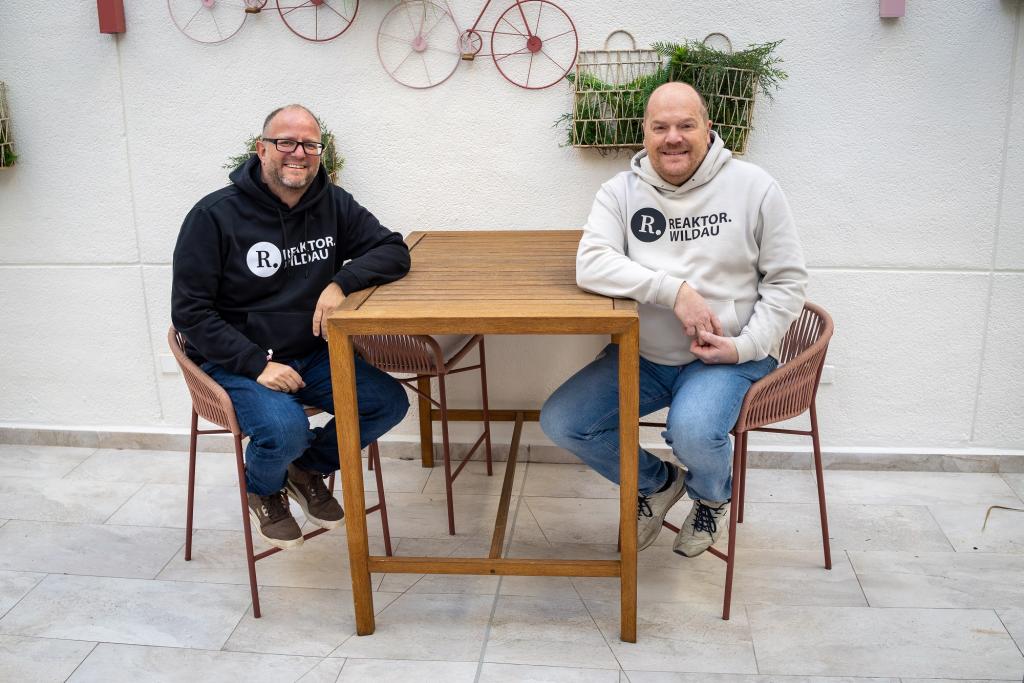
Interview with Rafael Kugel and Sascha Schubert
Rafael Kugel: Sascha , Brandenburg has startups, universities, funding programs, and—with Berlin—a huge capital market right next door. Why does it still need its own Brandenburg Investors Network?
Sascha Schubert: Because proximity alone doesn’t create a functioning network. Of course, Berlin is a major advantage for Brandenburg. It’s home to venture capital funds, business angels, family offices, and a very active startup scene. Nevertheless, in practice we see time and again that Brandenburg startups and potential investors don’t naturally find their way to each other. At the same time, there are many successful entrepreneurs in Brandenburg who bring capital, experience, and contacts to the table but haven’t necessarily seen themselves as part of the startup or business angel scene so far. It is precisely these worlds that we want to connect more closely. BIN is not intended to compete with existing networks in Berlin or Brandenburg. We want to bridge a gap and attract more people to startup investments.
Rafael: Sois Brandenburg primarilylacking capital?
Sascha: I think that would be an oversimplification. Capital is available. The bigger challenge is mobilizing it. A successful entrepreneur from Brandenburg might, in principle, be interested in investing in a young company. But then questions immediately arise: How do I find good startups? How do I evaluate an investment? What investment models are available? How does due diligence work? And who can I talk to about this? If getting started seems too complicated, often nothing happens at all.
That’s why we need not only more capital but also structures that make it easier to access startup investments.
Rafael: You’re addressing an interesting groupthere . Many successful small and medium-sized business owners would probably never describe themselves as “business angels.”
Sascha: Exactly . And that may be where one of Brandenburg’s greatest opportunities lies. We have many entrepreneurs who have built businesses over decades. They understand markets, customers, sales, production, human resources, and financing. For a startup, this knowledge can be at least as valuable as the capital invested.
An entrepreneur doesn’t have to suddenly become a traditional business angel with ten startups in their portfolio. Maybe it starts with a company whose technology or market they understand. If this leads not only to an investment but also to contacts with early customers, industry partners, or suppliers, it becomes particularly interesting.
Rafael: Who should get involved with BIN? Only experienced business angels? Sascha: No , definitely not.
Of course, we want to involve experienced business angels, family offices, and other professional investors. But just as important are people who have never invested in a startup before. These can be entrepreneurs, former founders after an exit, executives, or other private investors with an entrepreneurial background. We want to keep the barrier to entry deliberately low. No one has to be a startup investor already to become part of the network. On the contrary: BIN is also meant to be a place where people can learn how startup investments work.
Rafael: What exactly would an investor get from BIN?
Sascha: In my view,three things are particularly important: access, knowledge, and exchange. Access means getting to know interesting startups without having to constantly search for them yourself. Knowledge means being able to better evaluate investments. This includes topics such as company valuation, investment agreements, due diligence, tax issues, and portfolio strategies. And exchange means not having to make decisions alone. Co-investments, in particular, can be exciting. Multiple investors can invest together, contribute their different experiences, and spread the risk. We want to create a trusting community for this purpose.
Rafael: But there are already quite a few investor networks and pitch events. How will you prevent BIN from ultimately becoming just another mailing list and a few events a year?
Sascha: That’s actually one of the key questions. A network isn’t successful just because it has a lot of members on a list. It’s successful when it leads to concrete relationships and, ideally, investments. That’s why we want to approach BIN primarily from the investors’ perspective. Not: “We have ten startups—who wants to see them?” but rather, first: “What topics interest our investors?” What technologies do they understand? At what stage do they want to invest? What scale of deals are of interest? On this basis, we can make much more targeted matches. And, of course, the quality has to be right. If someone invests their time in an investor network, they need to be able to trust that the companies being presented are relevant and properly prepared.
Rafael: Does Brandenburg actually have to compete with Berlin when it comes to venture capital?
Sascha: No . In my view, that would actually be the wrong approach. We should leverage our proximity to Berlin while also capitalizing on our own strengths. Brandenburg has strong universities and research institutions, plenty of space for industrial applications and test sites, and a strong SME sector with enormous industry expertise. This can be a major advantage, especially in areas like deep tech, energy, mobility, manufacturing, or other technology-oriented business models. After all, a startup needs more than just a desk and capital. At some point, it needs customers, production capabilities, pilot projects, and real-world applications. This is where Brandenburg can be very strong.
Rafael: So the connection between startups and SMEs would be beneficial not only for the startups but also for the companies themselves?
Sascha: Absolutely . We often talk about what established companies can do for startups. But we should flip the perspective. Many small and medium-sized enterprises are currently grappling with digitalization, artificial intelligence, energy, automation, or the shortage of skilled workers. Startups are developing new solutions precisely in these areas. An investment can therefore also serve as a strategic gateway to innovation. The entrepreneur isn’t just investing money; they also gain insight into new technologies and business models at a very early stage. This can be extremely valuable for both sides.
Rafael: At FUSION, we deliberately talk about “Science + Entrepreneurship + SMEs + Capital.” Where do you see BIN fitting into this dynamic?
Sascha: Actually , right at the last link in the chain. Science can give rise to technologies. Technologies can give rise to startups. Small and medium-sized enterprises can become pilot customers, partners, or market enablers. But at some point, a growing company needs capital. If these four areas operate in isolation from one another, we’re squandering enormous potential. When we bring them together, a functioning innovation ecosystem emerges. That’s why BIN fits so well with the FUSION concept. We don’t just want to add another player to the mix—we want to forge connections.
Rafael: What would have to happen for you to say in three years, “BIN is working”?
Sascha: My most important metric wouldn’t be the number of members. I’d want to know: How many people have invested in a startup for the first time through BIN? How many co-investments have been made? How many startups have secured capital as a result? And how many long-term relationships have been formed between investors, startups, and companies?
If we manage to turn successful entrepreneurs into active startup investors as well, we’d have achieved a lot. And of course, it would be great if successful founders went on to invest again themselves later on. That’s how a cycle develops over time.
Rafael: And if someone reading this says, “I have entrepreneurial experience and find startup investments interesting, but I’ve never done it before”—is BIN the right place for them?
Sascha: That’sexactly the kind of person we want to reach. You don’t have to already have five investments, and you don’t have to invest tomorrow.
Anyone who’s curious about innovative companies, can contribute entrepreneurial experience, or can generally see themselves investing in startups in the future should reach out to us. BIN is currently in the process of being established. That also means the first members have the opportunity to help shape the network.
And perhaps that’s the most important message: Brandenburg doesn’t just need people who found startups. We also need more people who are willing to believe in these companies, contribute their experience, and take risks alongside them.

Newsletter
Startups, stories and stats from the German startup ecosystem straight to your inbox. Subscribe with 2 clicks. Noice.
LinkedIn ConnectFYI: English edition available
Hello my friend, have you been stranded on the German edition of Startbase? At least your browser tells us, that you do not speak German - so maybe you would like to switch to the English edition instead?
FYI: Deutsche Edition verfügbar
Hallo mein Freund, du befindest dich auf der Englischen Edition der Startbase und laut deinem Browser sprichst du eigentlich auch Deutsch. Magst du die Sprache wechseln?