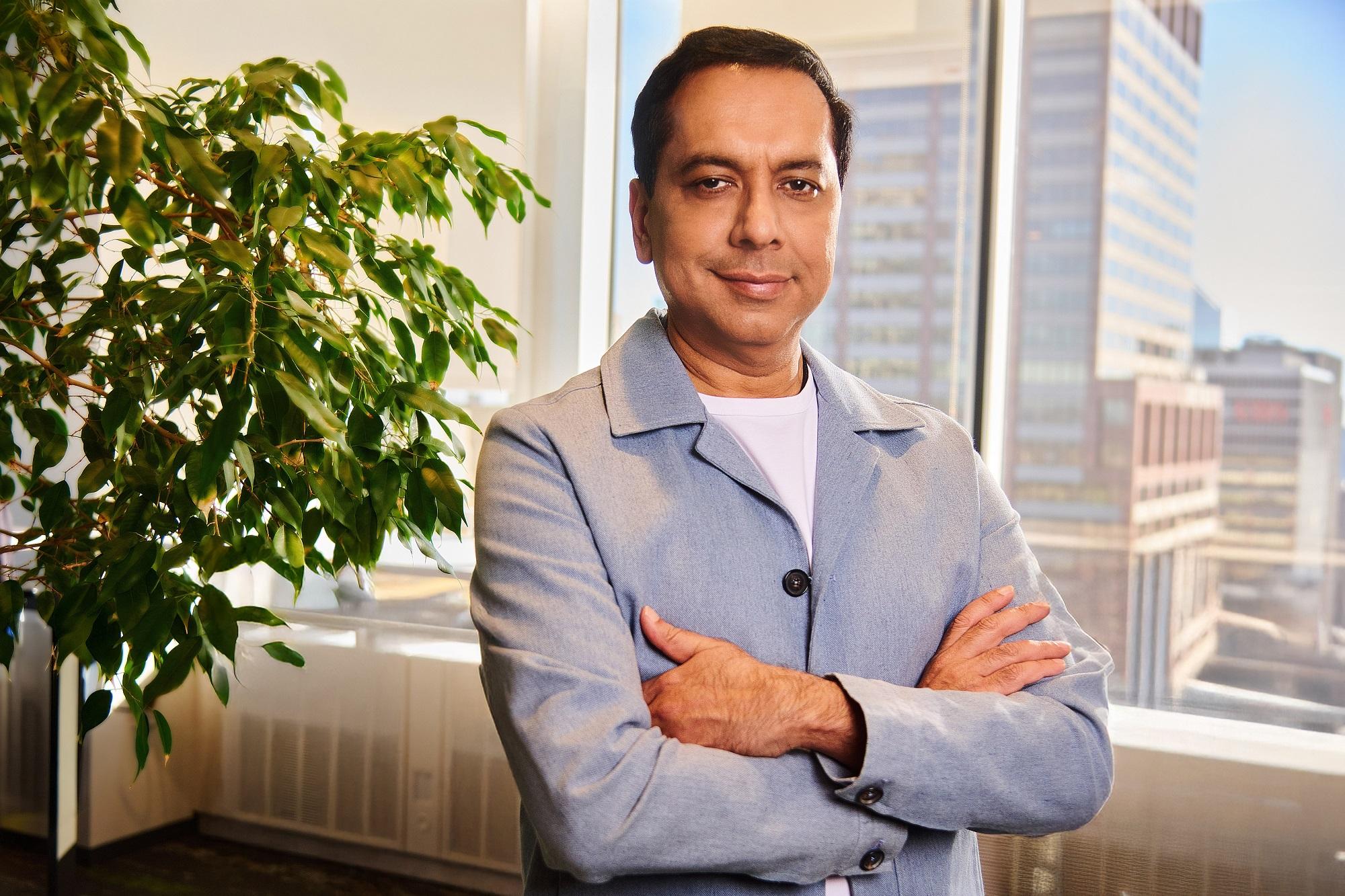
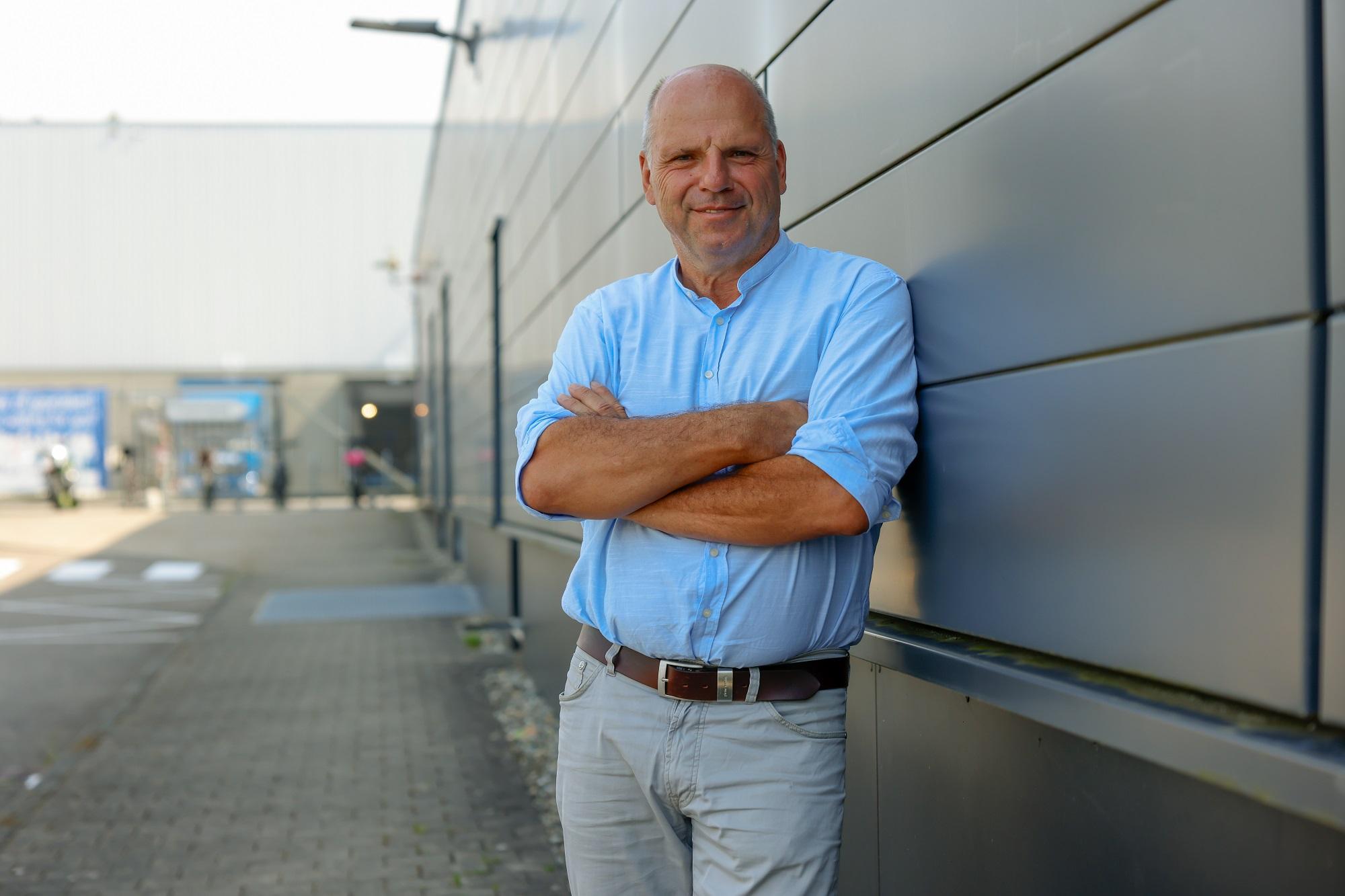
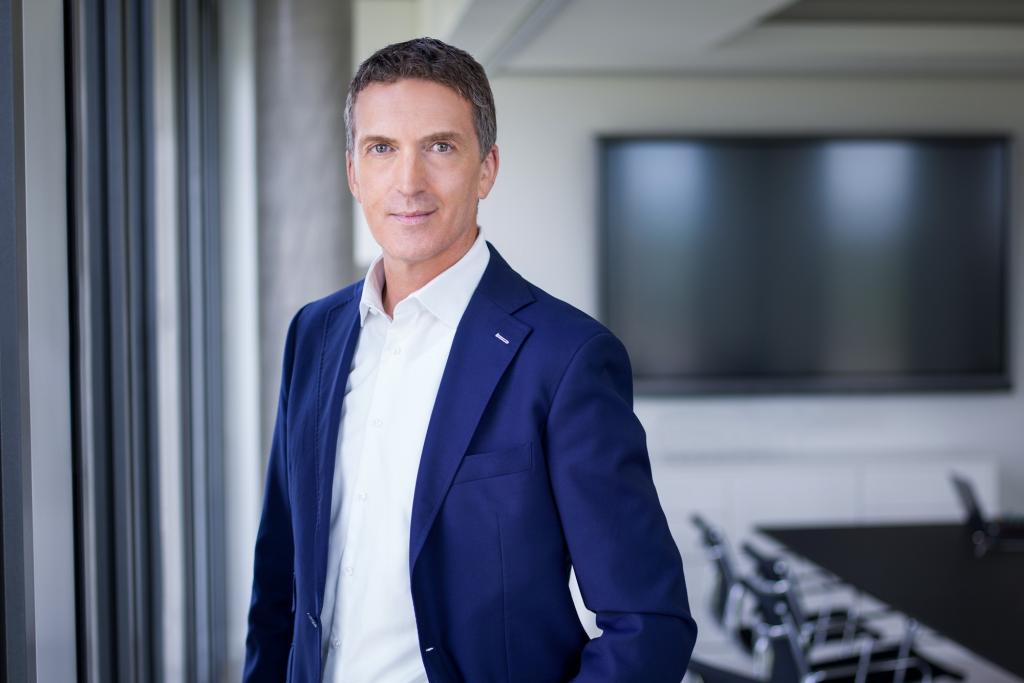
Ulrich Scheppan, Chairman of the Board of the Investment Bank of the State of Brandenburg (ILB), on the current state of the startup scene in Brandenburg

1. Mr. Scheppan, in your opinion, does Brandenburg have enough innovative companies? Or do many more need to be established?
Brandenburg currently has a much stronger innovation base than many people outside the state realize. Together with Saxony, we are the East German state with the highest number of start-ups, and Potsdam is even among the cities in Germany with the highest number of start-ups. At the same time, research-intensive sectors such as energy technology, the healthcare industry, microelectronics, and mobility are growing very dynamically.
But of course, innovation is an ongoing process. If we want to create more value, more skilled jobs, and greater technological autonomy in the future, more innovative companies must emerge. This would be particularly desirable in the field of industrial manufacturing. The good news is: The conditions for this have rarely been better in Brandenburg than they are today. We have a population that continues to grow, a strong scientific community, and proximity to the capital region. And thanks to the structural transformation in Lusatia, entirely new beacons of research and innovation are emerging, offering a solid infrastructure for new ideas and business locations.
2. Is financing currently one of the biggest barriers to growth?
Overall, I cannot say that this is the case for Brandenburg. Financing a startup is always an important factor, but in Brandenburg, no good idea has to fail because of it. Our funding landscape and our venture capital opportunities are structured accordingly. Many startups face greater challenges in areas such as regulatory requirements, a shortage of skilled workers, or access to international markets.
The financial challenges tend to be more pronounced in technology-intensive projects with long development cycles. In these cases in particular, it often takes years to generate initial revenue. Such companies need investors who are patient and willing to take risks. That is why, as a development bank, we see our role as supplementing private capital and sharing risks in the early stages. We do this very successfully through our subsidiary Brandenburg Kapital, which invests in companies via venture capital.
3. Where do you see the biggest funding gap: startup, seed, growth, or scale-up?
In my view, the biggest challenge now lies less in the startup phase and more in the growth and scale-up phases.
For the early stages, there is now a fairly well-developed range of support and financing options in Germany—not only in Brandenburg but nationwide. Things become more challenging when companies need tens of millions to expand internationally, build production capacity, or tap into new markets. It is precisely during this phase that we often see German companies relying on international investors. That is why we are working primarily with the state’s Ministry of Economic Affairs to further strengthen the local ecosystem.
Last year, the state government also demonstrated that this entire issue is a priority by establishing six startup centers. Although the centers tend to focus on the seed phase, they can already provide important impetus there.
4. What particular challenge does deep tech present?
Deep-tech companies often solve highly complex technological problems. For example, they develop new battery technologies, medical technology, biotechnological processes, or quantum technologies.
The particular challenge for investors is that there can often be a gap of several years between research success and market success. Patents must be secured, regulatory hurdles overcome, and substantial sums invested before the first products can even be sold.
That’s why deep tech needs more than just capital. It needs access to research institutions, specialized networks, entrepreneurial experience, and investors with staying power. This is precisely why the science hubs in Potsdam, Wildau, Cottbus, and Luckenwalde are so important to Brandenburg.
Ultimately, when it comes to deep tech, we should always keep one thing in mind: don’t be afraid of ideas that seem too big. Our shared goal should be for Europe to once again play a significant role on the international stage in future technologies such as quantum computing. Perhaps someday with a unicorn from Brandenburg? To achieve this, we must create the opportunities.
5. What role can a development bank play, and where must private capital step in?
A development bank can build bridges. We can provide support where the market alone isn’t yet sufficient—for example, through grants, low-interest loans, or equity capital.
However, our goal is not to replace private investors. On the contrary: public funding works best when it mobilizes and leverages private capital. In the long term, the scaling of successful companies will always have to be financed primarily by the market and private investors.
Development banks can provide the initial impetus and, together with policymakers, create the necessary infrastructure. For the major growth leap, business angels, venture capital funds, and strategic investors are then also needed.
6. How can Brandenburg attract more business angels and venture capital to the state?
Capital follows good business ideas. That’s why we must continue to raise the profile of the region, invest in our research landscape, and encourage young people to think innovatively and start their own businesses. We’re on the right track here. Last year, the ILB provided 107 million euros in support for innovation and research projects. That’s a record for our institution.
In addition, events like FUSION bring together founders, scientists, small and medium-sized businesses, and investors. These are exactly the kinds of platforms we need. It’s also important that we produce more success stories from startups. Every successful exit attracts new investors, mentors, and business angels.
7. Have public funding programs become too complicated?
Funding programs must manage public funds carefully. This inevitably leads to certain formal requirements that, depending on the funding pool, are sometimes perceived as bureaucratic and even complicated. That’s why making procedures simpler and faster is an important part of our daily work. Various projects are currently underway with the state government, and the ILB is also contributing to a special parliamentary committee on reducing bureaucracy.
In my view, funding policy is successful when founders can focus on their business model rather than on forms. We need to get back to that.
8. What do you look for in companies that need growth capital?
Ultimately, we always invest in three things: a strong team, a relevant market, and a compelling growth strategy. The question that’s particularly important to us is: What problem is being solved, and why is the solution better than existing alternatives?
Beyond that, we naturally look at scalability, technological differentiation, and the management team’s ability to drive growth. Especially during growth phases, it’s often not the idea itself that determines success, but rather the quality of its execution.
9. What can Brandenburg and Berlin learn from each other when it comes to startup financing?
Berlin boasts an enormous concentration of startups, investors, international talent, and expertise in managing this ecosystem. The entire metropolitan region benefits from this. Brandenburg, in turn, brings strengths that are becoming increasingly important for many technology-oriented companies: available space, industrial infrastructure, proximity to production sites, a very high share of renewable energy in the power grid, and comparatively low costs.
The future therefore lies less in competition than in cooperation. Together, the Berlin-Brandenburg metropolitan region is significantly stronger than either region on its own.
10. What would need to happen for significantly more large technology companies to emerge in Brandenburg in the coming years?
In my view, we need three things for this:
First, we must further improve the transfer of research into commercial applications. Brandenburg has strong universities and research institutions, and technology transfer is already functioning well—supported, by the way, by the ILB. However, there is still room for improvement here.
Second, we need more growth capital for the scaling phase.
And third, we need to attract and retain more international talent. Technology companies thrive particularly well where innovative ideas, capital, and skilled workers come together.
The conditions for this are in place: Brandenburg is the only eastern German state with continuous population growth, the number of people employed in research and development has doubled in recent years, and key future-oriented industries are developing dynamically. We can build on this foundation.
11. In your opinion, which three people or groups should definitely meet at FUSION?
First: Young people from universities who are eager to start a business, paired with experienced small and medium-sized business owners. This is often where the most valuable exchanges take place.
Second: Deep-tech startups with business angels and venture capital investors. Good technologies need early access to capital and expertise.
Third: Researchers, companies, and public funding institutions. Innovation usually arises within networks. FUSION is an ideal platform for this. It brings together people who, in the best-case scenario, can turn good ideas into successful companies.
Thank you very much for the interview and the fascinating insights into the development of Brandenburg’s startup ecosystem, Mr. Scheppan.
You can find plenty of current news, background information, and in-depth articles on the topic directly on the website of the Investment Bank of the State of Brandenburg.
FUSION as a Meeting Place for Brandenburg’s Startup Ecosystem
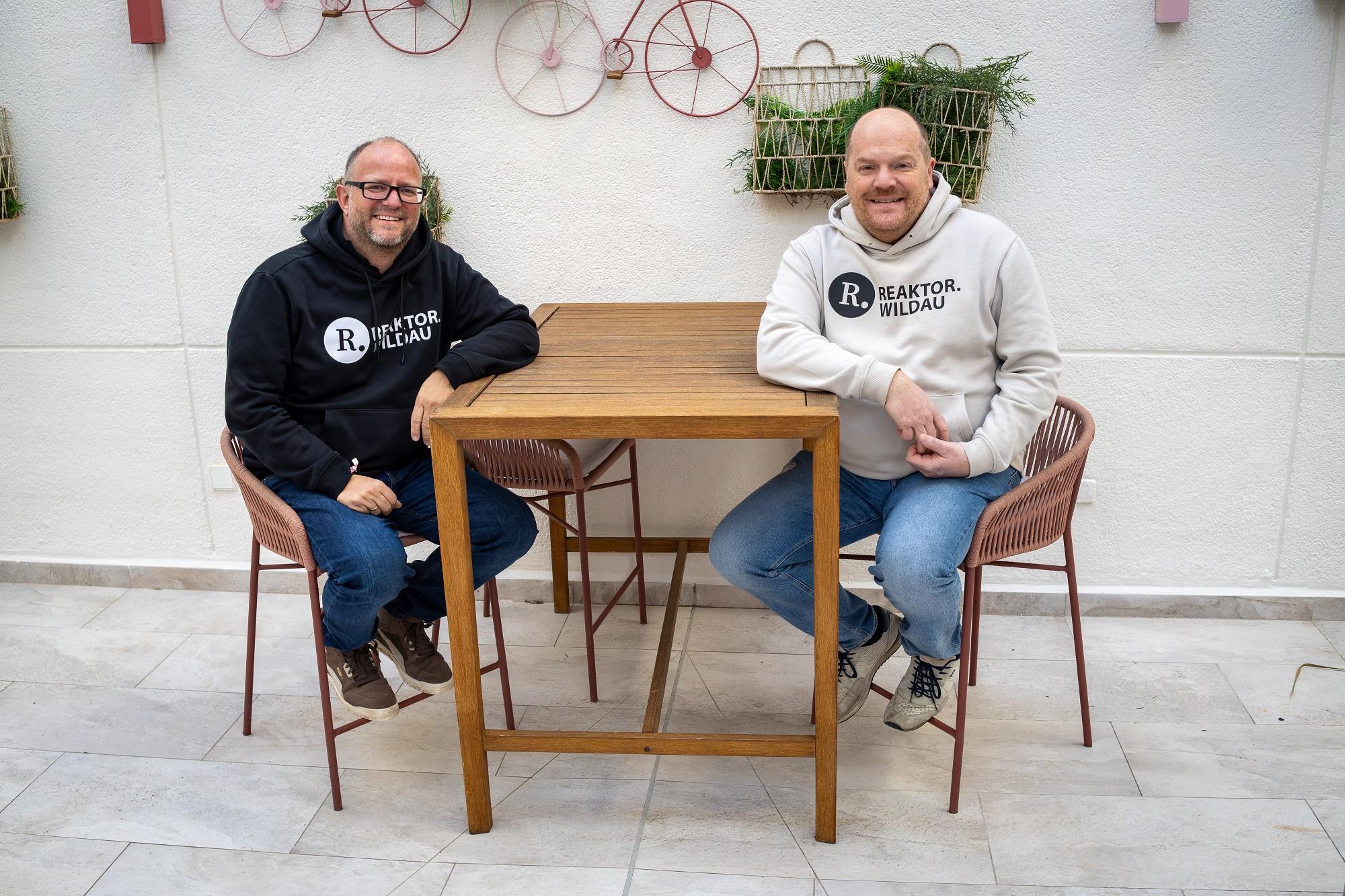
The FUSION in Wildau. The event brings together founders, startups, academia, small and medium-sized businesses, investors, and public funding institutions, thereby creating a space for exchange across the boundaries of the individual stakeholder groups. Such interfaces are particularly relevant for a location like Brandenburg, which boasts strong academic institutions and growing technology sectors: Research and innovative ideas must meet entrepreneurial experience, capital, and suitable networks so that growing companies can emerge. FUSION sees itself as a platform where such connections are forged and existing structures within Brandenburg’s startup ecosystem are more closely linked.




Newsletter
Startups, stories and stats from the German startup ecosystem straight to your inbox. Subscribe with 2 clicks. Noice.
LinkedIn ConnectFYI: English edition available
Hello my friend, have you been stranded on the German edition of Startbase? At least your browser tells us, that you do not speak German - so maybe you would like to switch to the English edition instead?
FYI: Deutsche Edition verfügbar
Hallo mein Freund, du befindest dich auf der Englischen Edition der Startbase und laut deinem Browser sprichst du eigentlich auch Deutsch. Magst du die Sprache wechseln?