Brandenburg Doesn't Have to Copy Berlin

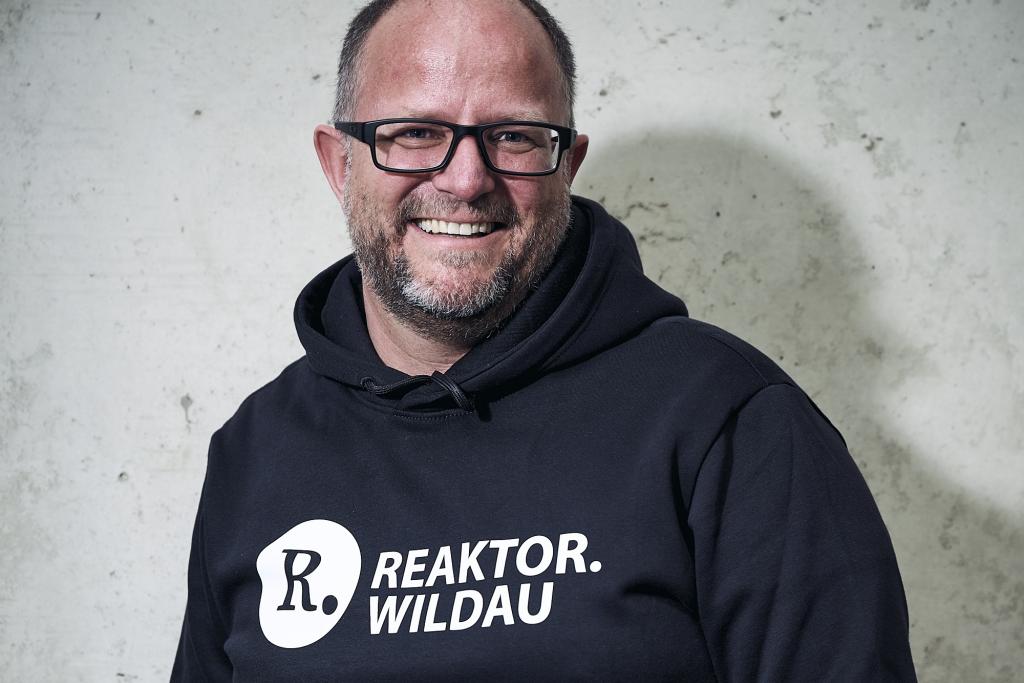
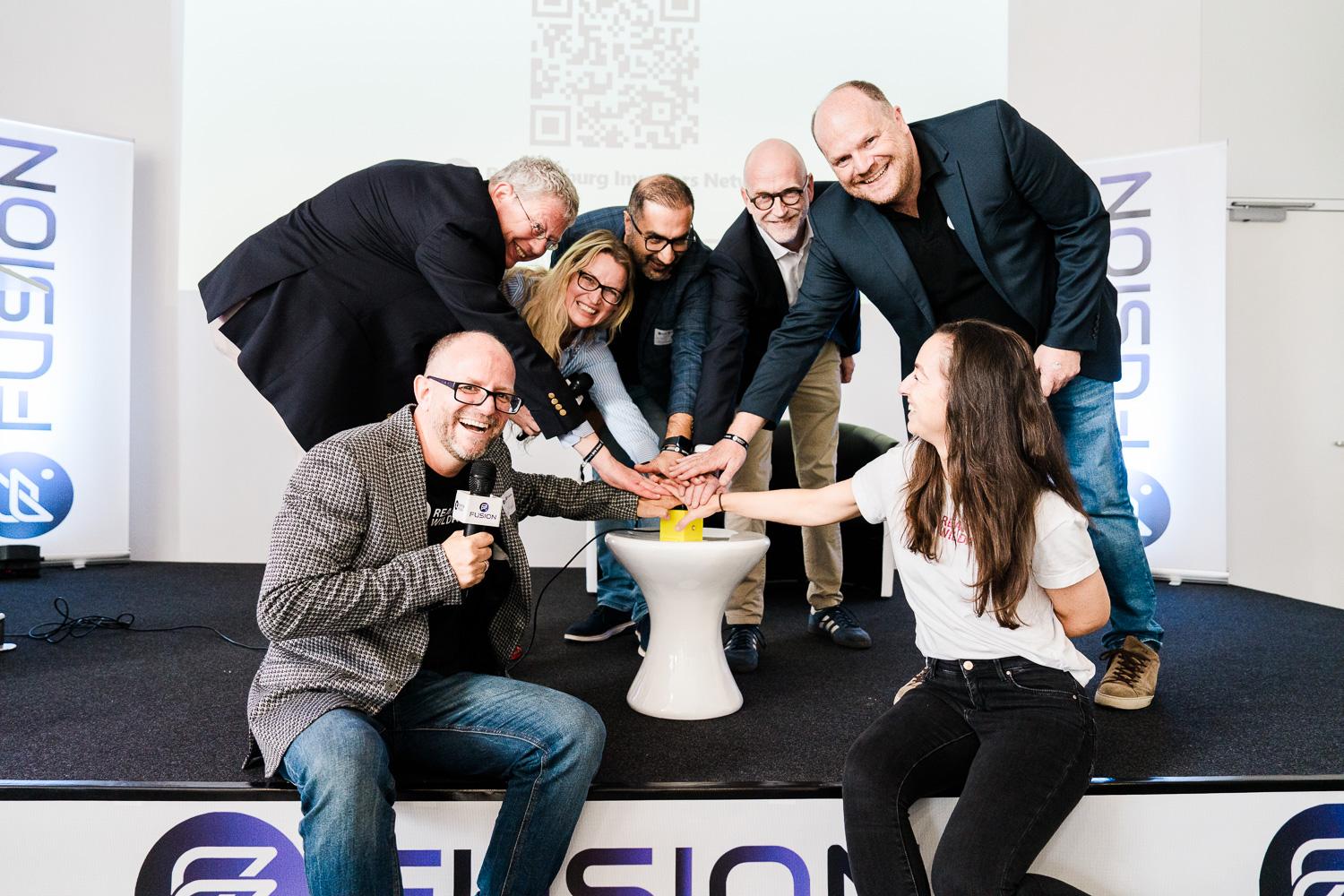
Berlin is one of Europe’s leading startup hubs. Right on the capital’s doorstep, an ecosystem with entirely different conditions is simultaneously taking shape: Brandenburg boasts excellent research institutions, a strong small and medium-sized business sector, industrial sites, land, and growing technological expertise. Rafael Kugel is convinced: Brandenburg should not try to become a second Berlin. With the FUSION , the Reaktor Wildau therefore aims to bring together research, entrepreneurship, small and medium-sized enterprises, and capital in a more systematic way.
Science + Entrepreneurship + SMEs + Capital—that’s the idea behind FUSION. 1. Why does Brandenburg even need an initiative like FUSION?
Because Brandenburg actually has an astonishing number of ingredients for a strong innovation ecosystem—but hasn’t yet connected them consistently enough.
We have universities and research institutions, innovative startups, a high-performing SME sector, industrial companies, economic development agencies, and investors. The problem is often not that something is missing. The problem is that these worlds still too often exist side by side.
That’s exactly where FUSION comes in. We don’t want to create yet another event where people who already know each other are the main attendees. We want to bring different worlds together: Science + Entrepreneurship + SMEs + Capital.
When this leads to concrete collaborations, pilot projects, customer relationships, investments, or new companies, a network becomes a functioning ecosystem.
2. Berlin already has a huge startup scene. Why should anyone travel to Wildau for a startup event?
That’s exactly why.
Brandenburg shouldn’t try to copy Berlin. Berlin has an enormous concentration of startups, investors, and international talent. That’s a major strength—and for Brandenburg, it’s even an advantage right on its doorstep.
But Brandenburg has other strengths. Here, technology and science meet industrial applications, small and medium-sized businesses, energy, logistics, mobility, and real-world infrastructure.
Wildau is a great place for this. We’re directly connected to Berlin, yet at the same time right in the heart of Brandenburg. Here, we have the Wildau University of Applied Sciences as a strong hub for science, technology companies, and a growing startup ecosystem.
That’s why, for me, the question isn’t: How can Brandenburg become the next Berlin? Rather: How can Brandenburg develop its own distinct profile—and how can we simultaneously leverage our proximity to Berlin?
3. What can Brandenburg offer founders that Berlin cannot? Above all, proximity to real-world applications.
For example, anyone working on energy technologies, mobility, manufacturing, logistics, new materials, or other deep-tech topics will eventually need more than just a desk and a good network. You need pilot customers, test sites, manufacturing facilities, space, and companies willing to try out new technologies.
Brandenburg has plenty of these.
Added to this is a strong small and medium-sized business sector. For startups, these companies can serve as development partners, pilot customers, first major clients, or even strategic investors.
That’s why I wouldn’t pit Berlin and Brandenburg against each other. On the contrary: the combination is intriguing. Berlin brings an enormous concentration of startups, international talent, and capital. Brandenburg contributes research, small and medium-sized enterprises, industry, space, and application opportunities. If we combine these strengths, we create a location that can be envisioned on a scale far greater than within state borders.
4. Where is the connection between universities, startups, and small and medium-sized enterprises still not functioning well enough today?
In many areas, there is a lack of a systematic transition.
Universities generate knowledge that could give rise to companies. Startups develop solutions for which they need pilot customers. At the same time, small and medium-sized enterprises face very specific challenges—ranging from digitalization and a shortage of skilled workers to energy and automation.
Ideally, these three groups should be collaborating continuously.
In reality, companies often don’t know which technologies are being developed right on their doorstep. Researchers don’t always understand the specific problems faced by companies. And startups have a hard time reaching the right decision-makers.
We must therefore focus much more on specific challenges: What problem does a company have—and who in academia or the startup scene can solve it?
When this connection works, all three parties benefit.
5. What specific experiences do you have with the startups at Reaktor Wildau?
Above all, we see how quickly startups can develop when they’re exposed to the market early on.
A good idea alone isn’t enough. The key is to figure out very quickly: Who really has this problem? Who is willing to pay for the solution? How do I land my first pilot customer? And how does a project become a scalable company?
That’s why, at Reaktor, we try to get startups out of their own bubble as early as possible. We connect them with companies, experts, investors, and potential customers.
Something interesting happens in the process: Often, a single good conversation changes more than weeks of theoretical work. An entrepreneur might say, for example, “I’m familiar with that problem—but I need the solution to be a little different.” Feedback like this is incredibly valuable for a young company.
6. In your experience, what do startups need more: capital or customers? If I had to choose: customers.
Of course, startups need capital. Especially in deep tech, development can be very capital-intensive. But capital alone doesn’t prove that a business model works.
A customer does.
A first pilot customer provides feedback, references, data, and—in the best-case scenario—revenue. Above all, they force a startup to develop a solution to a real problem.
That’s why I think it’s so important to involve small and medium-sized businesses more closely in startup ecosystems. We talk a lot about venture capital. We should be talking at least as much about how startups acquire their first five relevant customers.
The first major contract can be more valuable to a startup than the first investment.
7. Why did you choose deep tech, energy transition, and business succession as your focus areas?
Because these topics align very well with Brandenburg’s actual strengths and challenges.
Deep tech often emerges from science and research. Brandenburg has outstanding universities and research institutions in this area.
The energy transition, on the other hand, doesn’t just take place at conferences, but very concretely on the ground: in energy generation, grids, storage, industry, heating, and mobility. Brandenburg is a vast field of application for this.
And business succession is one of the major structural challenges facing small and medium-sized enterprises. At the same time, it holds enormous entrepreneurial potential.
At first glance, these three topics may seem unrelated. At their core, however, they all revolve around the same question: How can knowledge, technology, or existing economic assets be transformed into new entrepreneurship?
8. Is business succession even a startup topic? Absolutely. We just need to broaden our view of what it means to start a business.
Starting a business doesn’t necessarily mean starting from scratch with an idea. You can also take over an existing company and develop something new from it.
This can be particularly attractive for young entrepreneurs: there are already customers, employees, expertise, products, and revenue. At the same time, many of these companies are facing major transformation challenges—digitalization, automation, AI, new business models, or the energy transition.
This is essentially an ideal starting point for entrepreneurship.
That’s why we should talk more about “entrepreneurship through acquisition.” When a new generation takes over and further develops established Brandenburg-based companies, I consider that just as much entrepreneurship as founding a traditional startup.
9. What needs to have happened by the evening of September 17 for you to say: “FUSION was a success”?
Not as many business cards as possible, but as many concrete next steps as possible.
If a startup has scheduled a meeting with its first pilot customer by the end of the evening, a medium-sized company has discovered a technology that can solve a real problem, a scientist finds a partner for a spin-off, or an investor discovers a company they’d like to continue supporting—then FUSION has worked.
Of course, we want to create an event full of energy, good conversations, and exciting people. But for me, the real impact begins on September 18.
The success of FUSION is evident in what happens afterward.
10. Where do you see Brandenburg’s startup ecosystem in five years?
I hope that by then we won’t even have to debate so much whether Brandenburg is a startup hub.
It should be a given that companies emerge from Brandenburg’s universities. That medium-sized companies regularly collaborate with startups. That successful entrepreneurs reinvest in new companies. And that founders from Berlin, Germany, and Europe deliberately come to Brandenburg because they find customers, technology partners, space, and excellent conditions for growth here.
To achieve this, we don’t need to try to copy Berlin.
We should confidently focus on what Brandenburg already has and develop our own model from it.
Science + Entrepreneurship + SMEs + Capital.
If we succeed in permanently linking these four areas, Brandenburg can become one of the most attractive locations for technology-oriented entrepreneurship in Germany.


Newsletter
Startups, stories and stats from the German startup ecosystem straight to your inbox. Subscribe with 2 clicks. Noice.
LinkedIn ConnectFYI: English edition available
Hello my friend, have you been stranded on the German edition of Startbase? At least your browser tells us, that you do not speak German - so maybe you would like to switch to the English edition instead?
FYI: Deutsche Edition verfügbar
Hallo mein Freund, du befindest dich auf der Englischen Edition der Startbase und laut deinem Browser sprichst du eigentlich auch Deutsch. Magst du die Sprache wechseln?