The 2026 German-Indian Innovation Summit Focuses on Joint AI and Industrial Projects

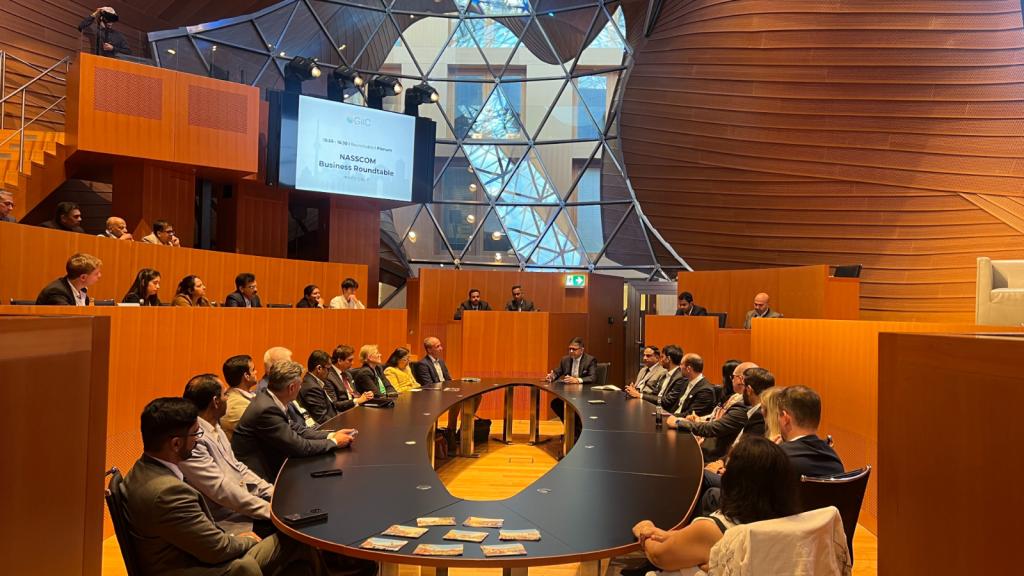
More than 300 representatives from business, politics, and research gathered at the German Indian Innovation Summit 2026 in Berlin. Under the theme “AI for Industries,” participants discussed closer cooperation between Germany and India in areas such as mobility, manufacturing, aerospace, defense, and healthcare. The focus was not limited to long-term goals: Several concrete initiatives were presented, including a new partnership between GIIC and NASSCOM, the India Desk Germany, and a joint innovation challenge.
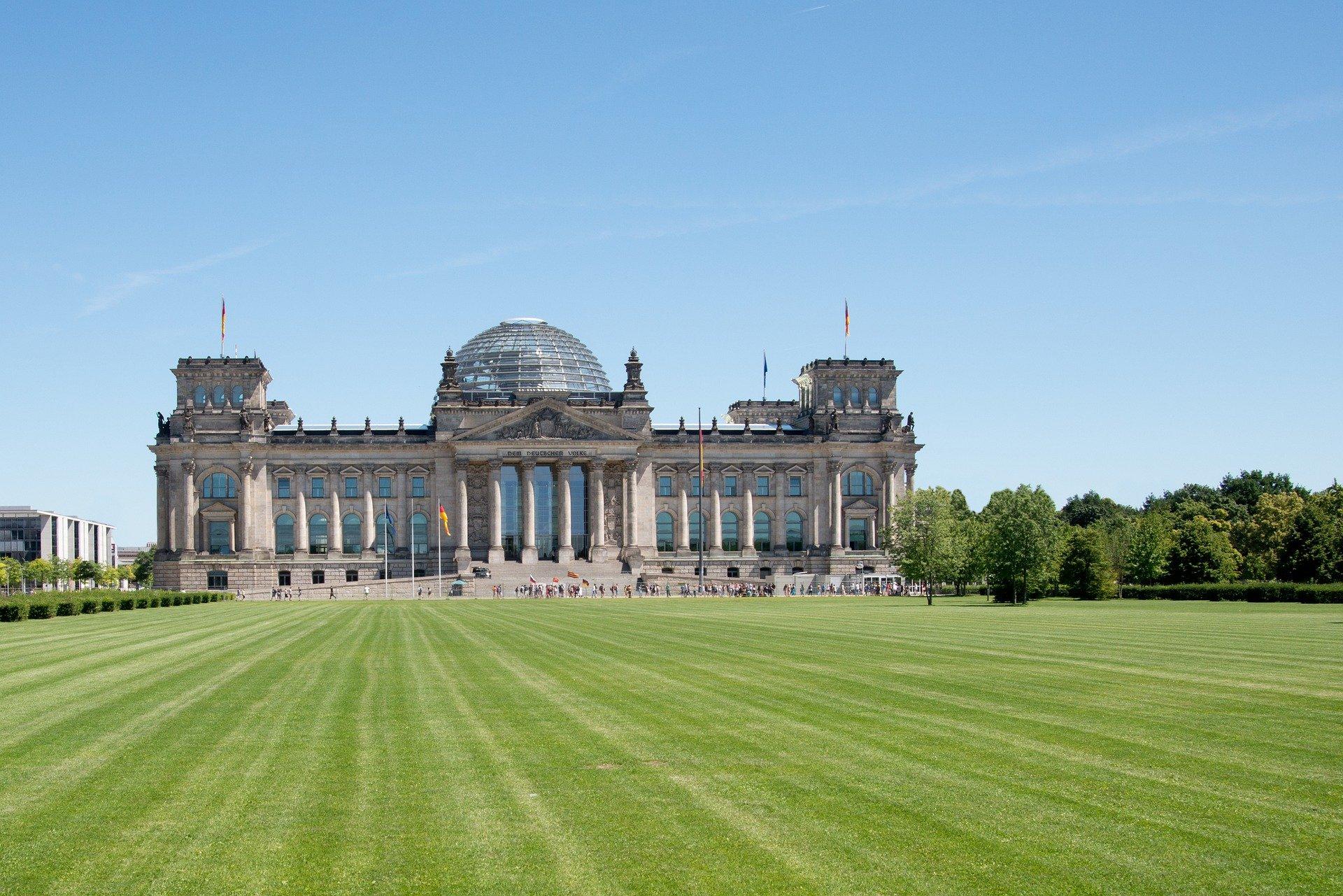
The summit was organized by the German Indian Innovation Corridor (GIIC) at AXICA near the Brandenburg Gate. The association aims to strengthen networking among companies, startups, investors, and institutions in both countries.
Shared Vision for 2035
GIIC Chair Jan Lachenmayer and Vice Chair Upen Barve presented a shared vision for the year 2035 at the summit. Under this vision, Germany—or rather, Europe—and India are to form a stronger common axis for innovation and economic growth.
From the organizers’ perspective, the different economic starting points complement one another. While German industrial companies face cost and competitive pressures, the Indian economy is growing and continues to expand its technological and digital capabilities.
The GIIC therefore aims in particular to promote joint value creation and technology development between the two markets.
“It’s not just about trading more with each other, but especially about developing more together to enable joint value creation,” explained Lachenmayer.
India Desk Aims to Facilitate Access to Europe for Indian Companies
A key component of this strategy is the India Desk Germany, which the GIIC is implementing in collaboration with Berlin Partner for Business and Technology and NLND.
The initiative is designed to facilitate access to the German and European markets for Indian startups and companies via Berlin. At the summit, representatives from the participating organizations reported on their initial experiences with the program.
The focus is particularly on companies in the fields of artificial intelligence, deep tech, mobility, aerospace, and life sciences.
For Berlin Partner, the India Desk is intended to serve as a direct gateway to Berlin’s innovation ecosystem and support companies in their expansion into Europe.
GIIC Collaborates with NASSCOM
Another announcement concerns the collaboration with the Indian technology association NASSCOM.
GIIC and NASSCOM plan to work together in the future to better connect German companies with the Indian Global Capability Center model. Such centers are used by international companies to outsource IT, development, and research tasks to India, among other things.
GIIC cites SAP, Siemens, and Bosch as examples of German corporations that already operate such facilities in India.
According to GIIC, NASSCOM represents the Indian IT and software services industry, which has a volume of 283 billion U.S. dollars and more than 3,000 member companies.
The partnership is intended to facilitate this access for additional German companies in the future.
Innovation Challenge for Urban Mobility in India
The GIZ GIIC Innovation Challenge was announced as the third concrete initiative.
Elisabeth von Ritter from the Federal Ministry for Economic Cooperation and Development presented the program at the summit. This public-private sector initiative focuses on the public urban mobility sector in Gurugram, India.
The focus is on solutions related to the environment and efficiency, as well as inclusion and the safety of women in public transportation.
The press release does not yet provide further details on the scope of the challenge, funding, or the application process.
AI for Industry Rather Than Purely Software Applications
In terms of content, the summit centered on industrial applications of artificial intelligence.
Parallel tracks addressed AI in production and manufacturing, mobility, aerospace, defense, and healthcare. There were also discussions on geopolitical risks and investment relations between Germany and India.
German and Indian startups also presented their technologies in a DeepTech pitch competition.
Participants and speakers included representatives from Siemens Technology and Services, Maruti Suzuki, and Bosch Connected Industry, as well as institutions and research organizations from both countries.
From Exchange to Joint Projects
For the German Indian Innovation Corridor, the summit is intended to be more than just a networking event in the long term. The organization aims to establish structures through which concrete collaborations can emerge from political and economic exchanges.
The three initiatives highlighted at the summit point in different directions: The India Desk is intended to facilitate market access to Germany for Indian companies; the NASSCOM partnership aims to connect German companies more closely with Indian technology and development structures; and the Innovation Challenge is designed to generate concrete solutions for the Indian market.
Whether this will actually result in the innovation hub the GIIC aims to establish by 2035 will depend primarily on how many joint ventures, investments, and technology projects emerge from these structures. For now, the Berlin Summit is providing further institutional links between the two ecosystems.







Newsletter
Startups, stories and stats from the German startup ecosystem straight to your inbox. Subscribe with 2 clicks. Noice.
LinkedIn ConnectFYI: English edition available
Hello my friend, have you been stranded on the German edition of Startbase? At least your browser tells us, that you do not speak German - so maybe you would like to switch to the English edition instead?
FYI: Deutsche Edition verfügbar
Hallo mein Freund, du befindest dich auf der Englischen Edition der Startbase und laut deinem Browser sprichst du eigentlich auch Deutsch. Magst du die Sprache wechseln?