VARM Receives 17.5 Million Euros to Scale Up Building Insulation in Europe

The heating transition is considered one of the challenges facing European climate policy. While discussions often focus on heat pumps, power grids, or renewable energy, a Berlin-based startup is bringing the often-underestimated lever of building insulation into the spotlight.
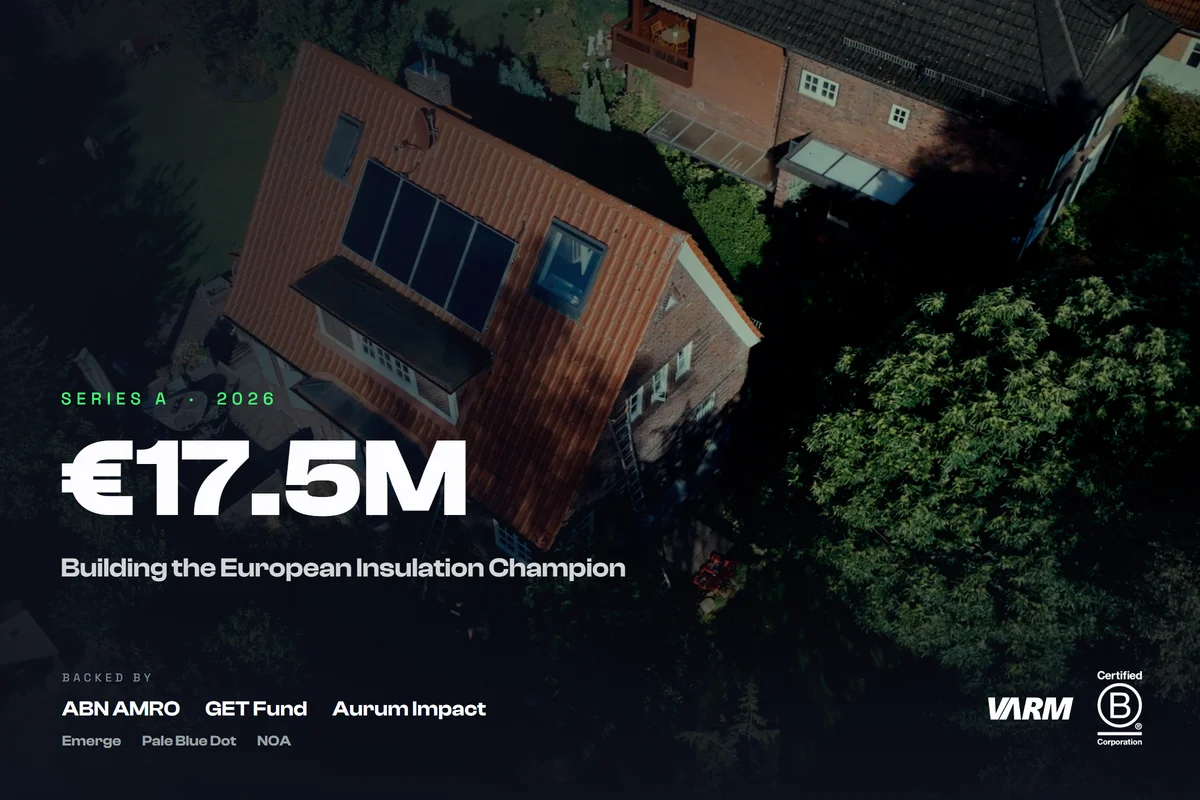
The ClimateTech company VARM has closed a Series A funding round of 17.5 million euros. The round is led by the ABN AMRO Sustainable Impact Fund, with the GET Fund investing as co-lead. Additionally, Aurum Impact is a new investor in the company. Existing investors Emerge, Pale Blue Dot, and noa are also continuing their investment.
With the fresh capital, VARM plans to expand its partner network, further develop its own AI platform, and drive expansion into additional European markets.
Millions of buildings await energy-efficient retrofits
Germany and many European countries must retrofit millions of existing buildings to improve energy efficiency in the coming years in order to meet climate targets and reduce energy costs. The problem lies less in the available technology than in its practical implementation. The skilled trades sector has been struggling for years with a shortage of skilled workers, fragmented structures, and limited capacity. Many renovation projects fail not because of a lack of demand, but because of a lack of resources for implementation.
The heating transition is failing less because of technology than because of implementation
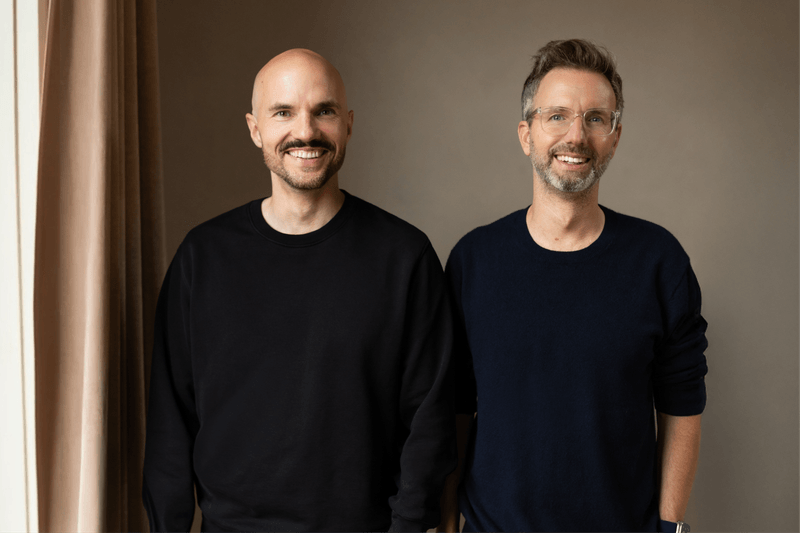
Christian Grüner, CEO & Founder of VARM
One house, one day, one fixed price
The company has developed a model that standardizes and accelerates insulation measures. At the heart of the approach is the ability to insulate a typical single-family home within a single day—and to do so at a transparent, fixed price. According to the company, the average cost is around 5,000 euros. Thanks to government subsidies, many homeowners’ out-of-pocket costs are reduced to less than 4,000 euros.
According to VARM, heating costs can be reduced by up to 50 percent. The investment often pays for itself within four to seven years.
AI Platform as Control Center
The technical foundation is a proprietary AI platform that digitally maps all project steps. From the initial survey and material calculations to quality assurance on the construction site, the processes are controlled automatically. This allows projects to be planned and executed much more efficiently than in traditional trades-based structures.
The platform also serves as an operating system for partner companies that manage their projects through VARM’s infrastructure.
A Network of Tradespeople Instead of a Skilled Labor Shortage
Instead of waiting for the already tight labor market, VARM is actively building new capacity. Through its own partner program, existing trades businesses—such as painters, drywall installers, and building technicians—are trained in insulation work and integrated into the platform.
In addition, the company relies on career-change programs to train skilled workers from related professions for energy-efficient retrofitting. This creates a decentralized production infrastructure that is centrally controlled via software.
Thousands of Projects Already Completed
According to its own figures, VARM has already completed several thousand insulation projects since its founding in 2023. The company is currently active in Berlin, Hamburg, Bremen, Essen, Cologne, Frankfurt, and Minden.
One million renovated buildings by 2035
With the new financing, the company is now pursuing an ambitious goal: to insulate one million buildings across Europe via the VARM infrastructure by 2035. To this end, a large portion of the capital is being invested in expanding the partner network and further digitizing processes. In the long term, VARM aims to assume the role of a Europe-wide infrastructure operator for energy-efficient building renovations.
Investors see this as an approach that goes beyond traditional contractor matching. Instead of merely matching contractors with jobs, the company creates additional implementation capacity and links it to a standardized digital platform. For the heating transition, it is precisely this combination of technology, training, and operational implementation that could bring added value.
At the same time, there are still millions of uninsulated buildings in Germany, ranging from half-timbered structures to other buildings under historic preservation. On the one hand, they represent a rich history and culture; on the other, they are an energy nightmare. Insulation work here is very labor-intensive and must be carried out with extreme precision. If the dew point is set anywhere other than on a 300-year-old single-pane window, you can almost watch as the buildings quickly fall into disrepair. Anyone who finds a safe, cost-effective solution here can be confident that their work will last for decades.

Newsletter
Startups, stories and stats from the German startup ecosystem straight to your inbox. Subscribe with 2 clicks. Noice.
LinkedIn ConnectFYI: English edition available
Hello my friend, have you been stranded on the German edition of Startbase? At least your browser tells us, that you do not speak German - so maybe you would like to switch to the English edition instead?
FYI: Deutsche Edition verfügbar
Hallo mein Freund, du befindest dich auf der Englischen Edition der Startbase und laut deinem Browser sprichst du eigentlich auch Deutsch. Magst du die Sprache wechseln?