Inflation rises to 2.6 percent. Energy prices also drive up import costs significantly

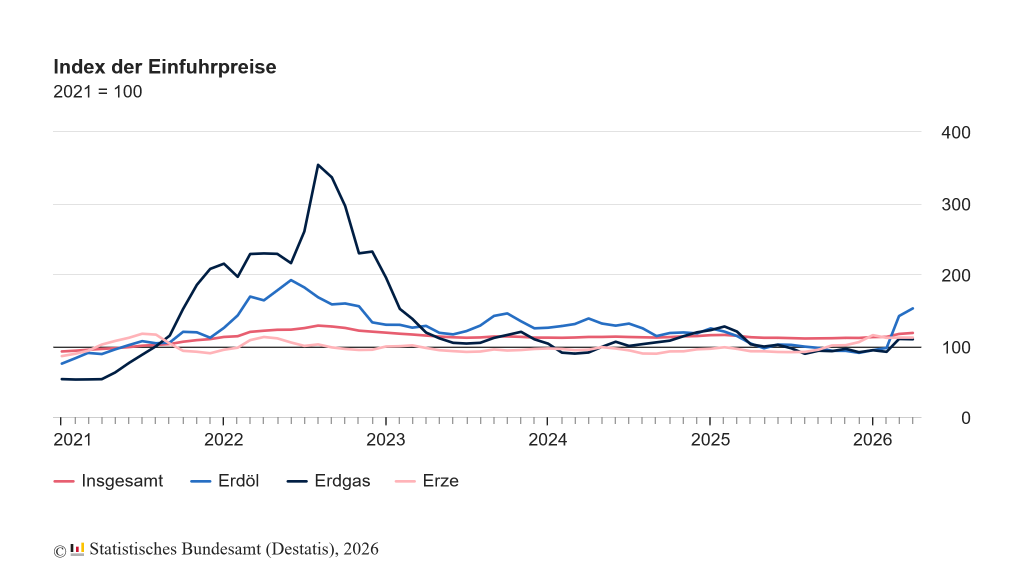
The inflation rate in Germany is expected to be 2.6% in May 2026. This was announced by the Federal Statistical Office (Destatis) on the basis of preliminary results. At the same time, Germany recorded the sharpest increase in import prices in April since the beginning of 2023, with the rise in energy prices and higher costs for industrial primary products having a particularly significant impact.
Consumer prices rise more slowly than energy
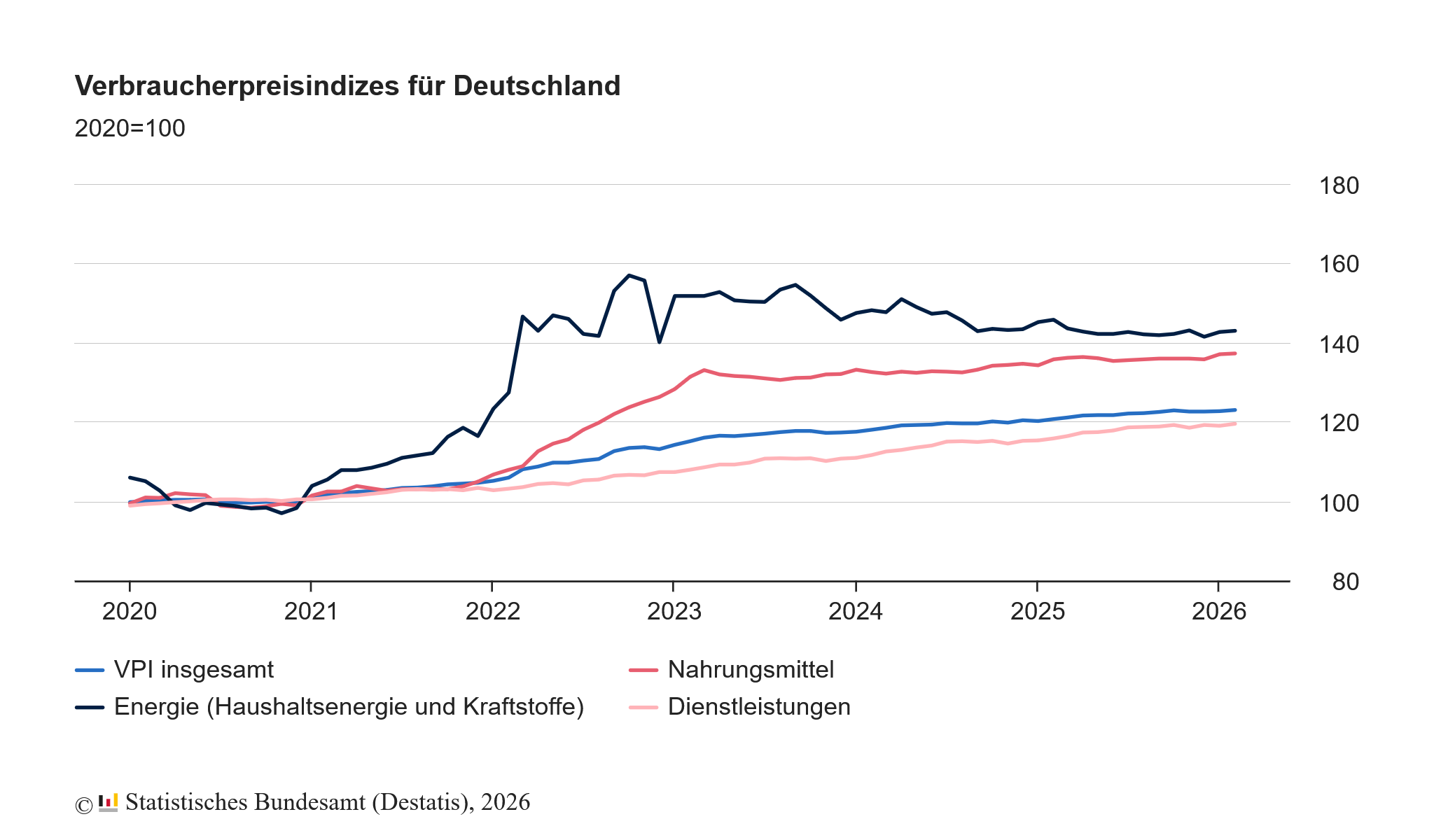
According to Destatis, consumer prices rose by 2.6% in May 2026 compared to the same month last year. Compared to April, prices actually fell slightly by 0.2%.
Core inflation, which excludes energy and food prices, amounted to 2.5%. This indicates that the underlying upward price trend in the economy is stabilizing somewhat. However, the energy sector remains a key driver of inflation. In May 2026, energy prices were still 6.6% higher than in the previous year. However, the momentum has slowed: in April, the increase was still at 10.1%.
Import prices rise more sharply than at any time since 2023
The trend in foreign trade is even clearer. Import prices in April 2026 were 5.3% above the previous year's level. This is the strongest increase since January 2023.
Compared to the previous month, import prices rose by a further 1.2%. Prices for intermediate goods rose particularly sharply by 7.8% and energy imports by 31%. Energy imports thus recorded the strongest price increase since October 2022.
Middle East conflict weighs on commodity and energy markets
The ongoing tensions and acts of war in Iran and the Middle East are considered to be the main drivers of this development. Raw materials and industrial primary products were particularly affected. Prices for non-ferrous metals rose by 27.6%, while precious metals increased in price by almost 50%. Imported fertilizers were 22.9% higher than in the previous year.
Energy prices also rose significantly. The price of petroleum products rose by 58.1 percent and crude oil by 47.5 percent. Natural gas was 6.9 percent higher than in the previous year.
Companies struggle with higher production costs
For many companies, this means higher costs along the entire value chain. Intermediate goods and energy are key components of numerous industrial and production processes.
Capital goods have also become more expensive. Prices in April were 1.5 percent higher than in the previous year. This could have an additional impact on companies' investment decisions.
Food and agricultural imports provide relief
While energy and raw materials are becoming more expensive, many agricultural and food prices declined. Imported agricultural goods were on average 4.7% cheaper than a year earlier. Prices for raw cocoa (-51.1%), green coffee (-16.6%), pigs (-17.1%) and grain (-6.1%) fell particularly sharply.
Consumer goods also showed signs of relief. Imported consumer goods were 1.7% below the previous year's level. Food imports were 5.4% cheaper overall than in April 2025.
Export prices also on the rise
The effects of higher energy and raw material costs are also evident on the export side.
Export prices in April 2026 were 2.9% higher than in the previous year and were up 0.8% on March. Energy exports became particularly expensive with an increase of 27%.
Jet fuel based on kerosene even cost 106.3% more to export than a year earlier. At the same time, prices for industrial intermediate goods rose by 4.3%.
Mixed signals for the economy and monetary policy
The current data sends a mixed signal. On the one hand, inflation remains above the ECB target and energy prices continue to put pressure on companies and consumers. On the other hand, many agricultural and food prices are falling, while core inflation remains comparatively stable.
The decisive factor for the German economy will be whether geopolitical tensions and the associated energy price risks ease in the coming months. How inflation, production costs and willingness to invest will develop over the rest of the year is likely to depend largely on this.

Newsletter
Startups, stories and stats from the German startup ecosystem straight to your inbox. Subscribe with 2 clicks. Noice.
LinkedIn ConnectFYI: English edition available
Hello my friend, have you been stranded on the German edition of Startbase? At least your browser tells us, that you do not speak German - so maybe you would like to switch to the English edition instead?
FYI: Deutsche Edition verfügbar
Hallo mein Freund, du befindest dich auf der Englischen Edition der Startbase und laut deinem Browser sprichst du eigentlich auch Deutsch. Magst du die Sprache wechseln?