Germany's Economic Outlook: Inflation Is Falling, Consumer Spending Is Picking Up, but the Labor Market and Foreign Trade Are Sending Mixed Signals

As of mid-2026, the German economy presents a mixed picture. While the inflation rate continues to decline and the retail sector is growing again, rising import prices and a weaker labor market are weighing on the economic outlook. The latest figures from the Federal Statistical Office paint a nuanced picture of the economic situation and also provide important insights for entrepreneurs.
Inflation Continues to Slow
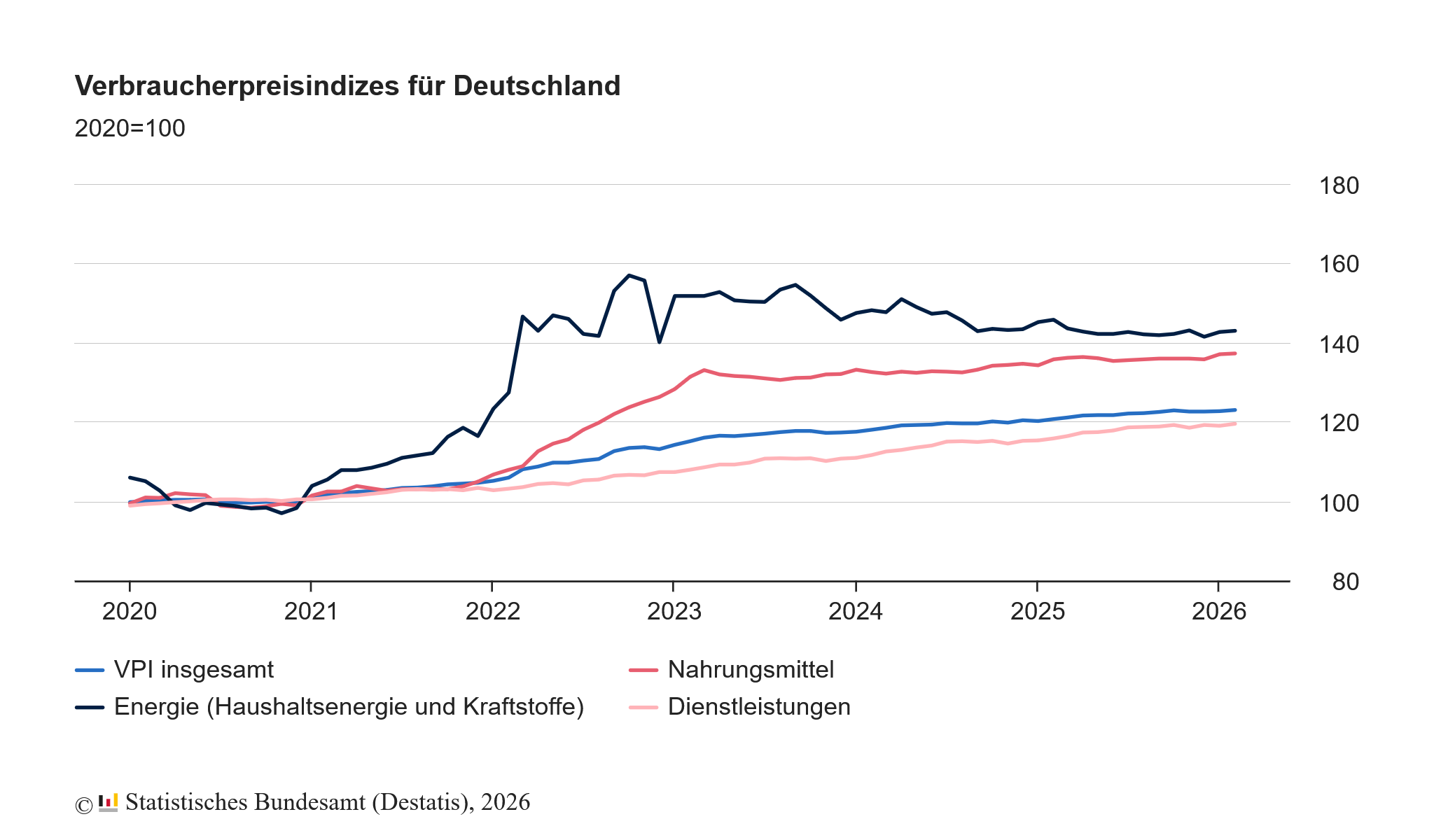
According to preliminary estimates, the inflation rate in Germany will stand at 2.3 percent in June 2026, once again lower than in the previous month (2.6 percent). Energy price trends have also slowed significantly recently. While energy prices in April were still 10.1 percent above the previous year’s level, the increase in June is expected to be only 3.4 percent.
So-called core inflation, which excludes the volatile energy and food sectors, remains at 2.5 percent, however. Services, in particular, remain a major driver of inflation, with a 3.1 percent increase. Food prices, by contrast, are rising only moderately, by 0.4 percent.
For companies and startups, this means, on the one hand, some relief from general price increases. On the other hand, labor-intensive business models in particular remain under pressure due to persistently high inflation in the services sector.
Labor Market Stabilizes in the Short Term, but Long-Term Trend Remains Negative
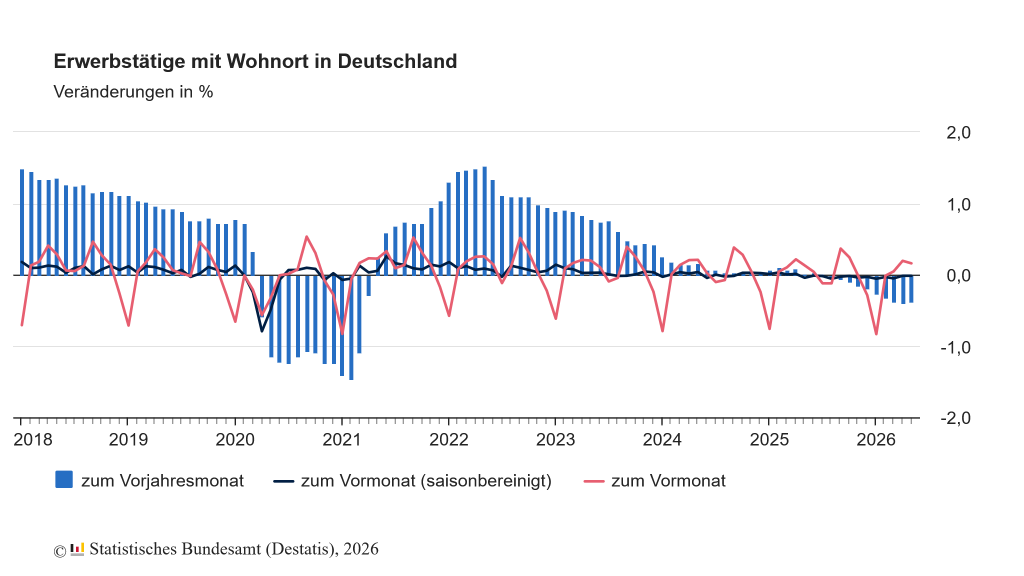
The German labor market showed signs of slight stabilization in May 2026. The seasonally adjusted number of employed persons remained virtually unchanged at around 45.68 million. This brings the series of monthly declines to an end—at least for the time being.
Compared to the previous year, however, the downward trend continues: Compared to May 2025, there were 171,000 fewer people employed. Germany has been recording year-over-year declines in employment figures since August 2025.
Unemployment, as defined by international standards, is showing a positive trend, however. The unemployment rate stood at 3.7 percent in May, slightly below the previous year’s level. On a seasonally adjusted basis, the rate remained stable at 3.8 percent.
For startups, the situation thus remains mixed. While the shortage of skilled workers in certain industries could ease slightly, the longer-term decline in employment points to continued weak economic momentum.
Import prices are rising at their fastest pace since the end of 2022
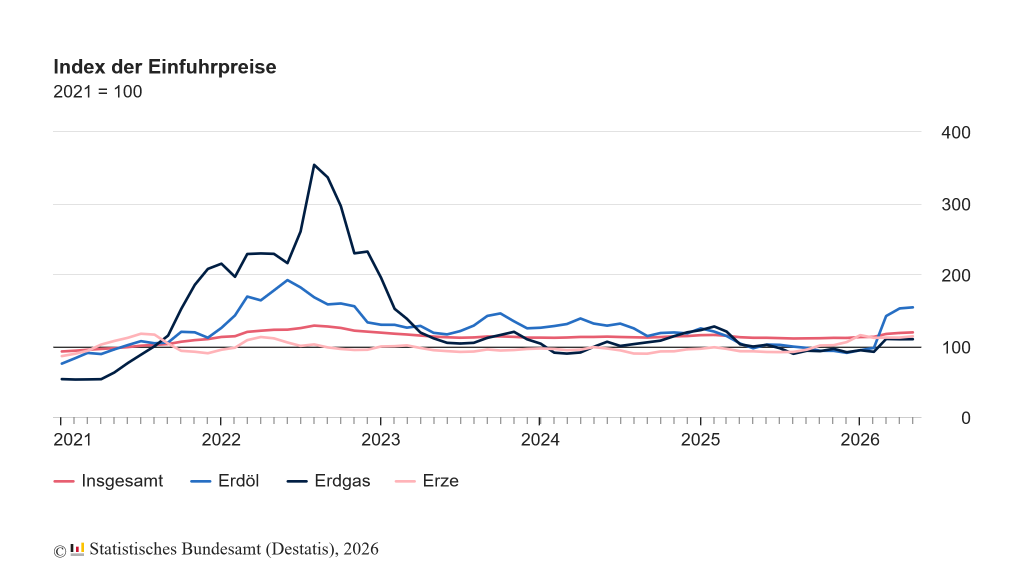
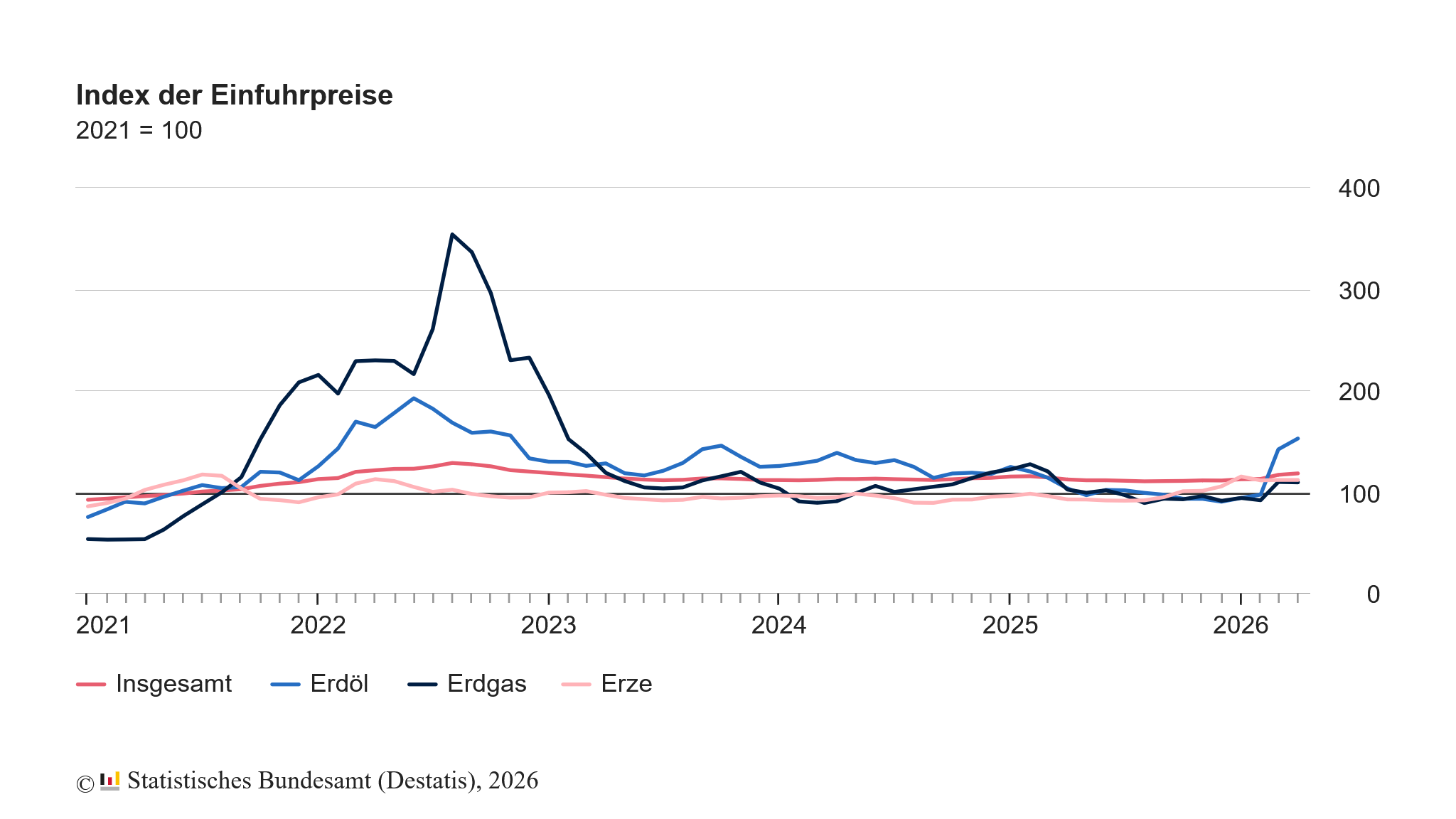
The effects of geopolitical tensions in the Middle East are particularly evident in foreign trade prices. In May 2026, import prices were 6.8 percent higher than the previous year’s level—the sharpest increase since December 2022.
The main drivers of this trend are intermediate goods and energy. Prices for imported energy rose by 37.2 percent, while intermediate goods became 10.1 percent more expensive. Non-ferrous metals, as well as precious metals and their semi-finished products, saw particularly sharp price increases.
Above all, the effects of the war in Iran continue to reverberate through the energy markets. Import prices for crude oil rose by 59.3 percent compared to the previous year, while petroleum products became 57.3 percent more expensive.
For manufacturing startups and industrial companies, these developments continue to pose significant cost risks in their supply chains. At the same time, many imported consumer goods and agricultural products remain cheaper than in the previous year.
The export sector is also feeling the strain of geopolitical tensions
Export prices also rose significantly, increasing by 3.4 percent in May compared with the same month a year earlier. Intermediate goods and energy exports were once again particularly affected.
Prices for energy exports were even 33.6 percent higher than the previous year’s level. At the same time, some export-oriented industrial sectors benefited from higher price levels for intermediate goods and capital goods.
This trend shows that geopolitical conflicts not only increase import costs but are also increasingly affecting the entire industrial value chain.
Retail Sector Surprises with Significant Growth
By contrast, private consumption is sending a positive signal. In May 2026, retail sales rose by 1.1 percent in real terms compared with the previous month. Compared with the same month last year, this represents a real increase in sales of 1.8 percent.
Online retail once again showed particularly strong growth. Sales in online and mail-order retail rose by 7.0 percent in real terms compared with the same month a year earlier. Brick-and-mortar retail of non-food items also saw strong growth.
This trend suggests that consumer purchasing power is stabilizing despite geopolitical uncertainties and ongoing price increases. For e-commerce startups and consumer-focused business models, this could be a positive sign for the second half of the year.
A Mixed Picture for Founders
The latest economic data does not provide a clear signal. Falling inflation rates and a growing retail sector point to a stabilization of the domestic economy. At the same time, rising import prices, geopolitical risks, and a weakening labor market are weighing on the economic outlook.
For startups and young companies, this means one thing above all: the ability to respond flexibly to volatile conditions will remain a decisive competitive factor in the second half of 2026 as well.

Newsletter
Startups, stories and stats from the German startup ecosystem straight to your inbox. Subscribe with 2 clicks. Noice.
LinkedIn ConnectFYI: English edition available
Hello my friend, have you been stranded on the German edition of Startbase? At least your browser tells us, that you do not speak German - so maybe you would like to switch to the English edition instead?
FYI: Deutsche Edition verfügbar
Hallo mein Freund, du befindest dich auf der Englischen Edition der Startbase und laut deinem Browser sprichst du eigentlich auch Deutsch. Magst du die Sprache wechseln?