ÄIO and TFTAK Receive 1.94 Million Euros

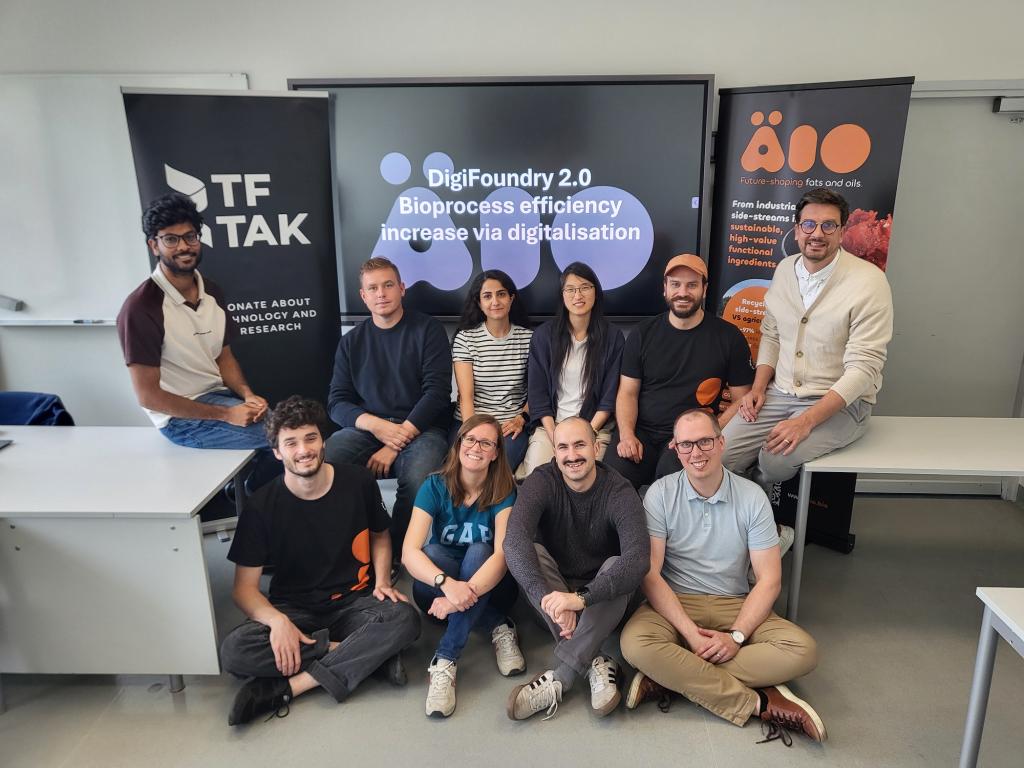
The Estonian biotech company ÄIO and the research organization TFTAK are receiving 1.94 million euros in funding to further develop their technology for producing microbial oils and fats. The three-year research project “DigiFoundry 2.0” aims to combine biotechnology, fermentation, automation, and digitalization into an integrated production platform. The goal is to enable the industrial production of alternative fats and oils more quickly, on a larger scale, and—above all—more cost-effectively in the future.
2.53 million euros for DigiFoundry 2.0
The project’s total budget is approximately 2.53 million euros. Of this amount, up to 1.94 million euros will be provided through the Applied Research Program of the Estonian Business and Innovation Agency, which is funded by the Estonian Ministry of Economic Affairs.
According to the company, ÄIO’s project ranked first among the approved applications in the tenth funding round. DigiFoundry 2.0 will run from July 1, 2026, to June 30, 2029, and builds on an initial joint research phase conducted by ÄIO and TFTAK.
The goal is to produce high-quality oils from waste materials
ÄIO was founded in 2022 as a spin-off of Tallinn University of Technology and develops fermentation technologies that can convert organic byproducts from the food, agricultural, and wood industries into high-quality fats and oils. Instead of growing oil crops or using animal fats, microorganisms handle the production. The resulting ingredients are intended for use in foods, cosmetics, and other consumer goods, among other applications.
According to the company, compared to conventional production methods, the process can reduce land use by up to 97 percent and water consumption by up to 90 percent. Another advantage lies in the raw materials. Locally generated industrial byproducts could serve as feedstock for fermentation. This would not only allow for the recycling of waste streams but, in the long term, also reduce dependence on global supply chains and traditional agricultural raw materials.
From Microorganism to Digital Factory
The predecessor project, DigiFoundry, ran from 2023 to 2026 and focused in particular on the development of suitable microorganisms. This resulted in an automated design-build-test-learn process that can be used to develop and optimize microbial strains for the production of specialized fats.
With DigiFoundry, we laid the foundation. With DF2.0, we are combining biology, fermentation, and digitalization into an integrated production system.
Petri-Jaan Lahtvee, COO & Co-Founder of ÄIO
DigiFoundry 2.0 now extends this approach to the entire manufacturing process. Biological development, fermentation, process data, and automation are to be interconnected. The idea behind this is that the more data collected and analyzed during fermentation, the faster production conditions can be optimized and new ingredients developed.
Costs Become the Decisive Factor
For ÄIO, it has long since ceased to be solely about demonstrating that microbial oils can be produced technically. The key challenge lies in achieving economic scalability.
After all, precision fermentation competes with established raw materials that are already produced in massive quantities through supply chains optimized over decades. For alternative fats to actually find their way into the mass market, production costs must fall, and processes must function reliably on an industrial scale.
Automation and data-driven process control are intended to shorten development cycles, use resources more efficiently, and simplify the transition from the lab to larger production facilities.
ÄIO is already operating on a metric-ton scale
The company is now on the path from technology development to commercial production. According to ÄIO, since its founding, it has scaled up its fermentation process from the laboratory to the metric ton scale and is working on partnerships to expand production capacity.
In the long term, this could evolve into more than just an ingredient business. In addition to in-house production, the microorganisms and production processes developed could also be marketed through licensing models in the future. TFTAK is contributing its expertise in synthetic biology, precision fermentation, and bioprocess development to the joint project.
Can biotech economically replace traditional oils?
How does one move from a technologically viable alternative to a product that can also compete on price in the industrial marketplace? ÄIO relies on a combination of local waste materials, specially developed microorganisms, automated fermentation, and data-driven optimization.
If these factors can be successfully integrated into a scalable platform, microbial fats could not only represent a more sustainable alternative to animal fats and tropical vegetable oils, but could also serve as an example of how industrial byproducts can be transformed into new, high-quality raw materials right where they are generated.

Newsletter
Startups, stories and stats from the German startup ecosystem straight to your inbox. Subscribe with 2 clicks. Noice.
LinkedIn ConnectFYI: English edition available
Hello my friend, have you been stranded on the German edition of Startbase? At least your browser tells us, that you do not speak German - so maybe you would like to switch to the English edition instead?
FYI: Deutsche Edition verfügbar
Hallo mein Freund, du befindest dich auf der Englischen Edition der Startbase und laut deinem Browser sprichst du eigentlich auch Deutsch. Magst du die Sprache wechseln?