What Venture Capital Did Last Night in the U.S.

While the workday is ending in Germany, the afternoon is just getting started on the U.S. West Coast. For the startup and venture capital world, this means that new funding rounds, funds, and deals are regularly on the table the next morning.
So what was venture capital up to last night in the U.S.? The short answer: It focused on healthcare, biotechnology, and artificial intelligence. And in doing so, it once again moved sums of money that are quite remarkable from a German perspective.
General Medicine Raises $120 Million
The largest traditional startup funding deal of the night comes from San Francisco. General Medicine has closed a Series B round of $120 million. The round is led by Andreessen Horowitz (a16z). Matrix, VXI Capital, Eli Lilly, Mercy Health via Granger Management, and BoxGroup are also participating.
This brings the total funding for the company—founded as recently as 2023—to $152 million.
General Medicine is building a kind of digital healthcare store for the U.S. market. The goal is to enable patients to search for, compare, and purchase healthcare services with the same level of transparency as products in an online store. The offering now includes more than 2,900 products and services—ranging from medications and lab tests to telemedicine, specialist consultations, and select treatments.
The pace of growth is particularly impressive: General Medicine launched nationwide as recently as May 2025. Hundreds of thousands of customers are said to have already registered.
The new $120 million in funding will now help integrate additional segments of the healthcare market into the platform.
KymaThera Raises $80 Million for Cancer Drug
Significant capital is also flowing into the biotech sector. San Diego-based KymaThera has closed a Series B round of $80 million. Alta Partners led the round, with Venrock, Foresite Capital, J. Wood Capital, and other investors also participating.
The funds will primarily go toward the development of the drug candidate K-1728. The drug is intended to target specific PI3Kα mutations and is being developed, among other things, to treat HR+/HER2-negative breast cancer and certain vascular malformations.
The size of the round is also noteworthy because clinical development is still in its early stages. The first patients are scheduled to be treated in the fourth quarter of 2026 as part of a Phase 1 trial. According to the company, the funding is intended to last until the first clinical proof-of-concept data is available.
Since its Series A round in 2024, KymaThera has thus raised more than $100 million.
Ampersand Secures $15 Million for the Infrastructure Behind AI Agents
With Ampersand, one of the most classic Silicon Valley topics of the moment is also making its way onto the funding table: the infrastructure behind AI agents.
Bessemer Venture Partners is leading a $15 million Series A round. Existing investors Matrix and Flex Capital are participating. New investors include Yelp, Tenacity Capital, CTO Fund, and Mana Ventures.
Ampersand aims to solve a problem that is becoming increasingly apparent with the adoption of AI in enterprises. Modern AI agents encounter decades-old and highly customized CRM and ERP systems in these environments.
Ampersand positions itself right between these two worlds.
The technology is designed to enable AI applications to access existing systems, read data, and even make changes. For AI software providers, this could eliminate a significant portion of the time-consuming integration work.
This funding round also demonstrates how investment interest in artificial intelligence is evolving: capital is no longer flowing exclusively into models or spectacular end-user applications, but increasingly into the infrastructure necessary for the productive use of AI.
$15 Million for AI in the Wine Store
Santé demonstrates that AI investments now extend deep into individual industries.
The New York-based company is also receiving $15 million in a Series A round. FINTOP is leading the funding, with Bonfire Ventures, Operator Collective, Y Combinator, and Veridical Ventures participating again.
Santé develops software specifically for wine and spirits retailers. Nearly 1,000 retailers are reportedly already using the platform and collectively process around two billion dollars in annual sales volume through it.
Now, the industry solution is set to increasingly evolve into an AI-powered operating system.
For example, AI agents will analyze inventory, suggest prices and promotional discounts, automatically process invoices, create marketing campaigns, and even assist with workforce planning.
Once again, the pace of fundraising is remarkable. Just six months earlier, Santé had announced a seed round of $7.6 million. According to the company, business has since grown by 500 percent.
For investors, the argument seems compelling: rather than funding yet another general-purpose AI assistant, AI is being deeply integrated into the operations of a very specific industry.
And then there’s another $6 billion
LS Power brings an entirely different order of magnitude to the nightly capital roundup.
The U.S. energy investor has closed its sixth fund with capital commitments totaling approximately $6 billion. The original target was $4 billion. According to LS Power, the fund was oversubscribed and ultimately reached its hard cap. This is not a traditional venture capital fund and should therefore not be equated with startup funding rounds. Nevertheless, the news is relevant for understanding the U.S. private capital markets.
The money is to be invested in energy infrastructure, renewable energy, conventional power generation, storage, and decentralized energy resources. And a significant portion has already been earmarked: Approximately $1.7 billion is to be invested in connection with planned acquisitions, which are expected to create a platform with about five gigawatts of gas-fired power plant capacity.
By comparison, LS Power’s predecessor fund raised $2.7 billion in 2024. In total, the company has now raised approximately $19.8 billion in equity commitments through its funds and investment partnerships.
Not every major startup announcement is a funding round
Meanwhile, Human Friendly Robotics serves as a reminder that at some point, startups must do more than just raise capital—they must, above all, attract customers.
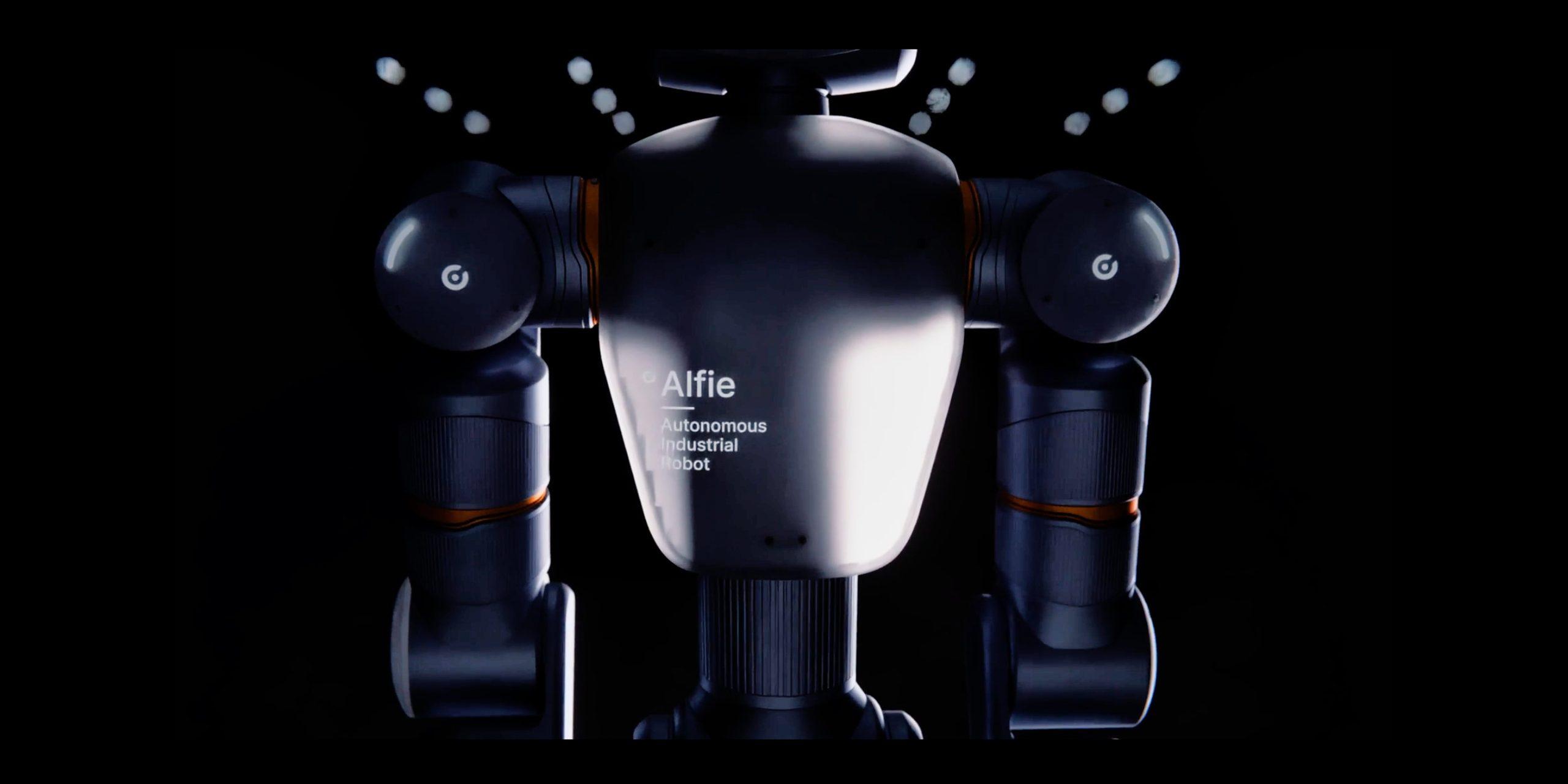
The robotics company has signed a three-year contract with Flooring Concepts of NJ worth up to $4 million. The autonomous robot “Tyler” handles repetitive tasks involved in floor installation. This is expected to enable existing teams to cover significantly larger areas while simultaneously reducing the physical strain on employees.
For the continued development of a young company, a contract like this can be at least as important as the next funding round: It demonstrates that there is indeed a willingness to pay for a new technology in the market.
What Sticks with Us from This Night
If we add up just the four traditional funding rounds from General Medicine, KymaThera, Ampersand, and Santé, $230 million in fresh capital was announced. Behind this lie four very different bets.
General Medicine aims to reorganize access to the U.S. healthcare market. KymaThera is receiving capital for a biotech development still in the early clinical stages. Ampersand is building infrastructure for a new generation of AI agents. Santé is attempting to deeply integrate artificial intelligence into the processes of a single retail sector. And in parallel, $6 billion in new capital is available for energy infrastructure.
Of course, a single night does not constitute a statistical snapshot of the entire U.S. venture capital market. It is a snapshot in time. But a rather interesting one. Because it shows where investors currently see major opportunities: healthcare, biotech, AI infrastructure, vertical AI, and energy. Above all, however, it demonstrates the speed at which capital can be deployed in the U.S. when investors recognize a large market and the potential for rapid scaling.
So while Germany is slowly getting started on a new workday, investors on the other side of the Atlantic have already placed their next bets: $230 million for four startups, $6 billion for a new energy fund, and a multimillion-dollar contract for robotics on construction sites. That’s what venture capital did last night in the U.S.

Newsletter
Startups, stories and stats from the German startup ecosystem straight to your inbox. Subscribe with 2 clicks. Noice.
LinkedIn ConnectFYI: English edition available
Hello my friend, have you been stranded on the German edition of Startbase? At least your browser tells us, that you do not speak German - so maybe you would like to switch to the English edition instead?
FYI: Deutsche Edition verfügbar
Hallo mein Freund, du befindest dich auf der Englischen Edition der Startbase und laut deinem Browser sprichst du eigentlich auch Deutsch. Magst du die Sprache wechseln?