Fusionality Receives 3 Million Swiss Francs for Fusion Technology

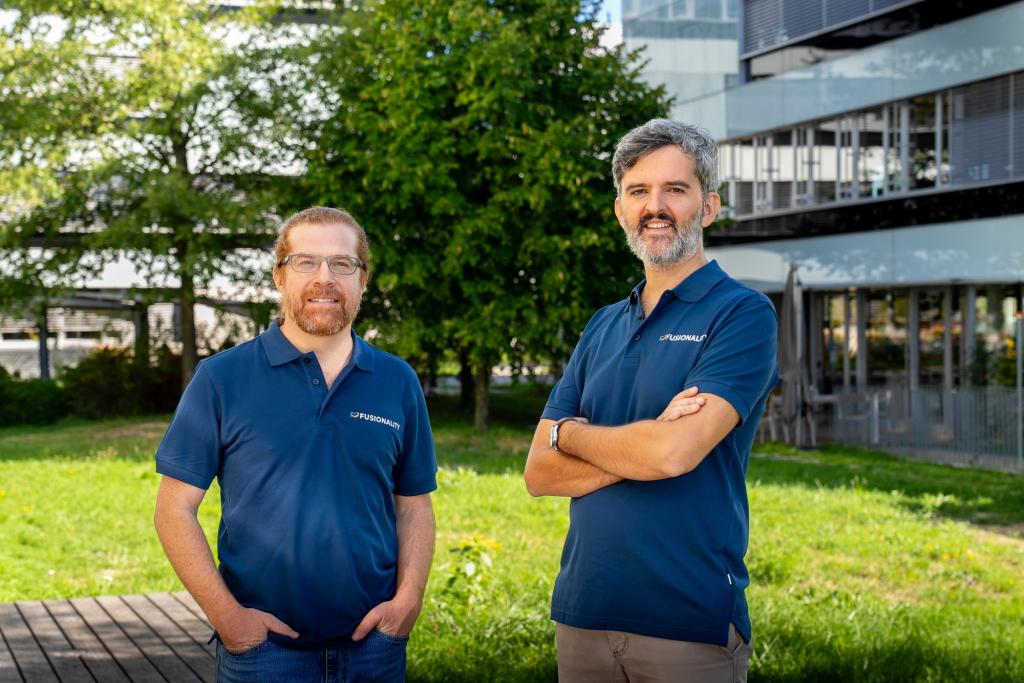
The Lausanne-based deep tech startup Fusionality has closed a pre-seed funding round of 3 million Swiss francs. The round is co-led by Founderful and Playfair. Founded in 2026 as a spin-off from EPFL’s Swiss Plasma Center, the company develops hardware and software that can be used to measure, simulate, monitor, and control fusion systems. The company was founded by two former scientists from Google DeepMind.
Infrastructure for the Fusion Industry
The startup provides technologies for companies and research institutions working on magnetic fusion systems. In these systems, extremely hot plasma is confined using strong magnetic fields. The goal is to create conditions similar to those found inside stars. The industry’s long-term goal is to generate commercially viable energy from this process.
According to Fusionality, more than 30 privately funded companies worldwide are now working on their own fusion reactors. In addition, there are government-funded national and international research programs. Regardless of the specific reactor technology, many of these projects face similar operational challenges.
Controlling Plasma Within Milliseconds
Operating a fusion facility requires the collection and processing of large amounts of diverse data. Systems must determine the state of the plasma and, based on this, control magnetic fields, heating, and fuel supply, among other things. Some of these reactions must occur within milliseconds.
The infrastructure required for this must function reliably. Errors can delay research or damage components. In future commercial fusion power plants, failures could also directly impact energy production.
So far, many companies have been developing this infrastructure largely on their own. Fusionality views this as unnecessary duplication of effort, higher development costs, and a factor that slows down the progress of the entire industry.
Standardized Hardware and Software Instead of In-House Development
Fusionality therefore aims to develop a transferable infrastructure for measurement, simulation, and control. To this end, the company combines hardware and software components. The key approach: The technology should be as easily transferable as possible to different fusion facilities. Instead of developing a completely new system for each customer, only limited adaptation to the respective facility should be necessary.
This is expected to reduce costs with each subsequent implementation and enable fusion companies to build out their operational infrastructure more quickly. The startup is thus positioning itself as a technology supplier for a growing fusion industry—comparable to an infrastructure platform on which different reactor concepts can be built.
Founders Met While Working on the DeepMind Fusion Project
Fusionality was founded in 2026 by Federico Felici and Jonas Buchli. Both bring experience in science, control engineering, and artificial intelligence.
Felici studied control engineering and earned his Ph.D. in plasma physics at EPFL. After serving as an assistant professor at TU Eindhoven, he returned to EPFL and worked at the Swiss Plasma Center on the control of fusion systems. He then spent two and a half years at Google DeepMind before returning to Switzerland to found Fusionality.
Buchli is an electrical engineer and previously worked at ETH Zurich. He later joined Google DeepMind as a senior research scientist, where his work focused on robotics, optimal control, and reinforcement learning for controlling physical systems, among other areas.
AI Has Already Controlled a Tokamak
The two founders met while working on a joint research project between EPFL and Google DeepMind. As part of that project, the team trained an artificial intelligence system to control the plasma in EPFL’s TCV tokamak. This research culminated in a 2022 publication in the journal *Nature* on the magnetic control of tokamak plasmas using deep reinforcement learning.
Operating a fusion facility is a challenging task that involves various data sources, different time scales, and complex plasma behavior.
Jonas Buchli, Co-founder and CTO
This combination of plasma physics, control engineering, software, and AI now also forms the technological foundation of Fusionality.
According to Buchli, Fusionality aims to address this challenge with a multidisciplinary approach combining measurement technology, software, control engineering, and data engineering.
Founderful and Playfair Lead Pre-Seed Round
The 3 million Swiss francs will initially be used to build out the team at the Lausanne location. Among others, Fusionality is seeking control engineers, computational physicists, plasma measurement specialists, and software developers. At the same time, the company plans to implement its first customer projects to demonstrate that the infrastructure it has developed can indeed be applied to various fusion facilities. David Gates, co-founder and CTO of the U.S. fusion company Thea Energy, sees the focus on measurement, simulation, and control in particular as having the potential to accelerate the development of the entire fusion industry.
A Supplier in the Race for Fusion Energy
Fusionality is thus taking a different approach than many startups in the currently growing fusion market. The company does not have to prove on its own that a specific reactor design can generate electricity economically. Instead, it is focusing on a technological challenge common to many different fusion concepts: systems must be reliably measured, understood, and controlled in real time.
Should the number of private fusion projects continue to rise, this very specialization could become particularly valuable. Instead of repeatedly developing new central operating infrastructure from scratch, companies could rely on standardized components. With the 3 million Swiss francs, Fusionality must now first prove that the technology can indeed be deployed across different reactor types with limited customization effort. If successful, the Lausanne-based startup could become an infrastructure supplier for a still-young but capital-intensive fusion industry.

Newsletter
Startups, stories and stats from the German startup ecosystem straight to your inbox. Subscribe with 2 clicks. Noice.
LinkedIn ConnectFYI: English edition available
Hello my friend, have you been stranded on the German edition of Startbase? At least your browser tells us, that you do not speak German - so maybe you would like to switch to the English edition instead?
FYI: Deutsche Edition verfügbar
Hallo mein Freund, du befindest dich auf der Englischen Edition der Startbase und laut deinem Browser sprichst du eigentlich auch Deutsch. Magst du die Sprache wechseln?