"The Lion's Den" on October 26: AI Startup Sparks a Bidding War, Founder Struggles to Hold Back Tears

The new episode of the 20th season of *Die Höhle der Löwen* airs on Monday, October 26, 2026, at 8:15 p.m. The show is hosted by Amiaz Habtu. In addition to the five new business ideas, viewers will be reunited with a founder from the first season. David Weyhe returns with his brand Mexican Tears and once again presents the investors with a spicy challenge.
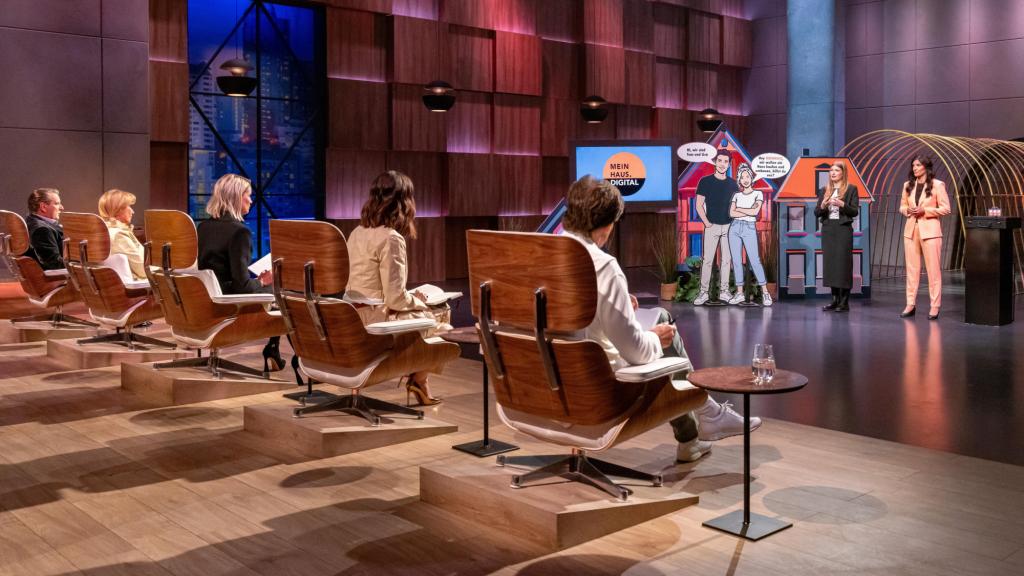
meinhaus.digital: AI for real estate renovations
425,000 euros for 5 percent – Company valuation: 8.5 million euros
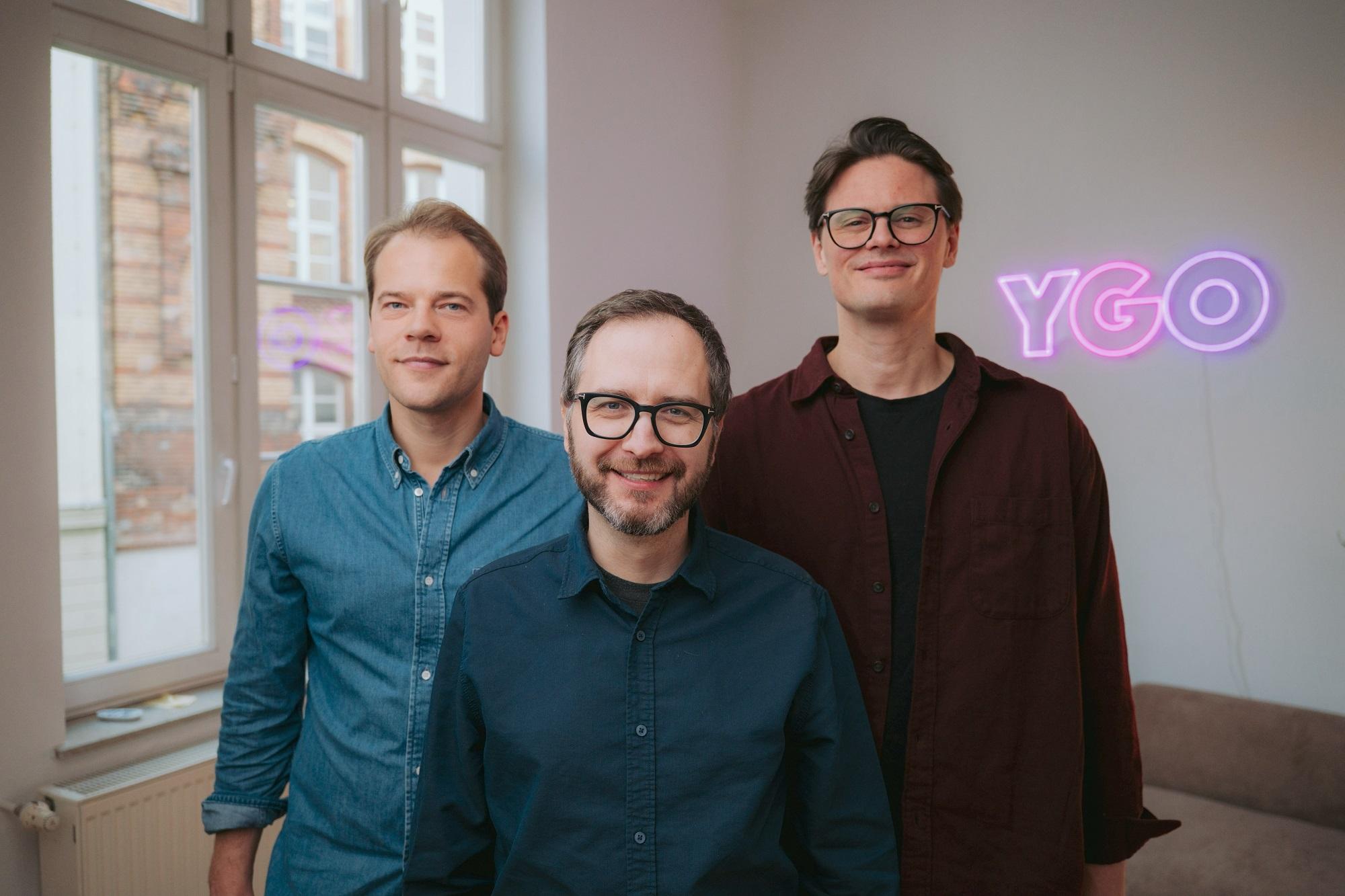
The startup meinhaus.digital, based in Munich and Schwäbisch Gmünd, is one of the most closely watched pitches of the episode. Founders Leonie Dowling (37) and Carolin Krebber (35) aim to simplify the planning of real estate renovations with the help of artificial intelligence.
The approach is aimed specifically at private homebuyers who, after purchasing a property, face high renovation costs and complex decisions.
Based on property information, the platform analyzes necessary renovation measures, estimates costs, and supports users in their further planning. The service ranges from an initial assessment and financing questions to the actual renovation.
The two founders bring diverse professional backgrounds to the table. Carolin Krebber worked as an architect for ten years, while Leonie Dowling also spent about ten years in strategic consulting, including work for companies in the construction industry.
They are seeking 425,000 euros in exchange for five percent of their company shares. This results in a requested company valuation of 8.5 million euros.
The valuation sparks some initial debate. At the same time, the business model apparently convinces several investors, leading to a bidding war.
For the startup, an investment could open the door not only to capital but, above all, to strategic partners and additional sales opportunities. The episode reveals whether—and with which investor—the founders reach an agreement.
allpacka One: Leipzig-based founders transform bicycles into cargo bikes
250,000 euros for 10 percent – company valuation: 2.5 million euros
With allpacka One, Jonathan Vincentz (29) and Lukas Ludwig (29) from Leipzig present a solution for transporting groceries and other items by bicycle.
Their invention is a foldable transport box that attaches to the bike rack and is designed to add extra carrying capacity to nearly any bicycle.
When unfolded, the box offers 30 liters of storage space and can carry a load of up to 20 kilograms. When not in use, it can be folded up to save space. It’s also designed to be compatible with bicycle panniers.
The idea arose from an everyday problem: Lukas Ludwig wanted to transport his groceries by bike but couldn’t find a suitable solution.
Together with Jonathan Vincentz, he spent two years developing the product. The initial work took place in a shared apartment, where they first had to fold up the bed to make room for their project.
Allpacka One is now in mass production and is already being shipped.
The founders are seeking 250,000 euros in exchange for ten percent of their company shares. In addition to funding, they hope to gain support for brand building and sales.
Especially in a market flooded with bicycle accessories, it will be crucial to determine whether the solution can position itself as a standalone brand beyond its practical utility.
Sober: Non-Alcoholic Italian Spritz Draws Harsh Criticism
300,000 euros for 12 percent – company valuation: 2.5 million euros
Berlin-based founder Isabella Steiner (37) has been working with non-alcoholic beverages for several years.
In 2020, she initially launched an online shop for non-alcoholic drinks. With her brand “nüchtern,” she now aims to establish her own product concept.
The focus is on highly concentrated non-alcoholic beverages in single-serve liquid portions. The product is designed to be particularly easy to use: open the single-serve packet, pour the contents into a glass, and top it off with tonic water.
The first product is a non-alcoholic Italian Spritz. Additional flavors are planned.
The concept is designed to appeal particularly through its compact packaging, long shelf life, and simple preparation.
Steiner is asking for 300,000 euros in exchange for 12 percent of her company’s shares.
However, the product faces significant criticism from investors. In particular, the taste and the question of what consumers expect from non-alcoholic beverages are the subject of heated debate.
The feedback hits the founder so hard that she breaks down in tears during her presentation.
The pitch thus also highlights a key challenge in the beverage market: In addition to compelling positioning, new products must above all stand out in terms of taste and hold their own against numerous alternatives.
LifeSaveAir: First-aid device developed following a personal emergency
100,000 euros for 10 percent – company valuation: 1 million euros
LifeSaveAir, based in Dortmund, was inspired by a personal experience.
Six years ago, Jonas—then 11 years old and the son of founder Nabil Chehade (46)—choked so severely on a strawberry that he couldn’t breathe. His mother responded by giving him back blows and was able to resolve the situation.
The experience prompted Nabil Chehade, together with his cousins Aiman Chehade (32) and Jusef Chehade (31), to develop a first-aid device designed to help with life-threatening airway obstructions.
After four and a half years of development work and regulatory approval processes, the founders are now presenting their solution to investors.
They are seeking 100,000 euros in exchange for ten percent of their company shares.
The presentation becomes particularly emotional when Jonas himself enters the studio. Now 17 years old, he shares his memories of the incident.
Investor Ralf Dümmel also shares a similar experience involving his own son.
Beyond the personal story, however, the focus is on the product’s economic prospects. Its proven effectiveness, safe use, and marketing potential are likely to be particularly decisive factors. Whether LifeSaveAir will also convince investors from a business perspective remains to be seen.
Kippo: Rotating wheelbarrow handle as a second career opportunity
50,000 euros for 30 percent – company valuation: approximately 167,000 euros
With Kippo, Patrick Waligorski (51) from Essen presents a comparatively simple yet practical invention.
The entrepreneur has developed a swiveling handle for wheelbarrows and hand carts designed to reduce strain on the wrists.
When unloading the cargo, the handles rotate along with it. This is intended to keep the hands in a more stable position and eliminate the need to reposition the grip.
The design is also intended to offer greater comfort while pushing the cart, especially when navigating curves.
However, the product also stems from a personal entrepreneurial challenge.
Waligorski runs a scrap yard together with his cousin. Because the lease is expiring and a new location is hard to find, his current livelihood is in jeopardy.
With Kippo, he therefore hopes to build an additional source of income.
He is offering 30 percent of his company shares for 50,000 euros. This valuation is significantly lower than those of the other startups presented.
His presentation apparently convinces several investors, who make him offers. However, the decision isn’t an easy one for him, because in addition to financial terms, the personal working relationship also plays an important role.
Mexican Tears: A Reunion with a Founder from Season One
In addition to the five new pitches, there’s a reunion with David Weyhe, who previously appeared in the first season with his brand Mexican Tears.
Back then, his exceptionally hot sauces sparked strong reactions among the investors.
In particular, Vural Öger—a “Lion” at the time—had trouble handling the heat. Judith Williams recalls that he even asked if an emergency doctor was needed.
In the new episode, Weyhe presents his products once again. This time, nearly all the investors dare to try the hottest level.
In addition to the tasting, the episode also focuses on the company’s business development and financial metrics.
Investor Andreas W. Herb shows such interest that he approaches Weyhe about a potential collaboration.
According to RTL’s announcement, no concrete investment is made during the reunion. However, the two agree to continue their discussions.
Five business models with very different valuations
The new episode once again highlights how differently founders value their companies and what expectations they have of potential investors.
While meinhaus.digital’s valuation request comes to 8.5 million euros, Kippo’s calculated valuation is around 167,000 euros. The remaining companies’ valuation requests range from one to 2.5 million euros.
Not only do the business models differ, but so do the stages of development.
allpacka One is already in mass production, while other founders are primarily seeking support in establishing new sales structures or launching their products on the market.
meinhaus.digital relies on a scalable AI platform, while Kippo and LifeSaveAir are developing physical products whose commercial success depends largely on production, distribution, and market demand.
The valuations being requested are initially the founders’ negotiating positions and do not yet indicate the actual terms under which investments will be made.
Between the AI Boom, Consumer Goods, and Inspiring Founder Stories
In this episode, the spotlight is on meinhaus.digital, a startup that applies artificial intelligence to a traditional industry.
The digitization of real estate and renovation processes could significantly simplify matters for private owners and the construction industry. At the same time, it remains to be seen how reliably automated cost and action planning will work for different types of buildings.
The other companies pursue more product-oriented business models. In particular, they must prove that their solutions generate sufficient demand and can be marketed profitably.
As a result, the episode offers a cross-section of different startup approaches: from technologically scalable platforms to inventions born out of personal, everyday experiences.
The bidding war for meinhaus.digital is likely to be exciting. At the same time, the presentations by nüchtern and Kippo show just how closely entrepreneurial decisions and personal challenges can be intertwined during the startup phase.
The new episode of “Die Höhle der Löwen” airs on Monday, October 26, 2026, at 8:15 p.m.

Newsletter
Startups, stories and stats from the German startup ecosystem straight to your inbox. Subscribe with 2 clicks. Noice.
LinkedIn ConnectFYI: English edition available
Hello my friend, have you been stranded on the German edition of Startbase? At least your browser tells us, that you do not speak German - so maybe you would like to switch to the English edition instead?
FYI: Deutsche Edition verfügbar
Hallo mein Freund, du befindest dich auf der Englischen Edition der Startbase und laut deinem Browser sprichst du eigentlich auch Deutsch. Magst du die Sprache wechseln?