Christian Lindner Invests in FinTech Company Ginmon

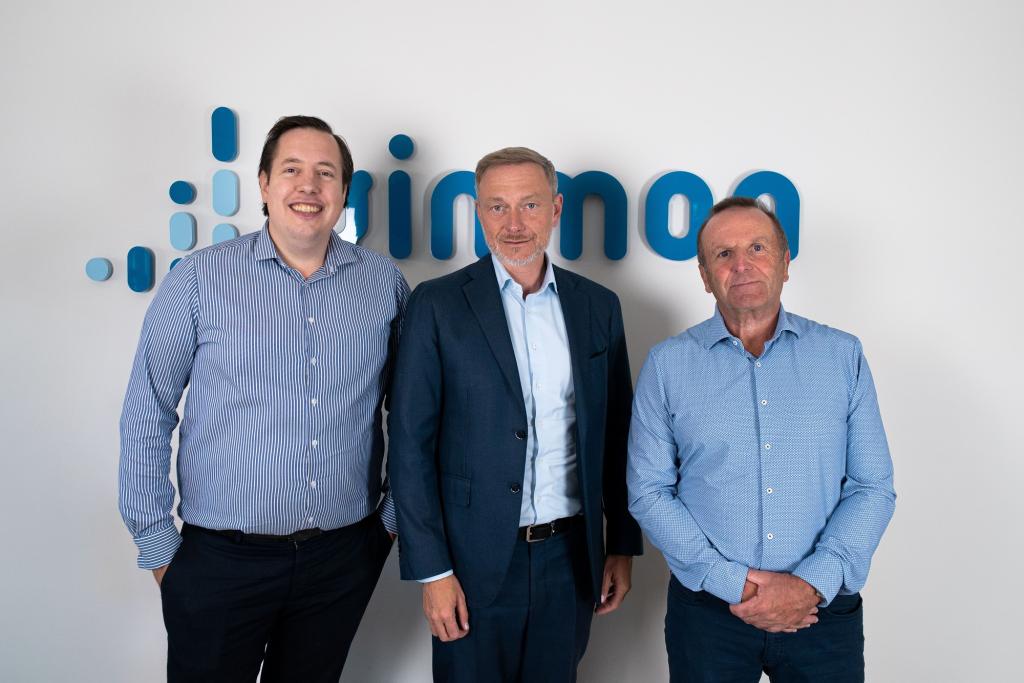
Former German Federal Minister of Finance Christian Lindner is joining Frankfurt-based fintech company Ginmon as an investor. Founded in 2014, the company develops digital infrastructure for investment and retirement products and is positioning itself, among other things, for the retirement savings account set to launch on January 1, 2027. According to information from the Handelsblatt, Lindner’s investment is initially in the five-figure range. Ginmon itself reports that it manages more than 500 million euros in client assets and is operating profitably.
From Finance Minister to FinTech Investor
Through this investment, Lindner is combining his long-standing political commitment to a culture of stock ownership and funded retirement savings with a private entrepreneurial venture.
During his tenure as Federal Minister of Finance, Lindner had already advocated for a stronger focus on capital markets in retirement planning. However, the retirement savings account set to launch on January 1, 2027, is part of the current federal government’s reform. The new rules open up tax-advantaged private retirement savings, among other things, to accounts without guarantees and investments in funds and ETFs.
“Germany needs more private-sector capital accumulation,” Lindner explained upon joining the company. Ginmon particularly impressed him because the company not only offers individual financial products but also provides the necessary technological infrastructure.
Investment is initially expected to be in the five-figure range
Ginmon does not specify the exact amount of the investment in its press release. However, Lindner told the media that his investment was in the five-figure range and described it as a starting point.
For Ginmon, Lindner represents an investor who, in addition to capital, brings political and public visibility in the field of funded retirement planning.
Ginmon is increasingly focusing on B2B infrastructure
Ginmon originally launched as a digital asset manager. The company has since significantly expanded its business model toward financial infrastructure. Through Ginmon Technology, the company provides banks and financial service providers with a modular white-label infrastructure that allows them to offer investment and retirement products under their own brand. Among the companies using Ginmon’s technology is the European neobank bunq.
In addition, there is apeiron Wealth, a platform for independent financial and investment advisors. Among other things, it combines digital customer onboarding, portfolio management, reporting, fee billing, and custody and securities settlement. According to the company, more than 100,000 end customers now use solutions based on the Ginmon infrastructure. The group operates in eleven countries.
Retirement Savings Accounts Are a New Market
Ginmon sees particular growth opportunities in the new retirement savings account. Starting in January 2027, providers will be able to launch corresponding government-subsidized products on the market. Unlike traditional Riester products, these retirement savings accounts will also be available without a guarantee. Capital can be invested, for example, in ETFs and other approved funds. Earnings remain tax-free during the savings phase, and benefits are taxed later.
This creates a new market for Ginmon’s infrastructure. Banks and other financial service providers will be able to use Ginmon Technology to develop their own retirement savings accounts and offer them under their respective brands. Through apeiron Wealth, independent financial advisors will, in turn, be able to integrate these products into their advisory services. Just recently, Ginmon announced a partnership with the global asset manager Franklin Templeton for this purpose.
Infrastructure Instead of a Single Financial Product
For Ginmon, the retirement savings account could thus become an important test of its strategic realignment. The company is no longer competing exclusively for retail investors but increasingly aims to provide the technical foundation on which other financial firms can build their offerings.
From a financial perspective, Lindner’s investment is modest, given that it initially amounts to a five-figure sum. Strategically, however, Ginmon is gaining a prominent investor whose political work to date has been closely linked to the topics of stock market culture and funded retirement savings. Whether Ginmon can actually benefit on a large scale from the launch of the retirement savings account will depend primarily on how many banks, financial service providers, and advisors rely on external infrastructure for their new retirement products.


Newsletter
Startups, stories and stats from the German startup ecosystem straight to your inbox. Subscribe with 2 clicks. Noice.
LinkedIn ConnectFYI: English edition available
Hello my friend, have you been stranded on the German edition of Startbase? At least your browser tells us, that you do not speak German - so maybe you would like to switch to the English edition instead?
FYI: Deutsche Edition verfügbar
Hallo mein Freund, du befindest dich auf der Englischen Edition der Startbase und laut deinem Browser sprichst du eigentlich auch Deutsch. Magst du die Sprache wechseln?