Boomerent: How Two Founders Are Disrupting the Opaque Real Estate Market with AI

Startbase Supports Startups from Reaktor Wildau - Series Kickoff
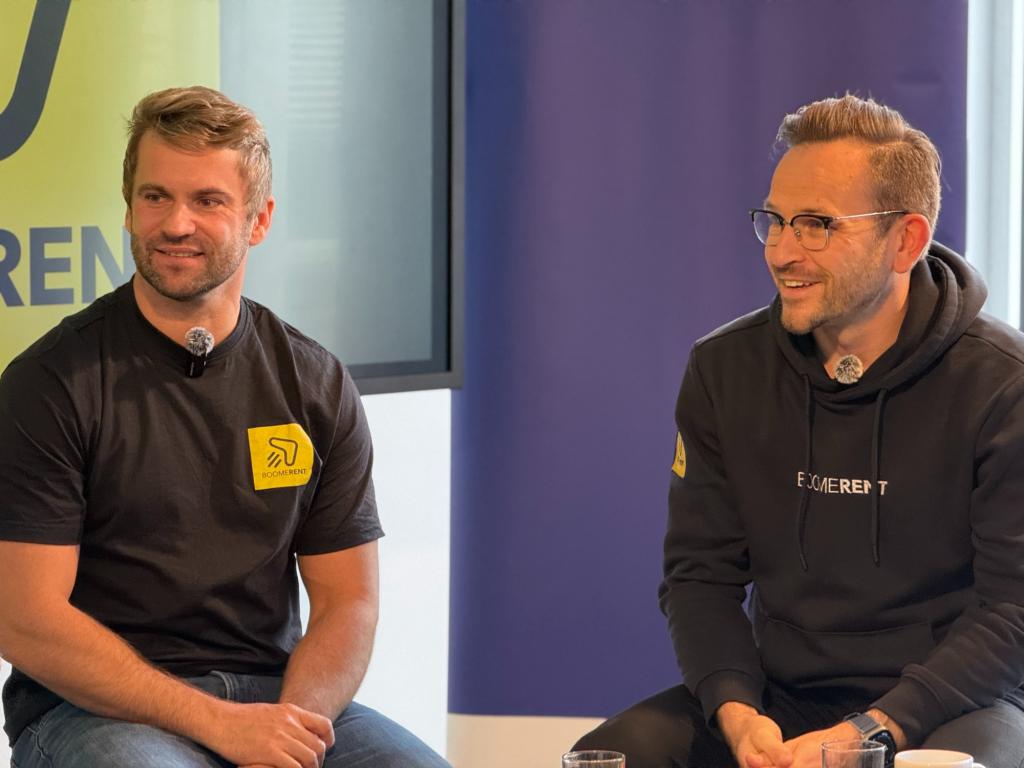
Startbase is launching a new exclusive series on the startups from the accelerator’s second batch Reaktor Wildau. Every Saturday, we’ll follow the participating companies and show how their business models, products, customer relationships, and original goals evolve during the program. Reaktor Wildau specifically supports startups in the fields of artificial intelligence, mobility, and energy as they enter the market and continue to grow. The series kicks off with the PropTech startup Boomerent, whose founders, Stephan Thiel and Ron van de Sand, met at an investor event at Reaktor Wildau. The startup aims to use AI to bring more transparency to the commercial real estate market.
Boomerent Profile
The real estate market is a place of asymmetry. While landlords have access to all the data, tenants are often left in the dark. Is the rent reasonable? Are the utility costs accurate? What deadlines have I missed? For many companies, space costs are the second-largest expense category after personnel costs—and yet they often go unanalyzed.
This is exactly where Boomerent comes in. Founded in June 2026, the startup sees itself as an “external real estate department” for commercial tenants. Its mission: to create transparency and structurally reduce the all-inclusive rent.
The Perfect Match: Real Estate Know-How Meets AI Expertise
Behind Boomerent are two minds who couldn’t be more different—yet complement each other perfectly. Stephan Thiel brings 16 years of experience in real estate management, including time at ECE Shopping Center. Ron van de Sand is the tech expert: he’s been working in the AI field for about ten years.
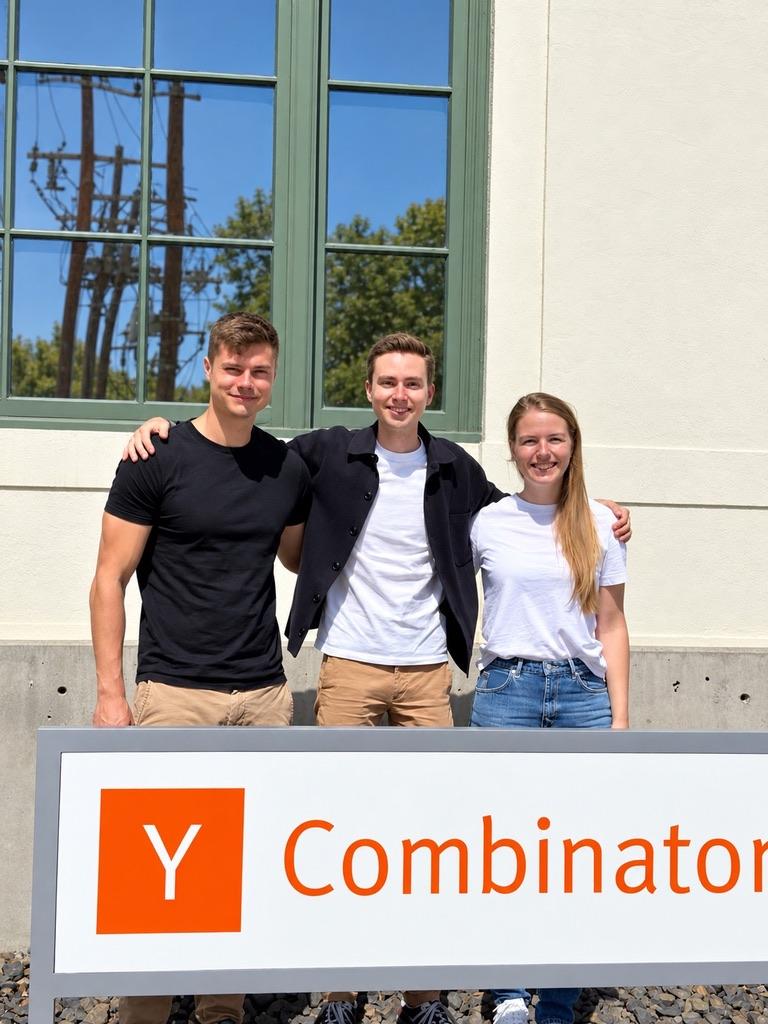
The two met at an investor event at Reaktor Wildau. What followed was no coincidence, but a systematic vetting process. “We put each other through the wringer, just like in a Y Combinator interview,” say the founders. They used personality tests and off-site meetings to ensure that not only the business model but also the interpersonal chemistry was right. “We spend more time with each other now than we do with our families,” Thiel says with a smile.
A Company in Three Weeks
The duo proved just how serious they were when they founded the company. While others in Germany struggle with bureaucracy for months, the team pushed through the founding process in just three weeks. “You have to be persistent and find a co-founder who takes a pragmatic approach to negotiations,” explains Thiel. With the support of an efficient tax advisor and a responsive bank, the company was up and running in June 2026.
More Than Just a Utility Bill Tool
Boomerent is not a traditional “utility bill claim tool.” The platform serves as a “single source of truth” for commercial tenants. The system analyzes lease agreements, utility bills, and other documents using OCR and AI. It monitors deadlines, checks option exercises, and detects calculation errors.
The key feature: The startup relies on an “agent-based approach.” This means that not only is the product AI-powered, but internal processes—from sales and marketing to SEO optimization—are also largely automated. This allows the small team to remain extremely lean while still scaling quickly.
The “Data Moat” as a Defense
At a time when everyone is experimenting with ChatGPT, the question of competitive advantage arises. Boomerent relies on what’s known as a “data moat.” While generic AI models are based on public data, Boomerent builds on proprietary data.
Through strategic partnerships—such as with the Bau-Akademie, which contributes data from 950 office properties, and Eurocres for space optimization—the startup has access to benchmarks that are not available to other market participants. “That’s our moat,” says van de Sand. “With every document that’s uploaded, our system gets better and more unassailable.”
Outlook: Scaling Up Instead of VC Pressure
Boomerent is currently bootstrapped. The startup has already generated its first five-figure revenue and is well on its way to becoming profitable this year. The goal for the coming months is ambitious: 200 lease agreements are to be managed on the platform by the end of 2026, and 1,400 in 2027.
Although VC funding for the later scaling phase isn’t ruled out, the focus remains on organic growth for now. Boomerent impressively demonstrates how a combination of deep industry knowledge, technical excellence, and a healthy dose of pragmatism can break open a stagnant market.
For commercial tenants, Boomerent could thus become exactly what its name promises: a boomerang that brings costs back to where they belong—on the tenant’s balance sheet.
“We take the back-office work off the tenant’s hands”—A conversation with the Boomerent founders
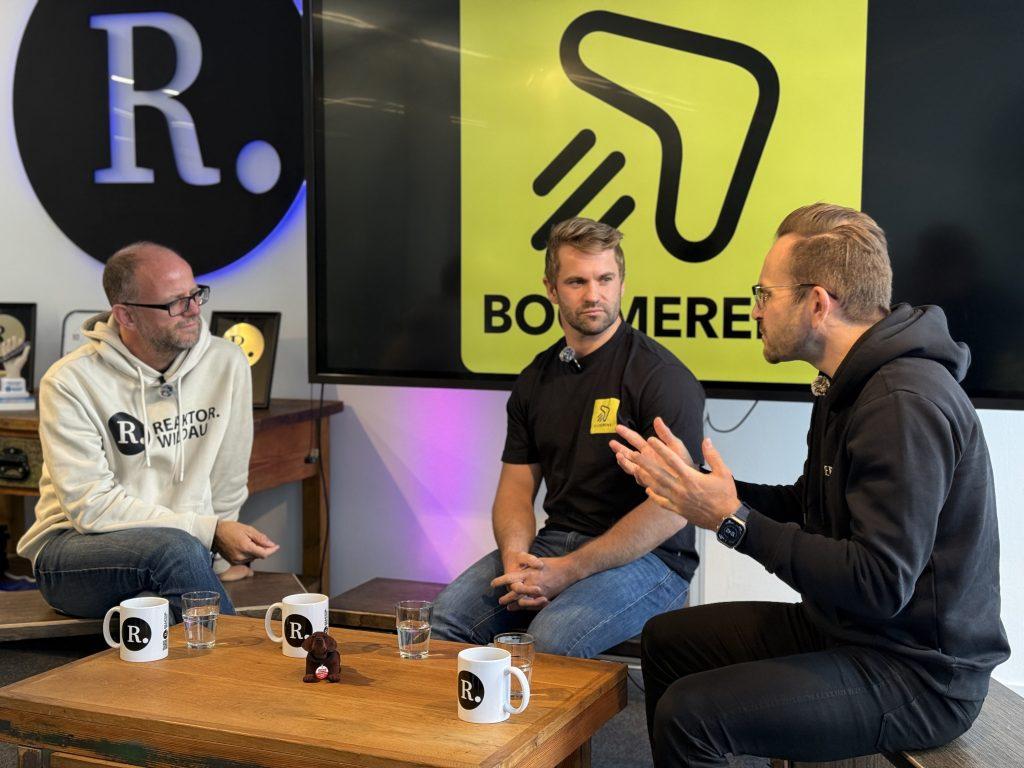
Rafael Kugel (Reaktor Wildau): Stephan, Ron, it’s great to have you here. You’re the founders of Boomerent. Tell us: What exactly do you do, what is your product, and what’s your story?
Stephan Thiel: First of all, thank you very much, Rafael. It’s always a pleasure to be here at Reaktor. We’re a startup that’s been around since June 2026. I bring 16 years of landlord know-how from real estate management, while Ron contributes his AI expertise. Together, we’re developing an external real estate department for commercial tenants. Our goal is to help tenants—whether they run an office, a bakery, or a retail business—systematically reduce their all-inclusive rent.
Ron van de Sand: I’m the career changer in the group. I don’t come from the real estate industry, but I’ve been working in the AI field for ten years. I’m building the platform—from document analysis and OCR to the interpretation of contract texts. We’re currently in the process of transitioning from the first prototype to a new MVP, which we plan to use to scale up.
Rafael Kugel: If I come to you as a tenant, what happens then? What does the process look like?
Stephan Thiel: The real estate market lacks transparency. Data is usually limited to a single building. We’ve realized that tenants often don’t have the time to deal with their lease agreements and complex utility bills. These are often the second-highest costs after personnel. We say: Focus on your core business; we’ll take care of the back office for you.
Ron van de Sand: Exactly. You upload everything that’s important for your property—every letter, every contract. We analyze this using our AI platform. We not only check for plausibility but also track rights, obligations, options, and deadlines. It’s a “single source of truth.”
Rafael Kugel: How much does this cost the customer?
Ron van de Sand: We currently charge 10 cents per square meter managed on our platform. On top of that, there’s an onboarding fee of 350 euros per contract, since we still have to put a lot of manual work into data cleansing. But that’s supposed to be fully automated by the end of the year.
Rafael Kugel: How did the name “Boomerent” actually come about?
Stephan Thiel: The name is a bit ambiguous, but it sparks discussion. The boomerang brings the costs back to where they belong—to the property manager and the tenant. It creates transparency and ensures compliance.
Ron van de Sand: It’s important to note: We’re not a traditional utility bill claim tool. Our primary focus is on transparency and process automation—not just on getting money back from the landlord.
Rafael Kugel: Your startup is still in its infancy. How is the product being received in the market?
Stephan Thiel: We currently have ten active customers and have already generated five-figure revenue in the first two months. We’re scaling quickly. We’re doing particularly well in the healthcare sector—with doctors and pharmacists—as well as in retail. We’ve also already received inquiries from large corporations that want to review hundreds of properties at once.
Ron van de Sand: We currently have 120 lease agreements on the platform. Our pilot customers are extremely important because they provide us with constructive feedback to help us gradually take the platform to the next level.
Stephan Thiel: In addition, we’ve secured strategic partners, such as the Bau-Akademie in Berlin. We have exclusive access to data from 950 office properties. That means we can say with certainty: Are your operating costs in line with the benchmark? That’s our “data moat.”
Rafael Kugel: You’re entirely self-funded. Are you seeking VC funding, or what does your growth path look like?
Ron van de Sand: We’re currently planning to bootstrap. While we’re considering a funding round during the scaling phase to hire sales staff, that’s not in the plans right now. We want to stay as lean as possible.
Stephan Thiel: Our back-office processes have been set up on an agency basis from day one. Our goal for next year is to have at least 1,400 lease agreements on the platform. That will easily cover all our costs. I expect we’ll already be profitable this year.
Rafael Kugel: There are just the two of you, but you often talk about “new employees.” What’s the story behind that?
Ron van de Sand: We’re trying to automate every process—sales, marketing, SEO—before we even consider hiring new people. We use agency-style workflows. It works surprisingly well.
Rafael Kugel: What’s been the lowest point so far, and what’s been the highlight?
Ron van de Sand: There hasn’t really been a low point. The frustration is at its highest when you make good progress in customer meetings and then there’s two months of radio silence. That’s the classic chicken-and-egg problem for startups.
Stephan Thiel: One highlight is definitely that we found each other. We’ve become not just co-founders, but true friends. The fact that we met at an investor event here at Reaktor Wildau was pure luck. We even used personality tests and AI analyses to see if we were a good fit. And we brought our families on board—their support is the key to our success.
Rafael Kugel: Last question: How do you measure success?
Ron van de Sand: If we successfully establish the new platform as a self-service solution this year and get it up and running, we’ll be well on our way.
Stephan Thiel: We’ve clearly defined our goals. If we hit the 200 lease agreements by the end of the year, that’s a strong sign. We’re ready to scale up.
Rafael Kugel: Thank you very much for the interview, Stephan and Ron. Best of luck going forward!
The full interview on video


Newsletter
Startups, stories and stats from the German startup ecosystem straight to your inbox. Subscribe with 2 clicks. Noice.
LinkedIn ConnectFYI: English edition available
Hello my friend, have you been stranded on the German edition of Startbase? At least your browser tells us, that you do not speak German - so maybe you would like to switch to the English edition instead?
FYI: Deutsche Edition verfügbar
Hallo mein Freund, du befindest dich auf der Englischen Edition der Startbase und laut deinem Browser sprichst du eigentlich auch Deutsch. Magst du die Sprache wechseln?