10 Years of Q-Summit: What Happens When Students Start Their Own Startup Conference?


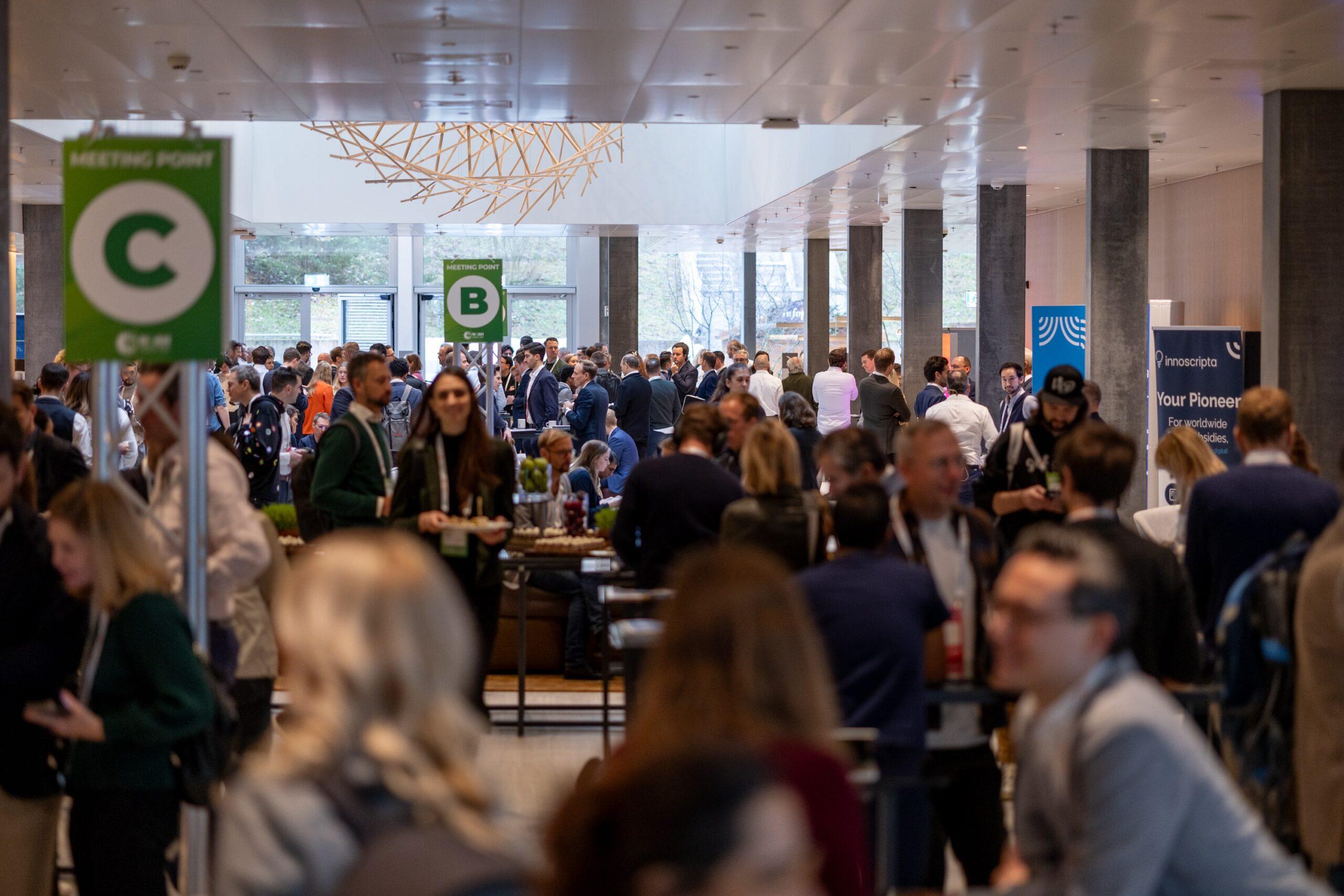
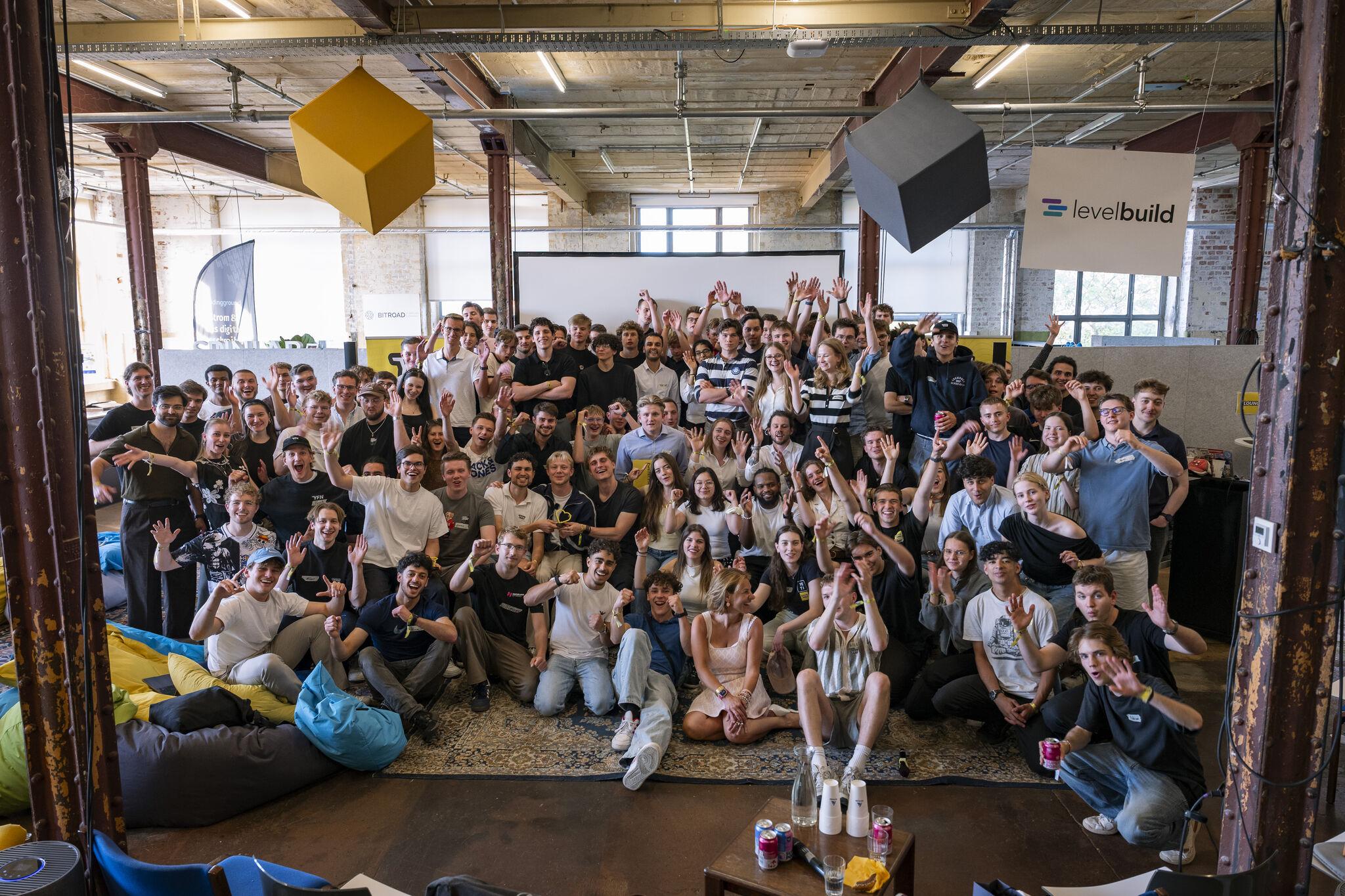
When the last guests left the Q-Summit at the University of Mannheim last April, the next team had already begun planning the upcoming conference. Anyone who takes on one of these roles has earned it: A year earlier, the future team leaders were themselves part of the organizing team, got to know the conference from the inside, and then applied for more responsibility. A year later, they’re welcoming over 1,500 people, coordinating more than 100 partner companies, and overseeing a program featuring more than 30 speakers. Starting in 2026, the program will be expanded for the first time to include a live podcast on the Main Stage. For a program of this scale, other conferences employ a permanent event office. The Q-Summit, on the other hand, is organized entirely by a new team of students every year.
How an Idea Turned into a Conference
Ten years ago, two business administration students at the University of Mannheim asked themselves a simple question: How can ambitious fellow students connect with investors, founders, and companies if there is no established platform for this at their university? They didn’t wait for an answer from outside. Together with about 25 other students, they built a conference from the ground up—handling everything from funding to the program entirely on their own.
That first edition gave rise to the Q-Summit. The various formats now attract more than 10,000 applications, and over 1,000 resumes are collected during the conference alone. This is not a byproduct of a successful program, but rather the actual proof that the original idea worked.
More Than Just a Stage
Anyone who only experiences the Q-Summit through the main stage is only seeing half of the conference. Those who only see the smaller formats know the other half. The Main Stage hosts program items that also have an external impact, such as talks by renowned speakers from companies like Google or the Pitch Battle, where startups compete against each other in front of an audience and a panel of experts. Since 2026, there has also been a new format in the program: a live podcast recorded on-site.
In addition, there are other formats for conference participants. In the “Qube” format—a kind of accelerated investor speed-dating session—15 startups each have 3 minutes to pitch to over 30 investors and answer questions. In the past, this has already led to actual funding discussions. Last year, representatives from seed+speed, HV Capital, and PERI, among others, were in attendance. The day before the actual conference, a hackathon brings together more than 150 students from over 20 countries to work on specific tasks from partner companies such as Cloover, Spherecast, and PicNic over the course of two days.
These formats explain why companies and investors—whom one might not necessarily expect to see on this scale at a public university—are now also participating. For them, the Q-Summit offers direct access to young people before they even become visible in traditional hiring processes. For the students, it is often their first serious exposure to a world to which they would otherwise lack access.
A team that is completely renewed every year
What is remarkable about this development is that it is not based on continuity in the traditional sense. There is no permanent executive board and no staff members who remain in their positions for years. Instead, each generation of organizers hands over full responsibility to the next: to students who proved themselves on the team the previous year and subsequently applied for the lead position.
What remains from one year to the next are the relationships: contacts with partner companies and investors that are maintained over the course of multiple conferences, as well as the knowledge of how formats like Qube or the hackathon function from an organizational standpoint. The focus of the content, on the other hand, changes
changes every year: Each new generation brings its own topics to the table—most recently, for example, questions about cross-border entrepreneurship, capital for European startups, or the impact of artificial intelligence on young companies. On this topic, guests from the OpenAI community were recently invited. The framework remains in place, while decisions on the content are made anew each year—by those currently in charge.
Every year, the entire leadership team steps down from the initiative—a structure that, on the face of it, should seem fragile. The fact that the Q-Summit has grown larger rather than smaller is due to a detail that’s easy to overlook: the handover here isn’t a stopgap measure for when no one has time anymore. It has been part of the concept from the very beginning.
What Remains in the End
From April 1 to 2, 2027, the Q-Summit will celebrate its tenth anniversary at the University of Mannheim’s Baroque castle. The conference will once again be organized by a student team with around 100 active members.
At the University of Mannheim, people regularly come together who, in the coming years, may themselves start a company, make investments, or advise the next organizing team. But the conference will continue to exist—not because someone has preserved it over decades, but because there is always someone willing to take it on for a year and then pass it on. That is precisely what distinguishes a growing ecosystem from an event that eventually comes to an end.






Newsletter
Startups, stories and stats from the German startup ecosystem straight to your inbox. Subscribe with 2 clicks. Noice.
LinkedIn ConnectFYI: English edition available
Hello my friend, have you been stranded on the German edition of Startbase? At least your browser tells us, that you do not speak German - so maybe you would like to switch to the English edition instead?
FYI: Deutsche Edition verfügbar
Hallo mein Freund, du befindest dich auf der Englischen Edition der Startbase und laut deinem Browser sprichst du eigentlich auch Deutsch. Magst du die Sprache wechseln?