Making mistakes is part of the process. Talking about them, apparently, is not.

Failure is part and parcel of starting a business. Anyone who develops a new business model, taps into an unknown market, or launches an innovative technology is inevitably venturing into uncharted territory. Not every idea works, not every decision is the right one, and sometimes an entire company can go under.
In the startup world, this is actually nothing new. Nevertheless, many people find it difficult to speak openly about mistakes—especially when it comes to their own company, their professional livelihood, or personal responsibility.
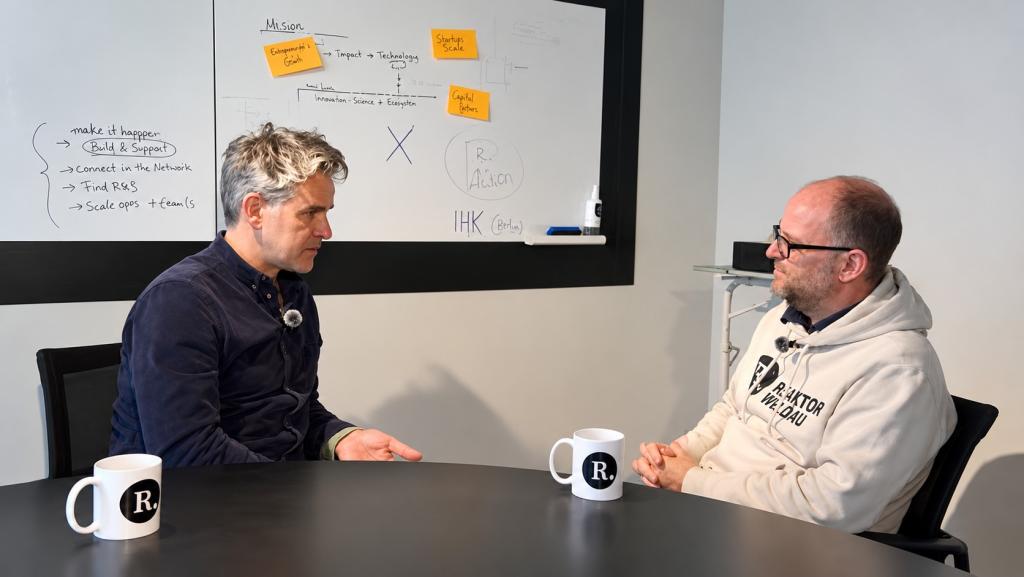
This is exactly where Fuckup Nights come in. Since 2014, Prof. Ralf Kemmer and his team in Berlin have been organizing events where entrepreneurs talk about their biggest business mistakes—not to celebrate failure, but to learn from it.
In a conversation with Rafael Kugel, CEO of the startup accelerator Reaktor Wildau, Kemmer explains why a healthy culture of error is far more than just a willingness to admit mistakes—and why even startups often lose their openness faster than they realize.
“Everyone has a culture of error. The question is, which one?”
Rafael Kugel: Ralf, you’ve been working on the topic of a culture of failure for many years and organize the Fuckup Nights. How did you actually get into this topic?
Ralf Kemmer: I originally come from the advertising and communications industry; I’ve done a lot of work in strategy and concept development, and for most of my professional life I’ve been self-employed or running my own business. Among other things, I was a partner and managing director of my own advertising agency.
Naturally, you experience plenty of mistakes in that line of work. I’ve been through situations myself where things got really tight from a business perspective—right up to the moment when a tax advisor tells you that you actually should have filed for bankruptcy months ago.
That’s why mistakes and failure aren’t abstract concepts to me. I know them from personal experience. Today, through our organization dedicated to a culture of error—both in our consulting work with companies and through our Fuckup Nights—that’s exactly what we focus on.
Rafael Kugel: Germany isn’t necessarily considered particularly tolerant of mistakes. Do we even have a culture of error here?
Ralf Kemmer: Everyone has a culture of error. The question is simply whether it’s positive and constructive.
In Germany, we’re very good at developing processes designed to prevent mistakes. That makes perfect sense in manufacturing, for example. After all, the goal is for a product to be as free of defects as possible.
What we find much more difficult is dealing with mistakes openly—that is, talking about why something didn’t work, what we can learn from it, and how we can do better next time.
Interestingly, we often delve very deeply into the analysis. We want to understand the causes, question decisions, and look for connections. That can be a strength. At the same time, the barrier to even talking about mistakes is often quite high for us.
Failure Is Not an End in Itself
Rafael Kugel: Especially with startups, failure is actually part of the business model. When I’m developing something truly new, I can’t possibly know in advance whether it will work. Without mistakes and failed attempts, there will be hardly any innovation.
Ralf Kemmer: Exactly. In the startup world, this understanding is much more deeply ingrained. Founders know that their ideas can fail. Investors and business angels know this, too.
But a culture of error isn’t just an issue for startups. It’s an important prerequisite for innovation as a whole.
Anyone who wants to develop something new has to experiment. And anyone who experiments has to accept that not every attempt will be successful.
The problem is that we often talk only about failure itself. But it’s actually about much more: about trying things out, questioning existing solutions, and being open to new ideas in the first place.
Rafael Kugel: Still, it makes a difference whether I fail as a founder with my own company or make a mistake as an employee at an established company.
Ralf Kemmer: Of course. Founders consciously choose to take an entrepreneurial risk. They know what they’re getting into.
In companies, the situation is different. Employees bear responsibility for their area of work but often don’t have the same freedoms. They want to do their job well, achieve their goals, and—understandably—avoid any negative consequences.
As a result, mistakes aren’t necessarily addressed openly. Projects continue even though they aren’t actually working. Problems aren’t communicated sufficiently.
And that’s exactly how valuable insights are lost.
Why Startups Can Lose Their Culture of Failure as Soon as They Hire Their First Employee
Rafael Kugel: What does this mean for startups that are currently growing and hiring their first employees?
Ralf Kemmer: That’s a particularly interesting point. As part of a study with students, we looked at how the culture of embracing mistakes in startups is changing.
It turned out that the founders’ open culture of embracing mistakes can come under pressure as soon as the first employees join.
Founders are used to trying things out, taking risks, and constantly questioning decisions. That’s part of who they are.
The first employees, however, come into the company with different expectations. Take someone in sales or engineering, for example. These people are hired to reliably perform specific tasks. They want to deliver good results and fulfill their responsibilities.
This quickly creates a tension between the founders’ experimental mindset and the employees’ need for security and clear expectations.
Rafael Kugel: We actually see this time and again at startups. Founders often think very freely—sometimes even quite wildly. Employees, on the other hand, need guidance and have to keep day-to-day operations running smoothly. How do you bring these different perspectives together?
Ralf Kemmer: A constructive culture of learning from mistakes must be modeled by leadership.
As a founder or CEO, I have to show that I, too, make mistakes—that I make decisions that later turn out to be wrong—and that I’m willing to talk about them.
This creates a space where employees, too, can deal openly with mistakes without immediately fearing negative consequences.
This can also be supported structurally, for example by allowing room for employees’ own ideas and experiments.
But what’s crucial is that leadership itself handles this credibly. It’s not enough to simply include a “culture of error” somewhere in the company’s values.
When founders share their own mistakes
Rafael Kugel: Is there an example where you’ve seen this kind of leadership actually make a difference?
Ralf Kemmer: We once had the two Zalando founders at a Fuckup Night. They spoke there about a failed company they’d founded before Zalando.
About half of Zalando’s workforce was in the audience at the time.
For many employees, this offered a completely new perspective on their founders. They knew them as successful entrepreneurs. Suddenly, they heard about the mistakes the founders themselves had made and the difficult situations they’d faced.
That changed their perception. The founders became more approachable, and the employees realized that mistakes can also be part of successful entrepreneurial development.
That’s exactly what it’s all about: Leaders must share their experiences, foster openness, and create space for experimentation. Only then can a culture of embracing mistakes truly become a part of everyday life.
Why Fuckup Nights Aren’t Lectures on Mistakes
Rafael Kugel: You’re exploring this topic very intensively, including from an academic perspective. But the Fuckup Nights themselves are more like entertaining events. How does that fit together?
Ralf Kemmer: That’s exactly our approach. We want to convey a message through an entertaining format without turning it into a traditional lecture.
At our events, people take the stage to tell their own stories. They’re about business missteps, failed projects, financial problems, and sometimes even existential crises.
These are very personal stories. And that’s exactly why they resonate with people.
We also don’t usually require the speakers to present three or five specific takeaways at the end. Because everyone in the audience takes something different away from a story.
Sometimes they’re very simple insights: You should open letters from the tax office. You should address problems early on. You should seek help before it’s too late.
Others take away insights about leadership, communication, teamwork, or decision-making processes.
The key is that people draw their own conclusions.
Rafael Kugel: So you learn without feeling like you’re sitting in a training session.
Ralf Kemmer: Exactly. It’s an engaging evening filled with real-life stories. You listen, perhaps recognize your own situations in them, and come away with new insights.
We’ve also implemented these kinds of formats with large companies. This allowed people from a wide variety of industries to share their experiences. And even if the stories seemed, at first glance, to have little to do with their own daily work, the participants gained very concrete insights from them.
A personal story can sometimes have more impact than ten presentation slides.
A culture of embracing mistakes doesn’t change overnight
Rafael Kugel: You’ve been organizing Fuckup Nights in Berlin since 2014. Has the culture of embracing mistakes changed noticeably during that time?
Ralf Kemmer: If we’re honest, we’ve hardly seen any fundamental change so far.
We’ve conducted our own studies and surveys. Of course, there are companies that are deeply engaged with the topic. And there have been recurring phases in which the culture of error has received a great deal of attention.
That was the case, for example, in connection with “New Work” or, later, with methods like Design Thinking.
But culture doesn’t change simply because a topic is currently popular.
It’s a long-term process. It requires leaders who model openness and structures that enable a constructive approach to mistakes.
If our events encourage people to reflect on their own experiences and view mistakes differently, that’s already an important step.
Fuckup Night goes Wildau: Learning from Mistakes, Thinking Ahead Together
On November 11, 2026, the event will come to Wildau for the first time in this collaborative format. The Cottbus Chamber of Commerce and Industry (IHK Cottbus), Fuckup Nights Berlin, and the startup accelerator Reaktor Wildau are bringing the event to the Audimax at the Wildau University of Applied Sciences.
Three entrepreneurs will share their personal stories that evening. The focus will be on business missteps, unexpected twists, and the question of what can be learned from them.
Unlike at a traditional conference, the audience is expressly invited to ask questions and join in the discussion.
And there’s another special feature: a fourth, open spot on stage. Anyone who wants to share a story about an entrepreneurial “fuckup” can volunteer on the spot during the open mic session.
Rafael Kugel: Our goal is to bring this openness more strongly into Brandenburg’s startup and business landscape. We have many innovative teams that are breaking new ground. Mistakes are inevitably part of that. What matters is how we deal with them.
Ralf Kemmer: And that’s exactly what an evening like this is ideal for. We create a safe space where people can speak openly and the audience can ask questions.
It’s not about putting anyone on the spot. It’s about understanding stories, sharing experiences, and engaging in conversation with one another.
And, of course, the evening should also be fun—with good conversations, networking, food, and drinks.
Rafael Kugel: Then we’re looking forward to an evening of exciting stories, honest insights, and hopefully many new learnings. And maybe someone from our network will even dare to take the stage.
Fuckup Night in Wildau at a Glance
- Date: Wednesday, November 11, 2026
- Location: Audimax at the Technical University of Wildau
- Doors open: at 5:00 p.m.
- Start: 6:00 PM
- Registration: https://www.eventbrite.de/e/fuckup-night-berlin-goes-wildau-tickets-2003292144732
- Program: Three personal business “fuckup” stories, audience Q&A, and an open fourth speaker slot
- Event partners: Cottbus Chamber of Commerce and Industry (IHK Cottbus), Fuckup Nights Berlin, and Reaktor Wildau
- Admission: Free
- Also: Networking, snacks, and drinks
Conclusion: A healthy culture of failure doesn’t mean glossing over mistakes or shirking responsibility. It means addressing problems openly, learning from experiences, and giving people the courage to try new things. For growing startups in particular, this can become a crucial leadership task.
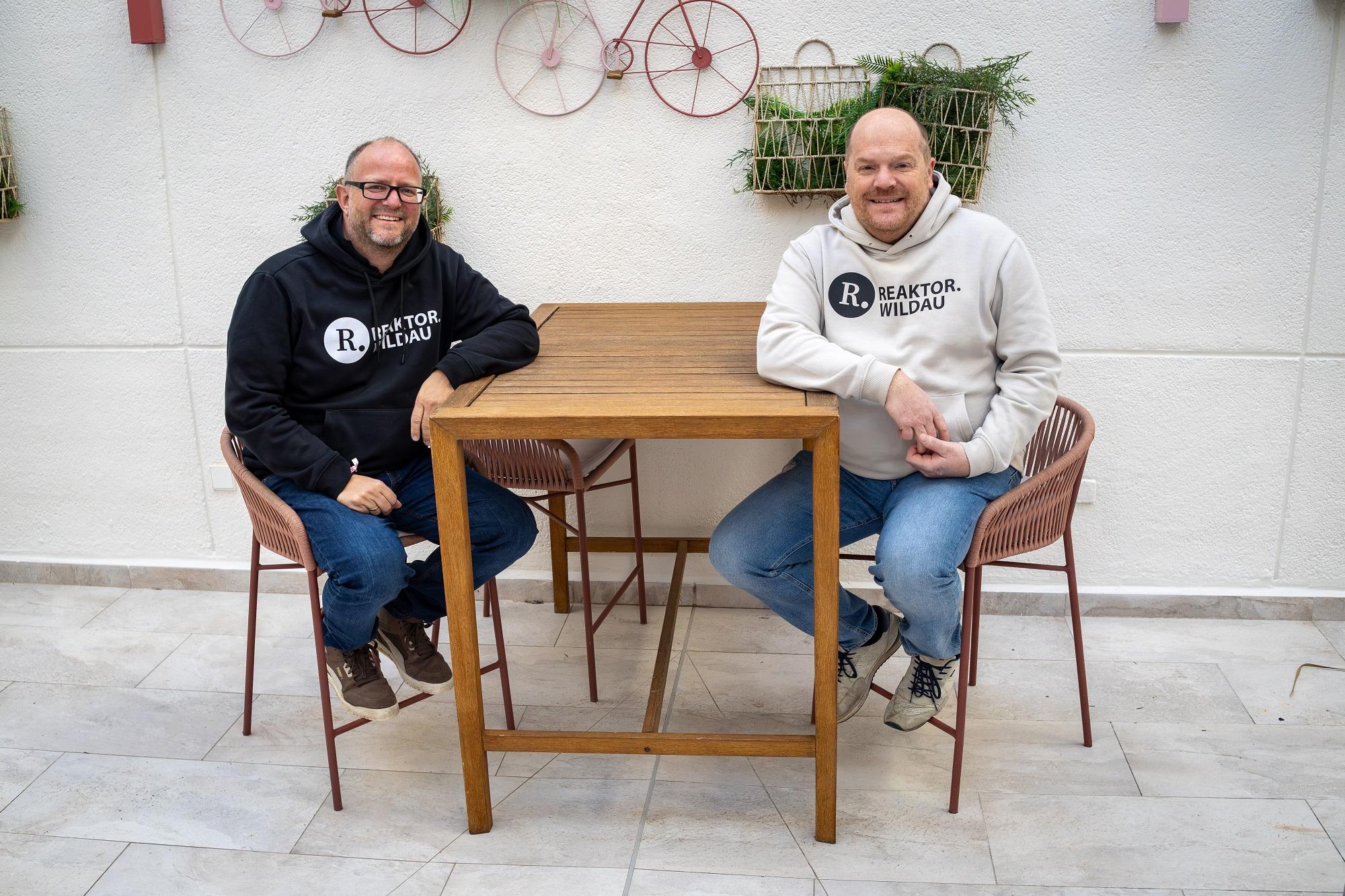
The conversation was led by Rafael Kugel, founder and managing director of the startup accelerator Reaktor Wildau, with Prof. Ralf Kemmer, professor at SRH University Berlin, entrepreneur, and co-organizer of Fuckup Nights Berlin. The interview was editorially shortened and linguistically edited for publication.
The interview on YouTube:





Newsletter
Startups, stories and stats from the German startup ecosystem straight to your inbox. Subscribe with 2 clicks. Noice.
LinkedIn ConnectFYI: English edition available
Hello my friend, have you been stranded on the German edition of Startbase? At least your browser tells us, that you do not speak German - so maybe you would like to switch to the English edition instead?
FYI: Deutsche Edition verfügbar
Hallo mein Freund, du befindest dich auf der Englischen Edition der Startbase und laut deinem Browser sprichst du eigentlich auch Deutsch. Magst du die Sprache wechseln?