German Economy Grows by 0.3 Percent in the Second Quarter

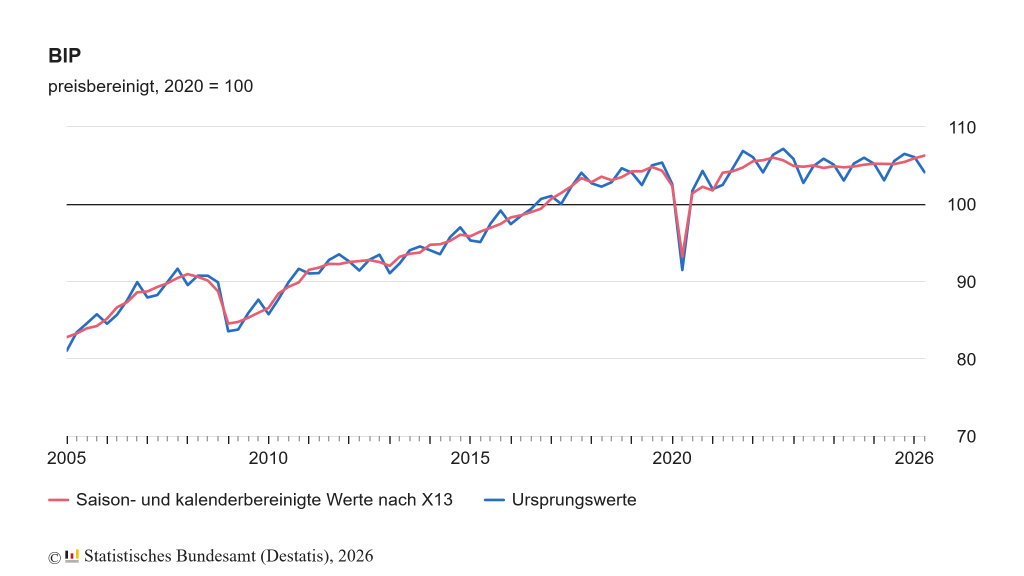
The German economy grew more strongly in the second quarter of 2026 than initially expected. The gross domestic product rose by 0.3 percent compared with the first quarter, after adjustment for price, seasonal, and calendar effects. In its initial flash estimate, the Federal Statistical Office had projected growth of 0.2 percent. Compared with the same quarter of the previous year, economic output increased by 1.0 percent.
This marks a continuation of the German economy’s modest recovery. Already in the first quarter of 2026, GDP had grown by 0.4 percent compared with the previous quarter. Once again, exports were the main driver of this positive development. At the same time, weak investment and the labor market indicate that the upswing continues to rest on fragile foundations.
Exports Drive Growth
Foreign trade showed a distinctly positive trend in the second quarter. On a price-, seasonally-, and calendar-adjusted basis, Germany exported 2.0 percent more goods and services than in the first quarter. Exports of goods rose by as much as 2.6 percent, while exports of services remained flat.
Imports also increased, though at a slower pace than exports, rising by a total of 1.5 percent. Imports of goods rose by 2.1 percent, and imports of services by 0.3 percent.
Compared to the same quarter of the previous year, the growth in exports is even more pronounced. Exports of goods and services rose by 3.7 percent, with goods exports alone increasing by 5.0 percent. Key drivers of growth included chemical products, data processing equipment, electrical and optical products, and other vehicle manufacturing. Trade in goods with other EU countries saw particularly strong growth.
Companies Are Holding Back on Investments
The trend in investment is less positive. Gross fixed capital formation declined by 0.2 percent compared with the first quarter. This reluctance is particularly evident in investments in equipment such as machinery, devices, and vehicles, where investment fell by 1.4 percent. Construction investment rose only slightly, by 0.1 percent. Consumer spending also provided little momentum for growth: both private and government consumer spending increased by only 0.1 percent compared to the previous quarter.
For startups and growth-oriented companies, investment trends are a particularly important indicator. Although the overall economy is growing again, the figures for the second quarter do not yet point to broad-based investment momentum.
Industry Grows Again for the First Time
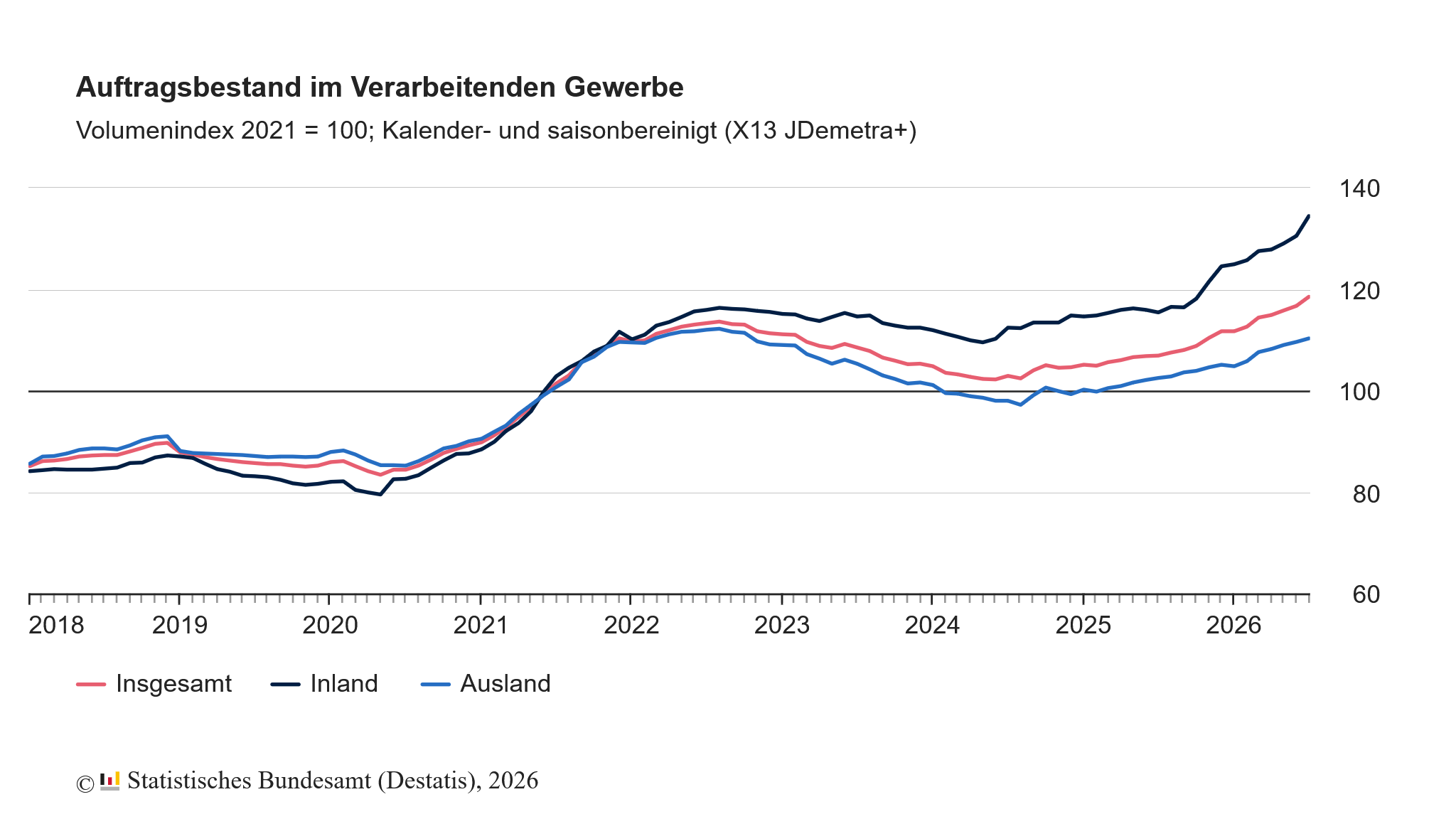
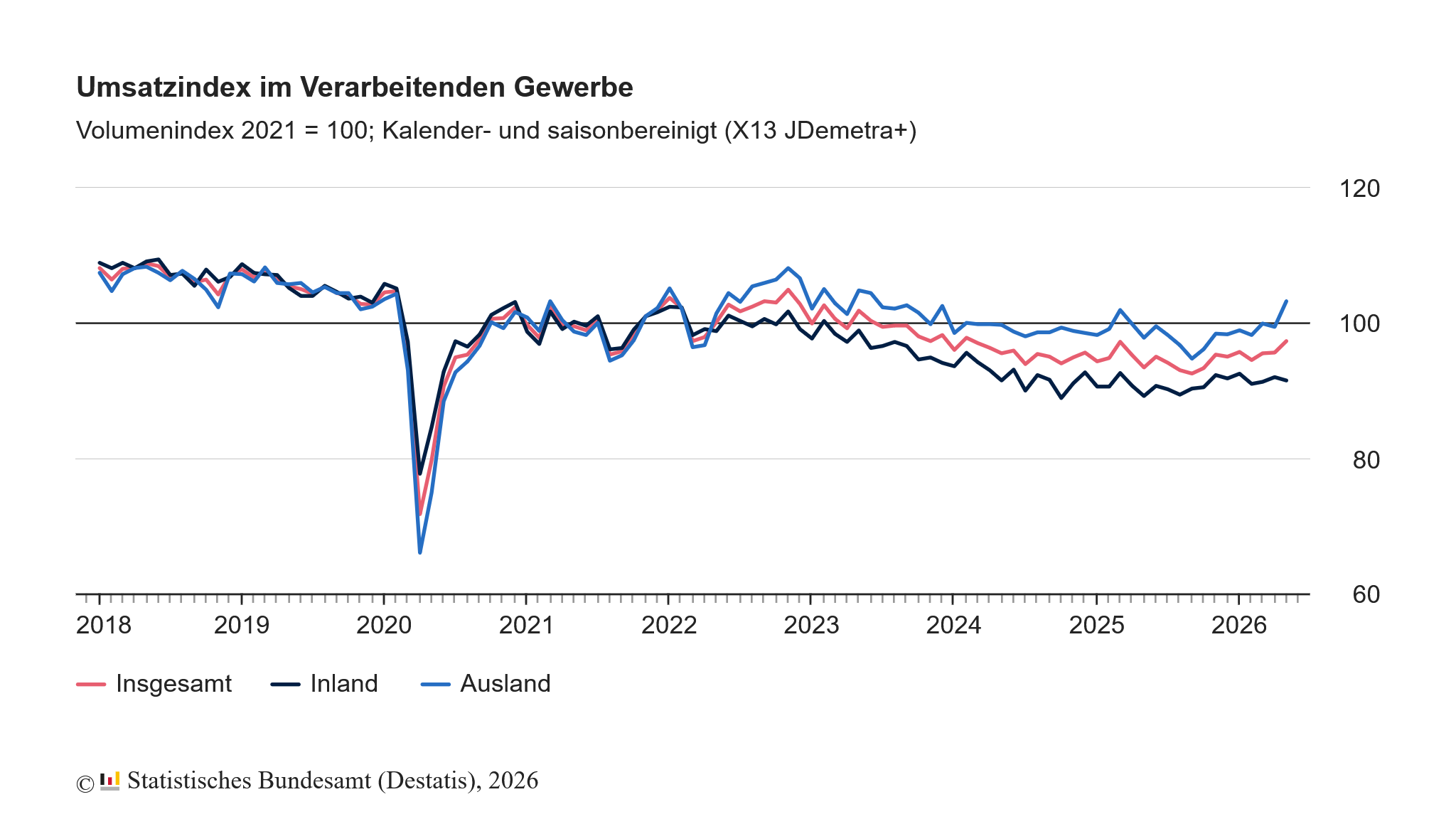
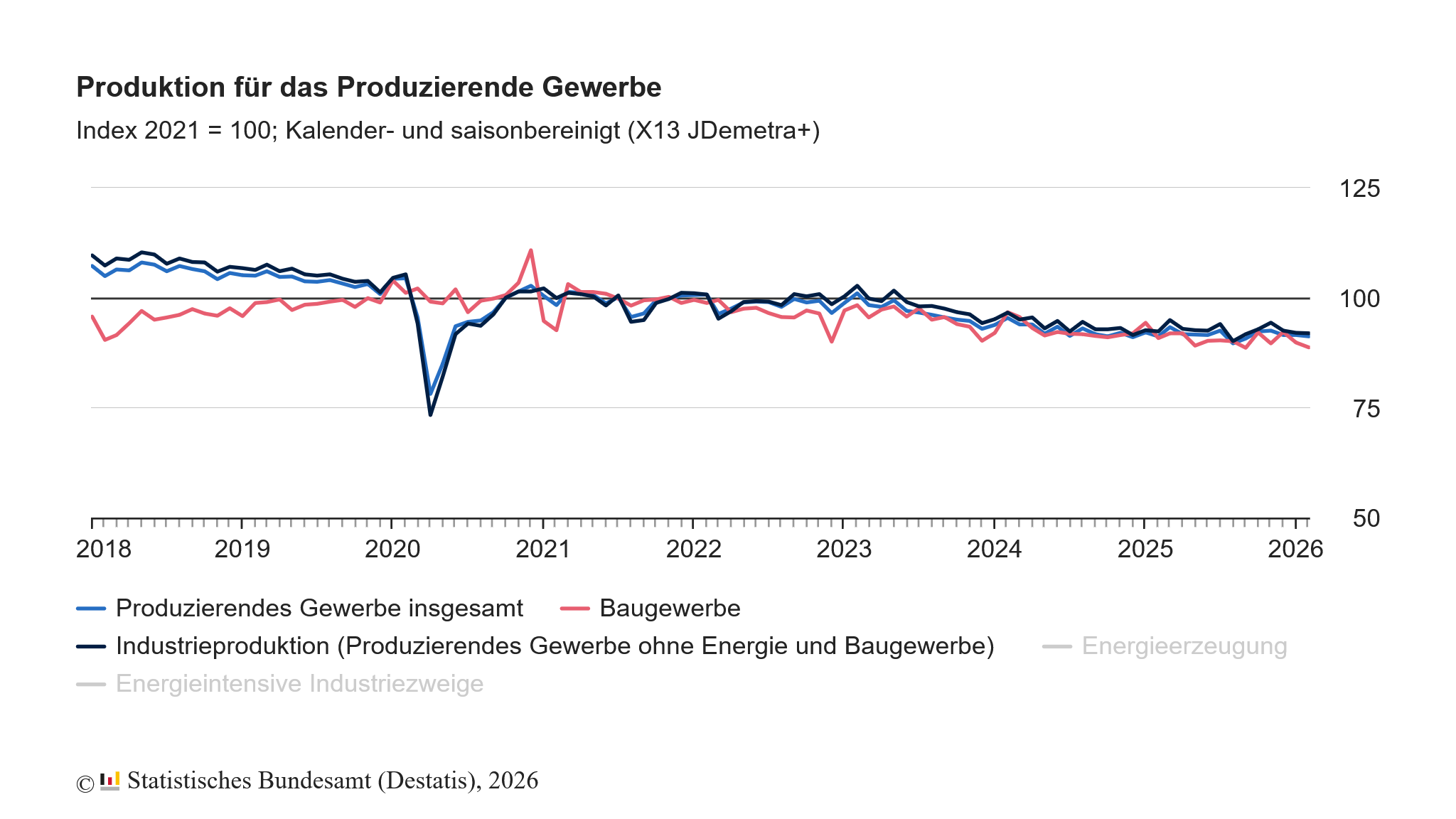
Value added, on the other hand, showed a positive trend. It rose by a total of 0.4 percent compared to the previous quarter. The manufacturing sector even grew by 0.9 percent. The chemical industry and manufacturers of electrical equipment contributed to this growth in particular.
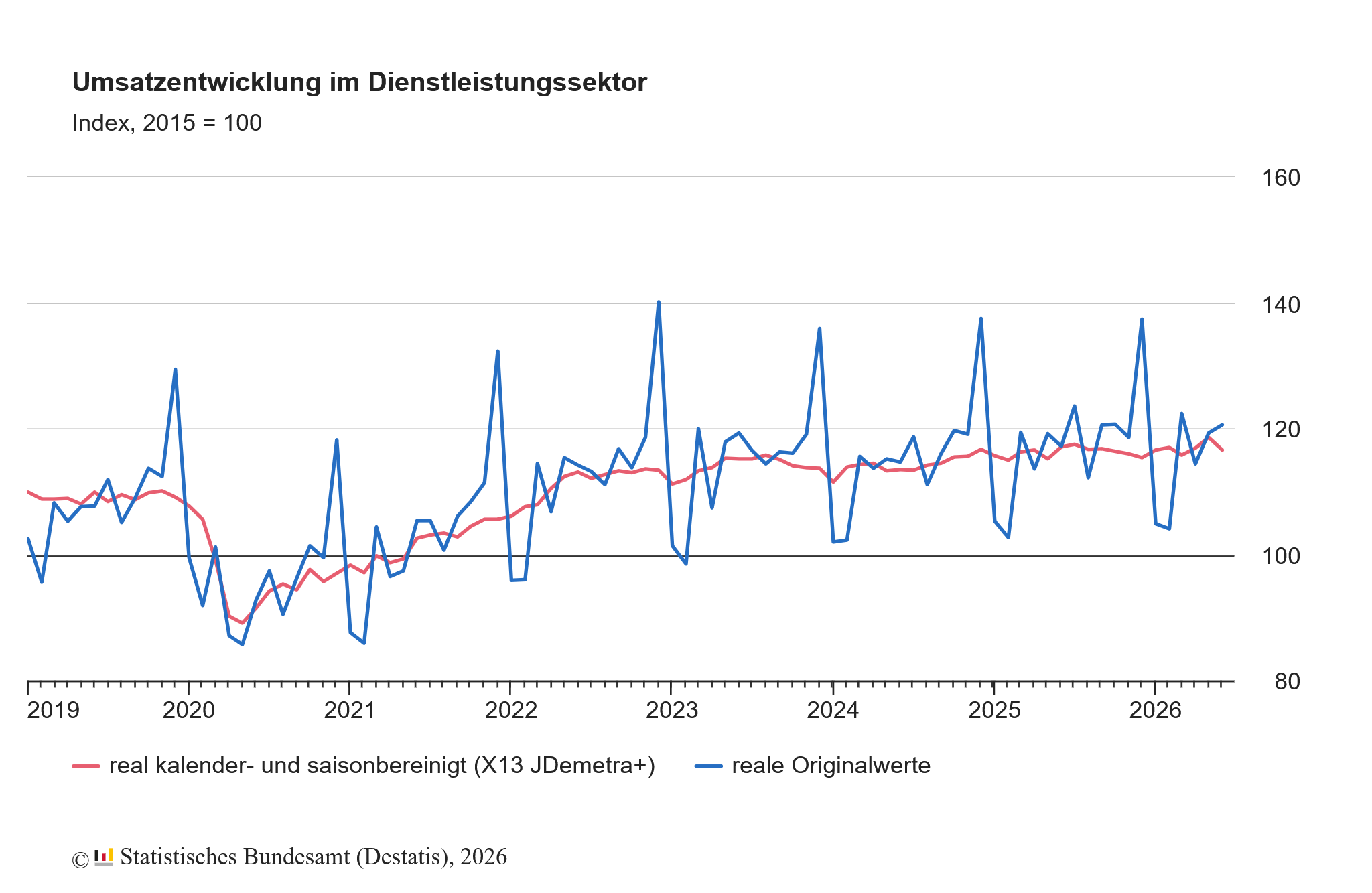
The information and communication sector, real estate and housing, as well as public services, education, and health care each recorded a 0.6 percent increase. Financial and insurance service providers, on the other hand, saw their value added decline by 0.7 percent.
The year-over-year comparison is even more striking. Value added in the manufacturing sector was 1.1 percent higher than in the second quarter of 2025. This marks the first time since the first quarter of 2023 that German industry has recorded growth compared with the corresponding quarter of the previous year.
Growth Has Not Yet Reached the Labor Market
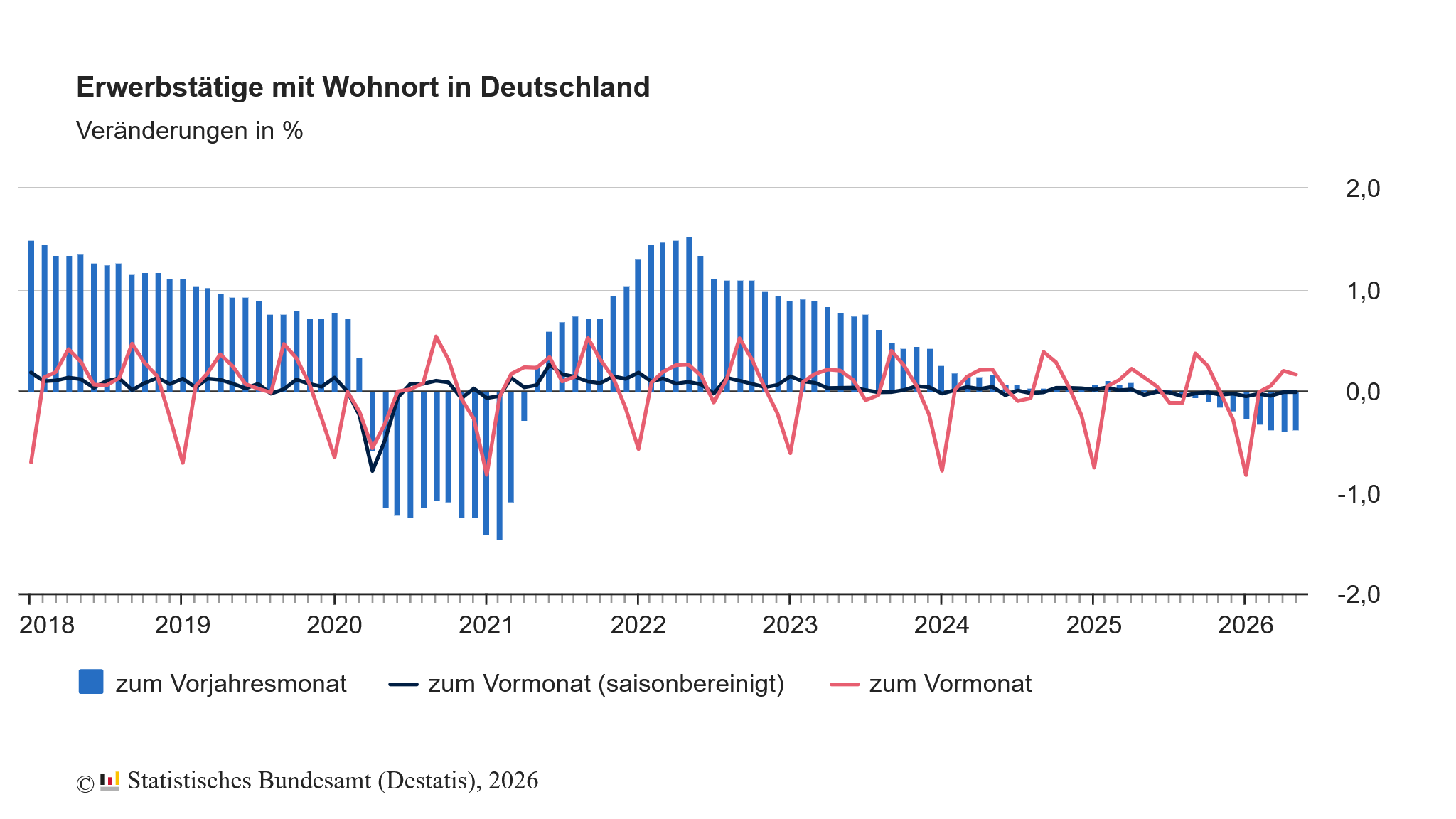
While GDP is growing, the labor market is moving in the opposite direction. In the second quarter, approximately 45.7 million people were employed in Germany. That was 212,000, or 0.5 percent, fewer than a year earlier.
It is important to note that, for the first time since the COVID-19 crisis, employment also declined in the service sectors. The manufacturing and construction sectors also employed significantly fewer people than a year earlier. The total volume of work in the economy fell by 0.5 percent.
At the same time, labor productivity increased. Price-adjusted GDP per hour worked was 1.5 percent higher than the previous year’s level. Calculated per employee, the increase was also 1.5 percent.
Germany Is Growing More Slowly Than the EU
By European standards, Germany continues to lag behind despite the improved figures. While the German economy grew by 0.3 percent compared with the first quarter, the EU as a whole grew by 0.5 percent.
Among the major EU economies, Spain posted the strongest performance with quarterly growth of 0.7 percent. France and Italy each recorded 0.2 percent growth. Compared to the same quarter last year, Germany’s 1.0 percent growth also falls slightly below the EU average of 1.2 percent.
Earlier Economic Crisis Appears Less Severe After Revision
The Federal Statistical Office’s (Destatis) routine revision of older GDP data has resulted in several changes. The correction for 2024 is particularly significant. Previously, Destatis had projected a 0.5 percent decline in economic output for that year. Following the revision, stagnation of 0.0 percent is now reported for 2024.
For 2025, however, the forecast remains at a slight economic growth of 0.2 percent. Data for the years 2011 through 2021 have also been retroactively adjusted. Over this period, cumulative GDP growth is now 0.8 percentage points higher than previously calculated.
Recovery with a Question Mark
The current figures thus paint a mixed picture. After years of stagnation and a weak economy, the German economy is growing again. Exports and parts of the industrial sector are performing well, and GDP has now risen for two consecutive quarters.
However, it is still too early to speak of a broad-based recovery. Companies are cutting back on capital expenditures, private consumption is showing little movement, and the number of people employed is declining. At the same time, Germany continues to grow more slowly than the EU as a whole.
The question for the coming quarters will therefore be whether the export-driven recovery will give rise to stronger domestic investment and growth momentum.

Newsletter
Startups, stories and stats from the German startup ecosystem straight to your inbox. Subscribe with 2 clicks. Noice.
LinkedIn ConnectFYI: English edition available
Hello my friend, have you been stranded on the German edition of Startbase? At least your browser tells us, that you do not speak German - so maybe you would like to switch to the English edition instead?
FYI: Deutsche Edition verfügbar
Hallo mein Freund, du befindest dich auf der Englischen Edition der Startbase und laut deinem Browser sprichst du eigentlich auch Deutsch. Magst du die Sprache wechseln?