Startups are on the rise again in Germany, while the industrial base continues to shrink

At first glance, the latest figures from the Federal Statistical Office paint a positive picture for Germany as a business location: In the first half of 2026, more companies were founded, while at the same time fewer large businesses closed down.
However, when the startup figures are compared with the latest insolvency and employment data, a much more contradictory picture emerges. Germany is gaining new companies, but at the same time is losing industrial jobs on a significant scale.
352,400 New Businesses in Six Months
In the first half of 2026, approximately 352,400 new businesses were established in Germany. This represents an increase of 8.3 percent compared to the same period last year.
The trend is also upward for economically significant new businesses. Approximately 69,600 businesses—whose legal structure and number of employees suggest greater economic significance—were newly established. Here, growth compared to the first half of 2025 stands at 3.0 percent.
At the same time, fewer larger businesses were completely shut down. Their number fell by 3.8 percent to approximately 49,800.
At first glance, this is a positive sign. Especially during an economically difficult period, the willingness to take entrepreneurial risks does not appear to have disappeared by any means.
Insolvency figures tell a different story
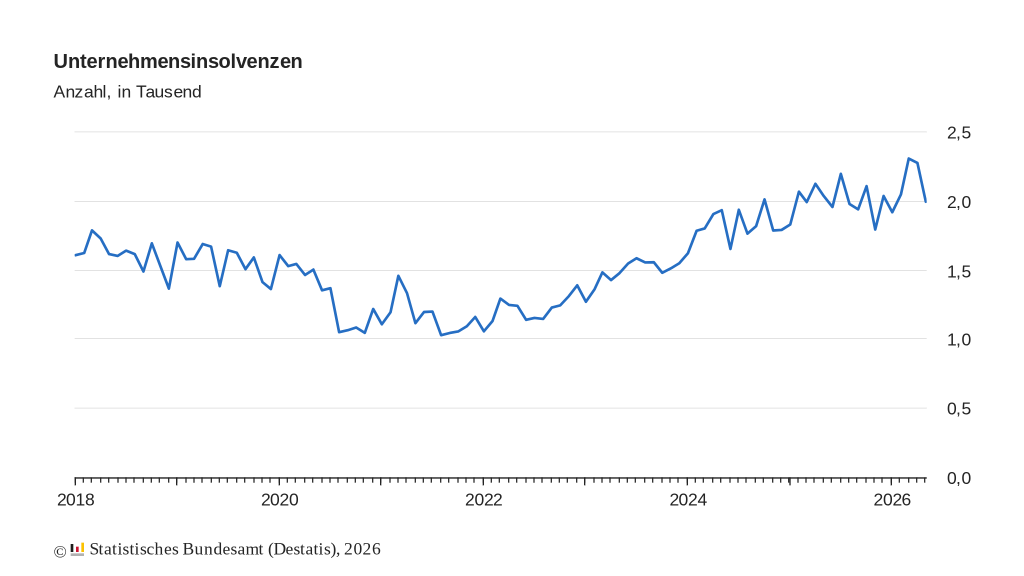
At the same time, economic pressure on existing companies remains high.
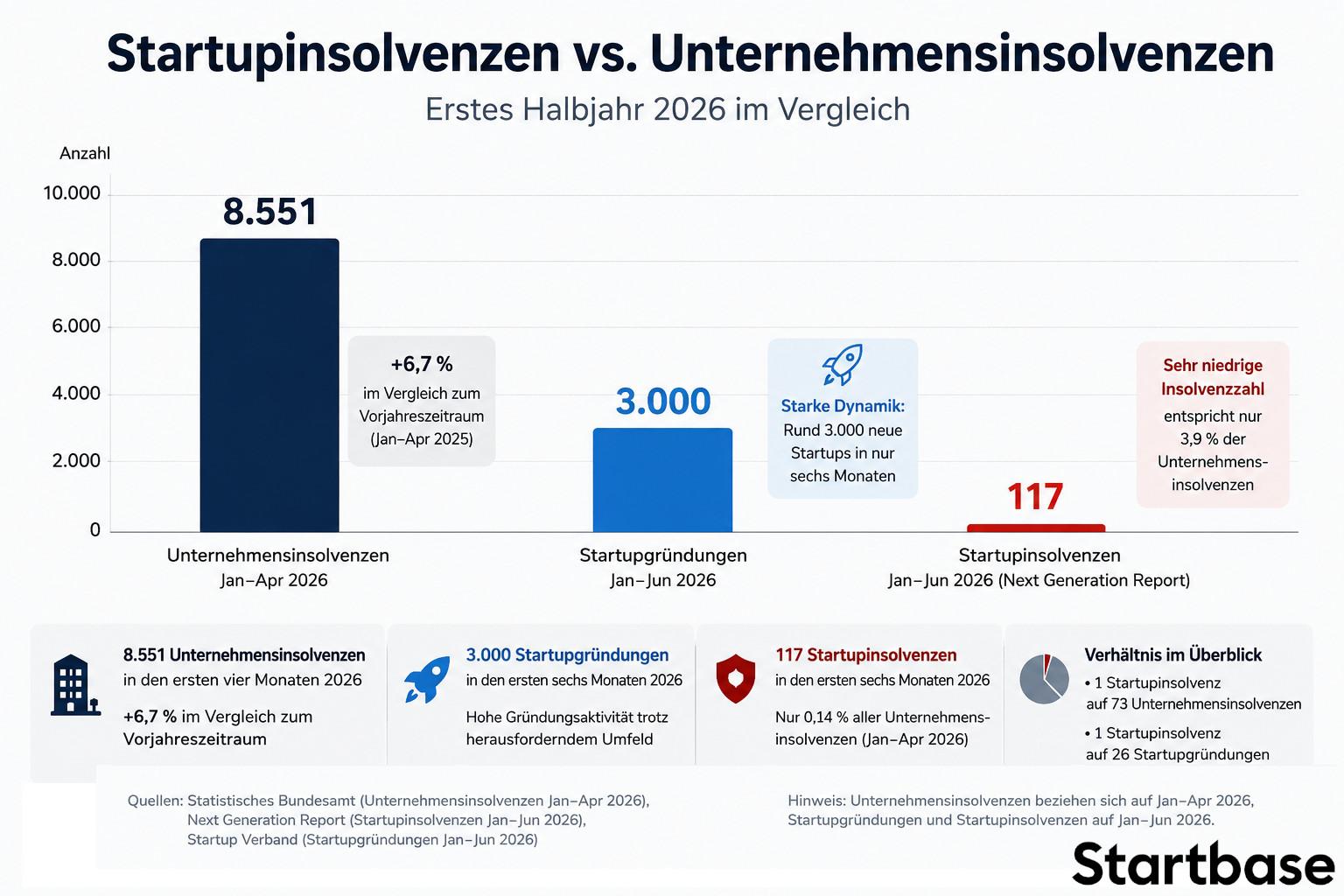
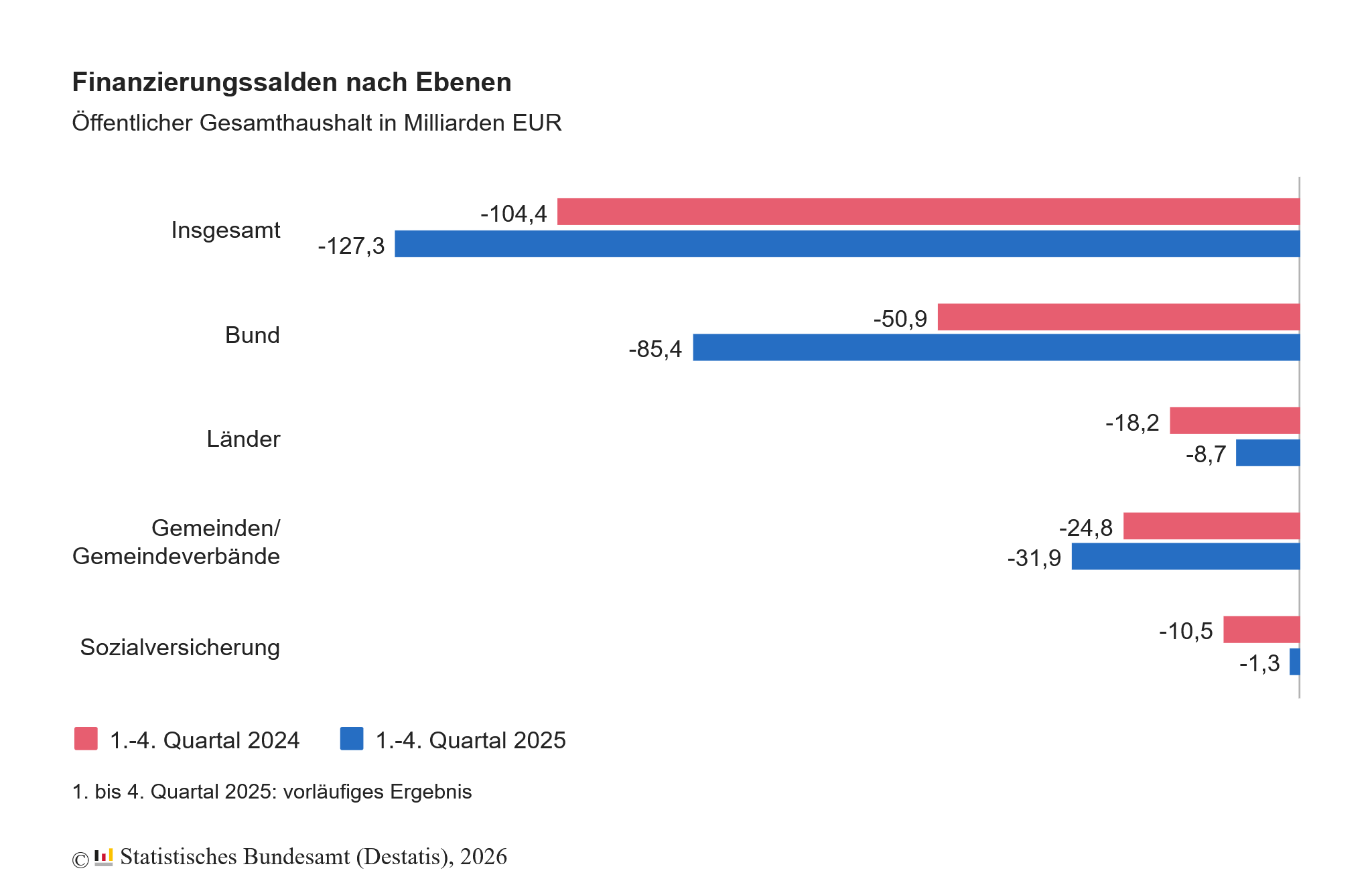
Although local courts recorded 1,995 corporate insolvencies in May 2026— 2.0 percent fewer than in May 2025—an upward trend remains evident when viewed over a longer period.
From January through May, 10,546 corporate insolvencies were recorded. That was 4.9 percent more than in the same period the previous year.
Another interesting development is that creditors’ claims fell significantly despite the rising number of cases. They totaled approximately 15.4 billion euros in the first five months of 2026, down from 25.7 billion euros in the same period the previous year.
This suggests that, at least, the scale of the affected companies has shifted. While more companies are filing for insolvency so far, the overall financial losses are lower.
The situation is particularly dire in the transportation and warehousing sector. With 57.2 insolvencies per 10,000 companies, this sector has the highest insolvency rate. It is followed by the hospitality industry with 49.2 and the construction industry with 44.0 cases.
The biggest warning sign comes from the manufacturing sector
However, the trend in the industrial sector is likely to be of even greater concern than the insolvency figures.
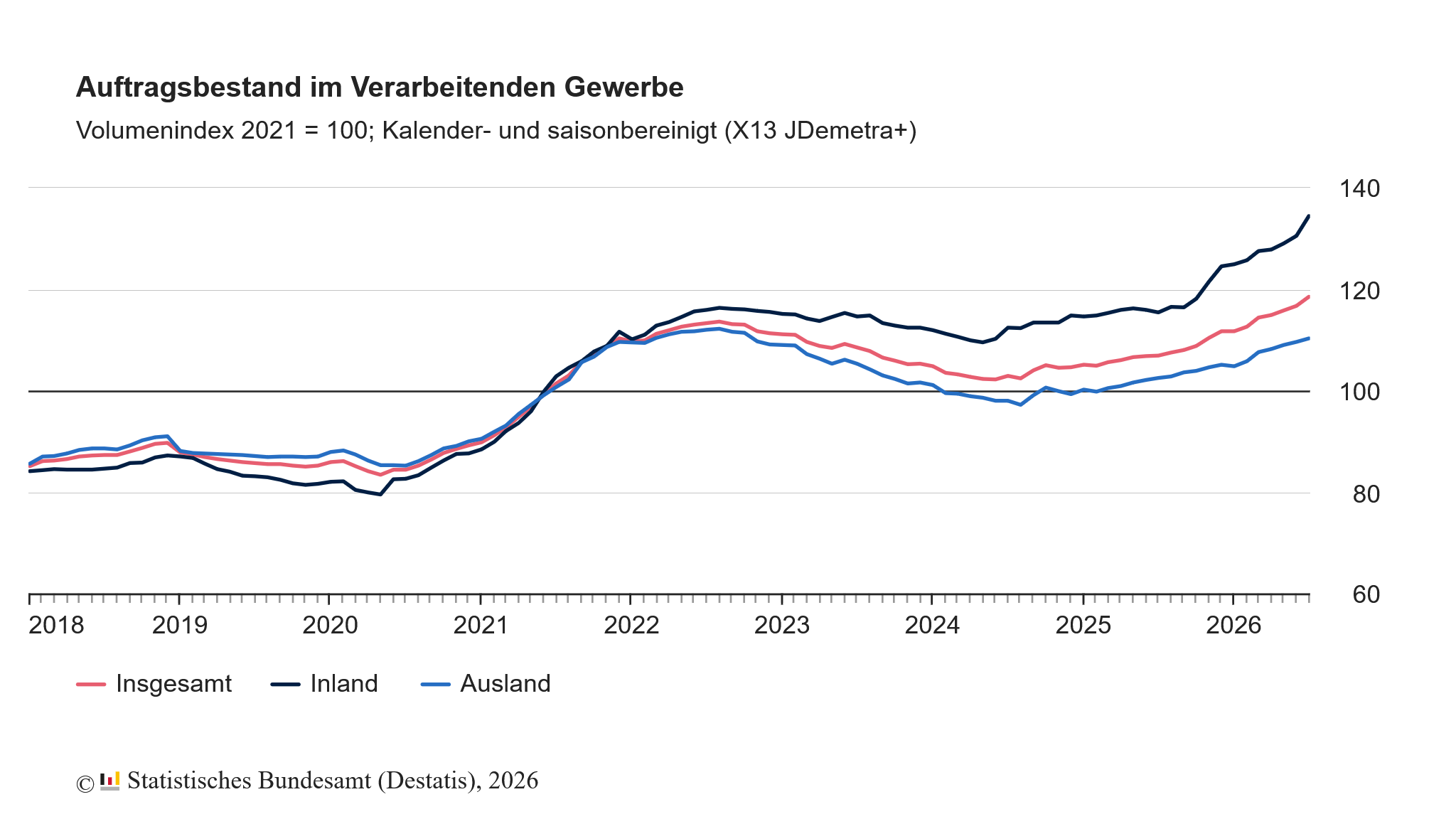
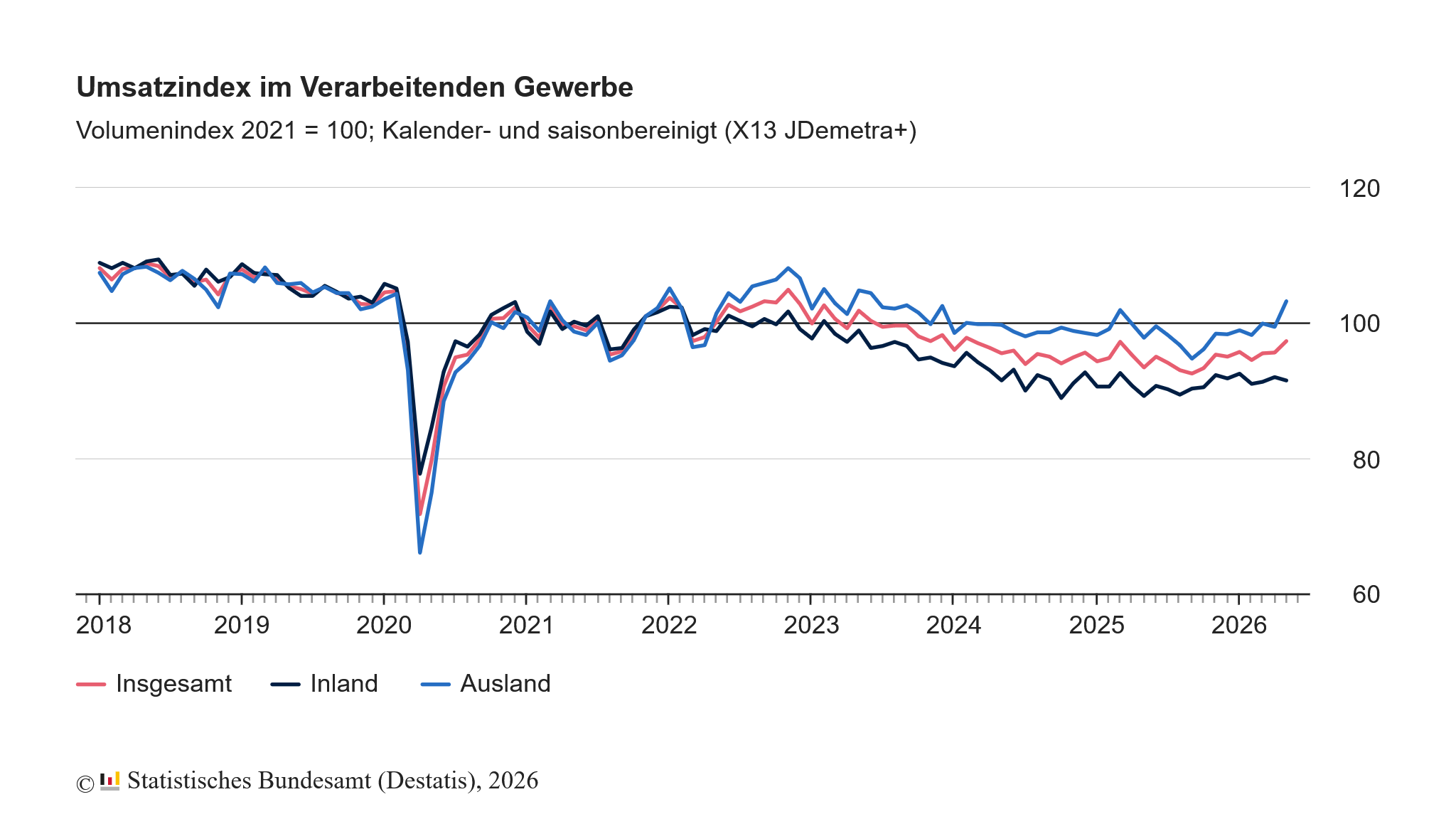
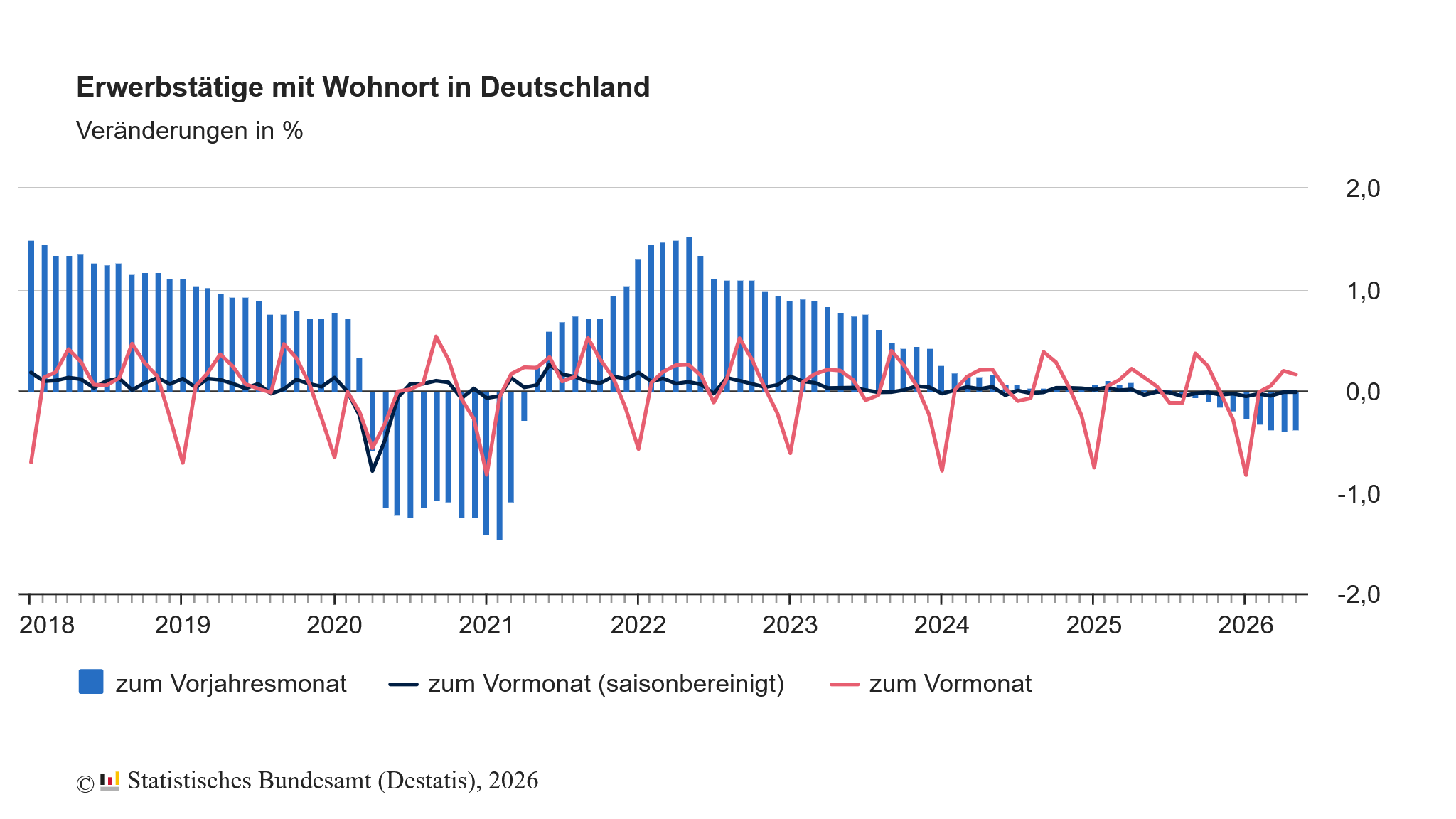
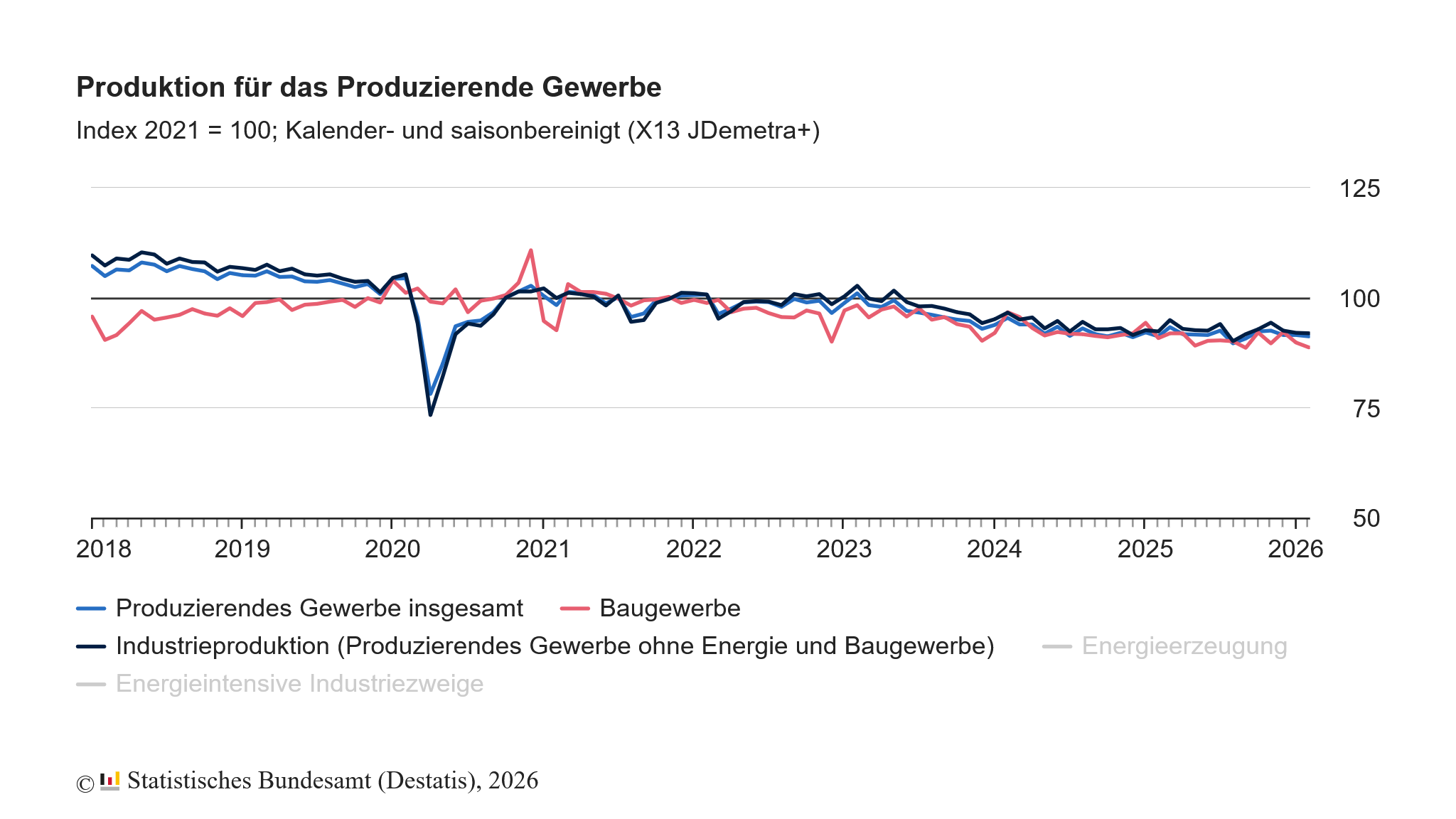
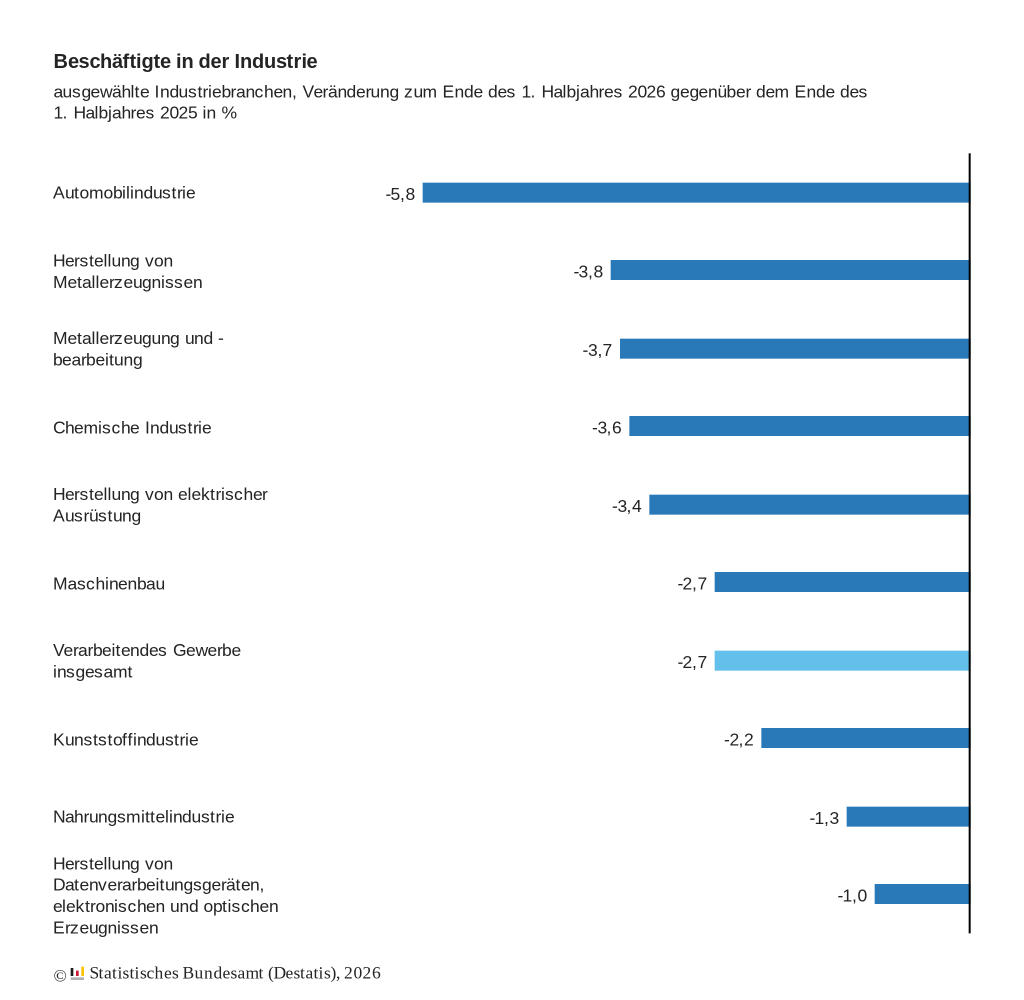
Within just one year, 144,100 jobs were lost in the manufacturing sector. By the end of the first half of 2026, 5.29 million people were still employed there. This corresponds to a decline of 2.7 percent.
Ironically, one of Germany’s key industries has been hit particularly hard.
In the automotive industry, 42,300 jobs were lost within a year. Employment fell by 5.8 percent to just 691,500 people. This means that fewer people are working in the German automotive industry than at any time since 2005.
The trend is even more dramatic among traditional parts suppliers. There, employment fell by 7.6 percent to 219,500 people. Among vehicle and engine manufacturers, the decline was 6.1 percent.
And the problem is by no means limited to the auto industry. The metal, chemical, electrical engineering, and mechanical engineering industries are also losing jobs. Even Germany’s largest industrial sector, mechanical engineering, recorded a decline of 2.7 percent.
Startup Boom Meets Structural Change
Thus, the three latest statistics paint an unusual picture. Germany does not necessarily have a startup problem. Rather, Germany could be facing a scaling and structural problem.
352,400 new businesses within half a year show that economic activity continues to emerge. The Federal Statistical Office even classifies 69,600 of these as startups of greater economic significance.
At the same time, however, well-paid industrial jobs are disappearing on a significant scale.
This is crucial from an economic perspective. After all, a business registration is not automatically a substitute for a lost industrial job. What will be decisive is which companies emerge from today’s startups, how productive they become, how many people they employ, and whether this leads to new industrial value creation.
New companies will eventually have to fill the gap
This is precisely where one of the central challenges of the coming years lies.
Startups and young companies are often viewed as a complement to the established economy. However, in light of the ongoing structural change, they may increasingly have to take on a different role: they must replace some of the value creation that is being lost in traditional industries. This makes the rising number of new business registrations fundamentally encouraging.
But in the long term, the decisive metric will not be how many businesses have been registered. What matters is how many of them grow into companies with 50, 500, or 5,000 employees. Germany therefore needs more than just an increase in the number of startups. It needs framework conditions under which young companies can develop as quickly as possible into major employers, industrial innovators, and internationally competitive enterprises.
A Positive Sign with a Clear Caution
The current figures are therefore neither a pure crisis report nor a cause for unbridled optimism.
A 3.0 percent increase in the number of larger companies being founded and an 8.3 percent increase in new business start-ups overall are a strong signal. At the same time, these figures are offset by rising corporate insolvencies so far this year and the loss of 144,100 industrial jobs.
So, Germany is certainly seeing new business startups. The far more important question is: Will this lead quickly enough to the creation of companies that can generate the jobs, value added, and competitiveness in the future that are currently being lost elsewhere?

Newsletter
Startups, stories and stats from the German startup ecosystem straight to your inbox. Subscribe with 2 clicks. Noice.
LinkedIn ConnectFYI: English edition available
Hello my friend, have you been stranded on the German edition of Startbase? At least your browser tells us, that you do not speak German - so maybe you would like to switch to the English edition instead?
FYI: Deutsche Edition verfügbar
Hallo mein Freund, du befindest dich auf der Englischen Edition der Startbase und laut deinem Browser sprichst du eigentlich auch Deutsch. Magst du die Sprache wechseln?