FUSION 2026: Brandenburg Aims to Finally Bring Together Research, Capital, and Entrepreneurship

How does research become a marketable product? How does a good idea secure the necessary capital? How do startups land their first major clients? And what happens when young tech companies encounter a small-to-medium-sized business that is simultaneously facing digitalization, transformation, and a massive succession challenge?
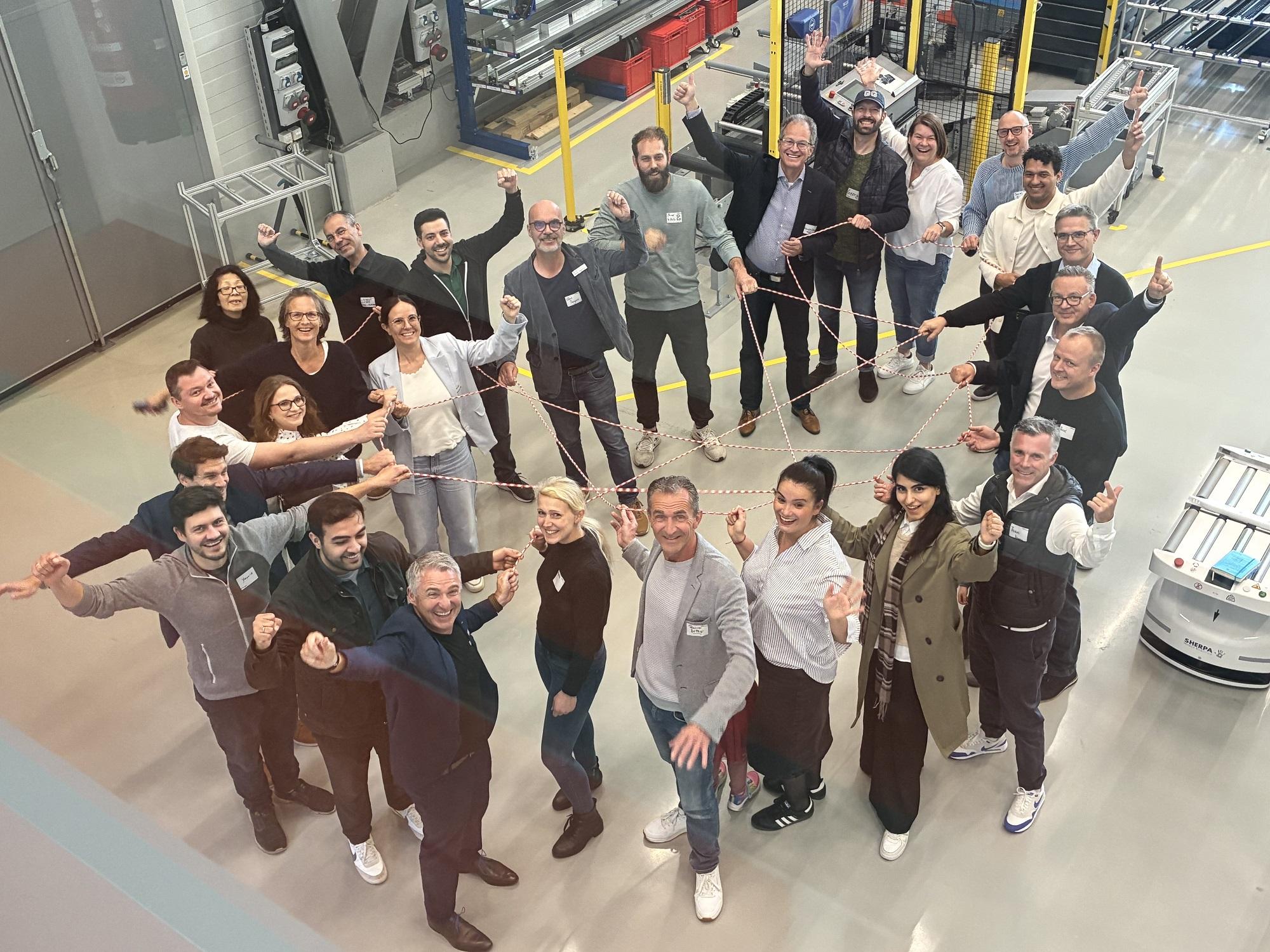
These were the big questions that FUSION 2026 in Wildau set out to address. But even the event’s motto suggested that the answers should not necessarily be sought in new institutions, funding programs, or individual measures: “Connecting the Dots of Science, Innovation, and Entrepreneurship.”
After all, many of the necessary elements have long been in place. Universities conduct research, founders develop technologies, investors seek investments, development banks provide capital, established companies need innovations, and public institutions aim to facilitate economic development. The challenge lies in actually drawing lines between these individual points.
That is exactly what FUSION 2026 set out to do.
Wildau as an Example of How Transformation Can Work
The fact that the event took place in Wildau, of all places, was fitting given the location’s history. Mayor Frank Nerlich recalled that the city’s industrial development began in the late 19th century with locomotive manufacturing. Following the economic upheaval resulting from German reunification, a second transformation took place: In 1991, the Wildau University of Applied Sciences was founded, and in 1994, the Technology and Start-up Center (TGZ) was added. Today, the university, the TGZ, the Center for Aerospace, Fraunhofer, and Reaktor Wildau, among others, form a new innovation ecosystem.
Over the decades, locomotive and heavy machinery manufacturing have thus evolved into deep tech, artificial intelligence, mobility, and energy.
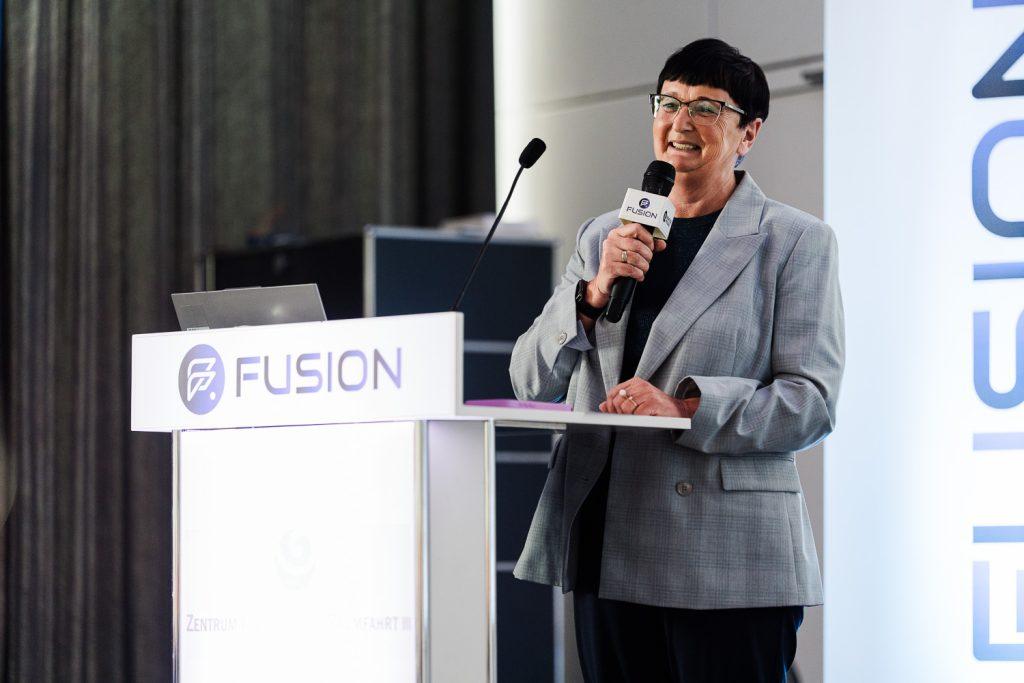
Prof. Dr. Klaus Martin Melzer, Vice President for Research and Transfer at TH Wildau, made it clear, however, that a collection of institutions alone does not yet constitute a functioning ecosystem. What is crucial, he said, is the actual collaboration among the people behind these initiatives. Under the umbrella of “Dahme Innovation,” academia, economic development, and politics have drawn closer together in recent years. At the same time, Melzer called for greater efforts to overcome administrative boundaries between Berlin and Brandenburg in day-to-day innovation work.
Marion Schirmer of the Dahme Spreewald Economic Development Agency boiled down the prerequisites for successful business development to three factors: people who believe in their idea, a functioning network, and the necessary infrastructure. According to Schirmer, the centers for aerospace and future technologies alone offer approximately 30,000 square meters of space, with more than 90 companies already based there.
Wildau is thus itself a prime example of the conference’s central theme: An innovation hub is not created by a single major breakthrough, but rather by connecting various structures over the course of many years.
Brandenburg finally wants to generate more value from research
Carsten Schöning, head of the Department of Economic Policy, Start-ups, and Foreign Trade at the Brandenburg Ministry of Economic Affairs, then shifted the focus to the economic policy dimension.
Startups are no longer a side issue for Brandenburg. Especially in fields such as AI, energy, mobility, and health, the state views them as an integral part of its future economic development. More than 17 million euros are set to be invested by 2028 in infrastructure for technology-oriented startups and the supported startup centers. In addition, Schöning announced the Future Tech Fund Brandenburg as a tool for building and scaling companies.
At the same time, he addressed the well-known obstacles. Processing times, bureaucracy, and lengthy utility connections can delay investments. Among other things, Schöning cited halving processing times at JTF Unternehmensförderung as a concrete goal.
His core message, however, extended beyond funding programs: innovation cannot be mandated. It arises from interaction. This established an early guiding principle that would run through nearly all subsequent agenda items.
Günter Faltin: Think First, Then Finance
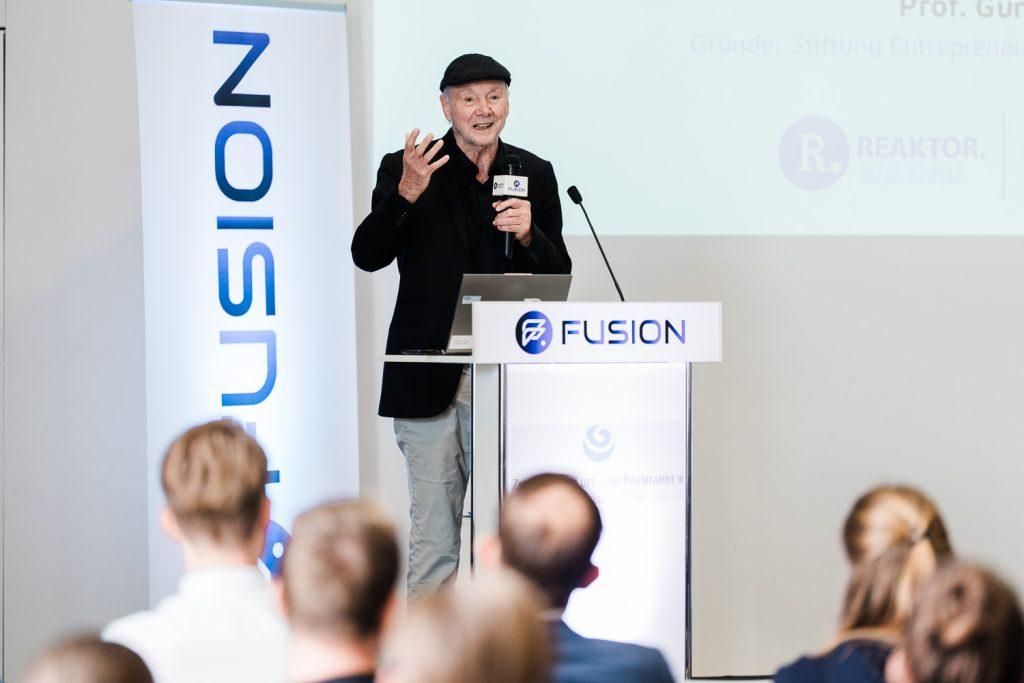
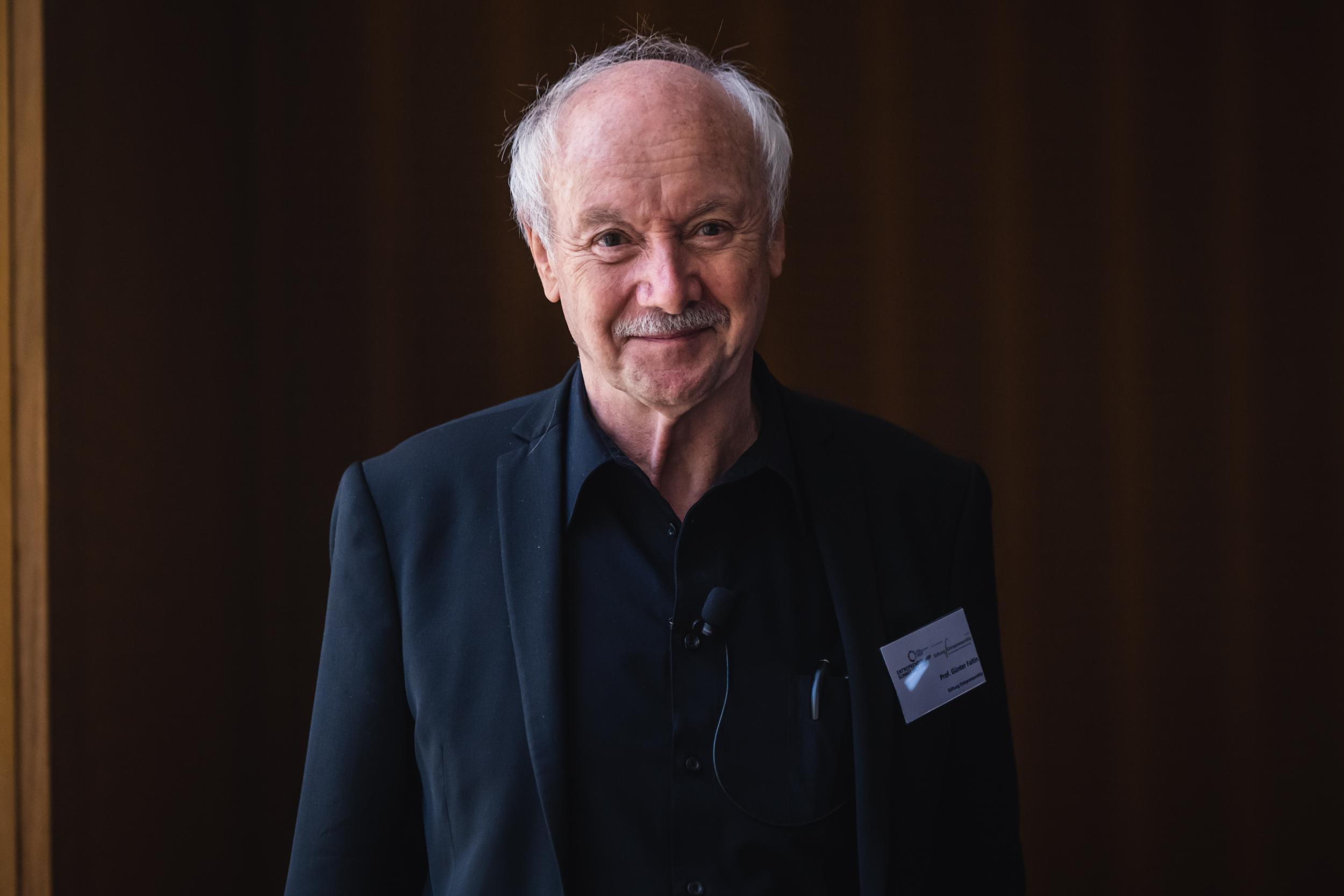
Prof. Dr. Günter Faltin deliberately offered a counterpoint to the ubiquitous debate on financing.
The entrepreneurship pioneer and founder of TEEKAMPAGNE framed his keynote around a credo that was as simple as it was provocative: “Brains beat capital.” (Here’s an extremely fascinating interview with Prof. Dr. Günter Faltin at Startbase)
For Faltin, entrepreneurship does not begin with the question of the next round of funding. It must start with an exceptionally good and robust business concept. Nor should the business plan be confused with reality. It is, first and foremost, a set of hypotheses about the product, price, and distribution. It is therefore crucial to engage with real customers as early as possible and test these assumptions.
With this, Faltin raised a question that is occasionally lost, especially in the funding-driven startup ecosystem: Is a company good because investors are willing to put money into it, or do investors invest because an exceptionally good company is emerging?
For him, entrepreneurship is also more than just starting a business. Entrepreneurship means taking on responsibility and actively helping to shape society. His appeal: Founders shouldn’t let anyone talk them out of starting a business, but they should think through their concepts much more thoroughly.
Good concepts still need capital
However, even the best concept can’t succeed without any money at all.
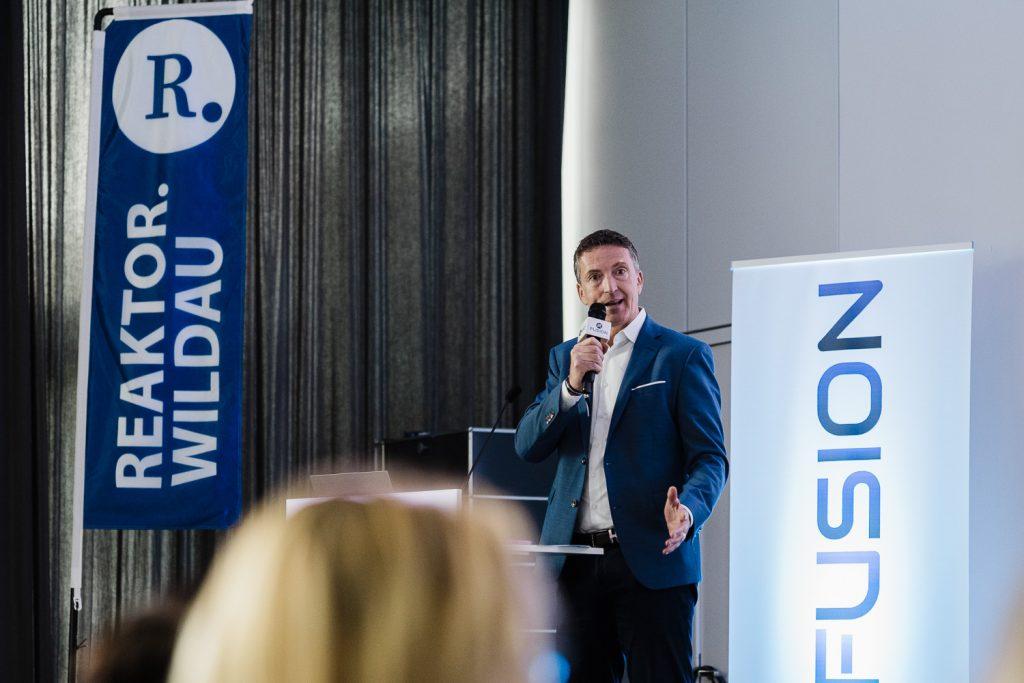
Ulrich Scheppan, CEO of the Investment Bank of the State of Brandenburg (ILB), therefore described the ILB’s role as that of a bridge-builder. Grants, subsidized loans, and equity capital are intended to help, in particular, where private markets do not yet provide sufficient financing in the early stages of a company’s development. Public capital is not intended to replace private capital, but rather to mobilize it.
The situation remains particularly challenging for technology-oriented companies. Battery technologies, medical technology, and other “deep tech” fields often require long development cycles before generating significant revenue.
And even once this hurdle is cleared, the next one awaits: scaling up.
Anyone looking to build up production capacity or expand internationally quickly needs significantly larger amounts of capital. Scheppan’s goal is therefore to create framework conditions under which successful companies can complete their next growth phase in Brandenburg, rather than having to relocate to do so.
Eve Büchner: “Team beats idea”
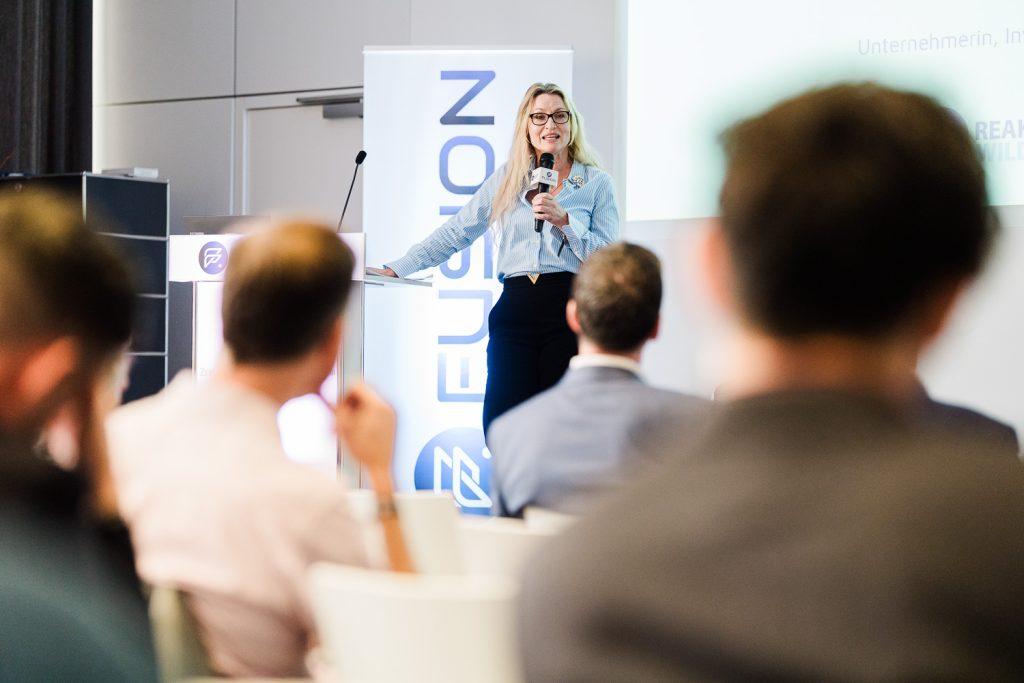
Business angel Eve Büchner examined the same problem from an investor’s perspective and painted a mixed picture.
In her assessment, Brandenburg has an exceptionally attractive funding framework. The weaknesses lie less in the existing instruments than in their speed, predictability, and flexibility. Startups, in particular, need to be able to adapt their business models without coming into conflict with rigid funding criteria. Funding gaps between different programs could also threaten the very existence of young companies.
Büchner formulated her investment credo just as succinctly as Faltin: “Team beats idea.”
In her view, capital alone is not enough. Investors should contribute business development expertise, experience, and networks. Money must be transformed into “smart money.” At the same time, Büchner advocated introducing more people to angel investments to mobilize additional private capital for young companies.
The seemingly contradictory statements “Brainpower beats capital” and “Team beats idea” together almost formed a mini-formula for FUSION: Capital is necessary, but it cannot compensate for either a weak concept or an unsuitable team.
Deep Tech and the Famous “Valley of Death”
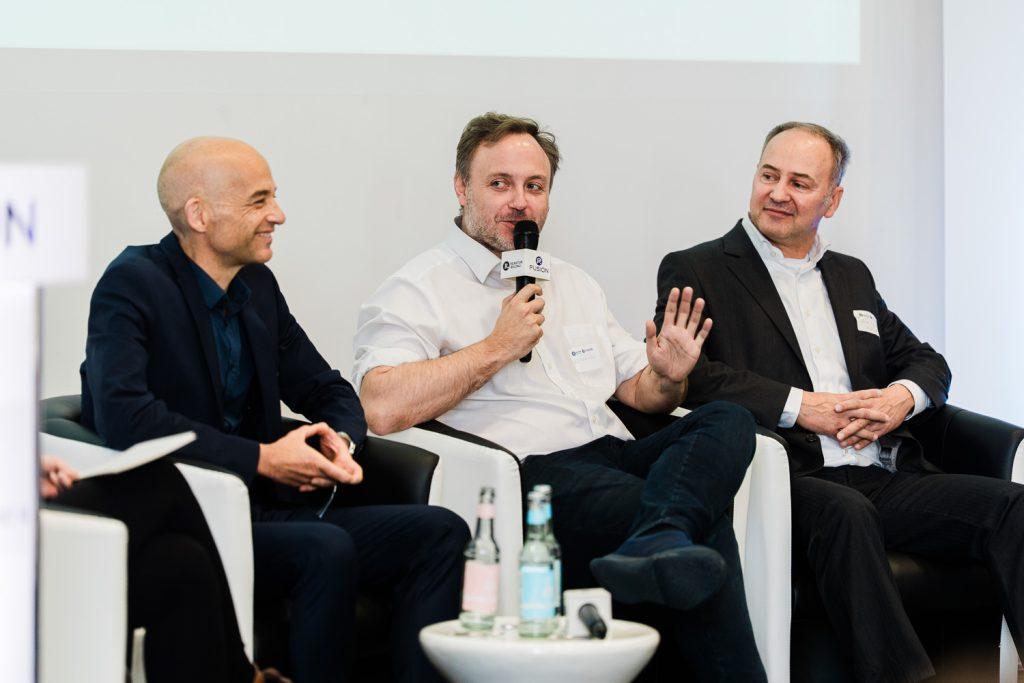
The Deep Tech Panel demonstrated just how concrete these problems become for science-based startups.
Dr. Alex Erdmann of Aerlin presented a flying wing aircraft that, according to the company, is intended to enable a significant increase in aviation efficiency. Roy Uhlmann of Motor AI, in turn, showcased his approach to Level 4 autonomous driving. At its core is an explainable AI designed to assess its own uncertainty.
Together with Prof. Dr. Andreas Zaby from SPRIND and Prof. Dr. Jörg Reiff Stephan from the Technical University of Applied Sciences Wildau, the discussion quickly turned to one of the core problems of the European deep tech ecosystem: the “Valley of Death” between successful research and commercial application.
This is not exclusively about capital. IP transfer, customers, regulatory requirements, and long development cycles can be just as critical. During the panel, for example, the average negotiation period of more than 18 months for intellectual property transfer was criticized.
The message: Technological excellence is only the beginning. At some point, a deep tech startup must also be able to sell its products.
And it was precisely at this point that a term was mentioned that would resurface later: venture clienting. Instead of supporting startups exclusively with grant money, the government could more often become the first customer of innovative companies itself.
Energy Transition: Technology Isn’t the Biggest Problem
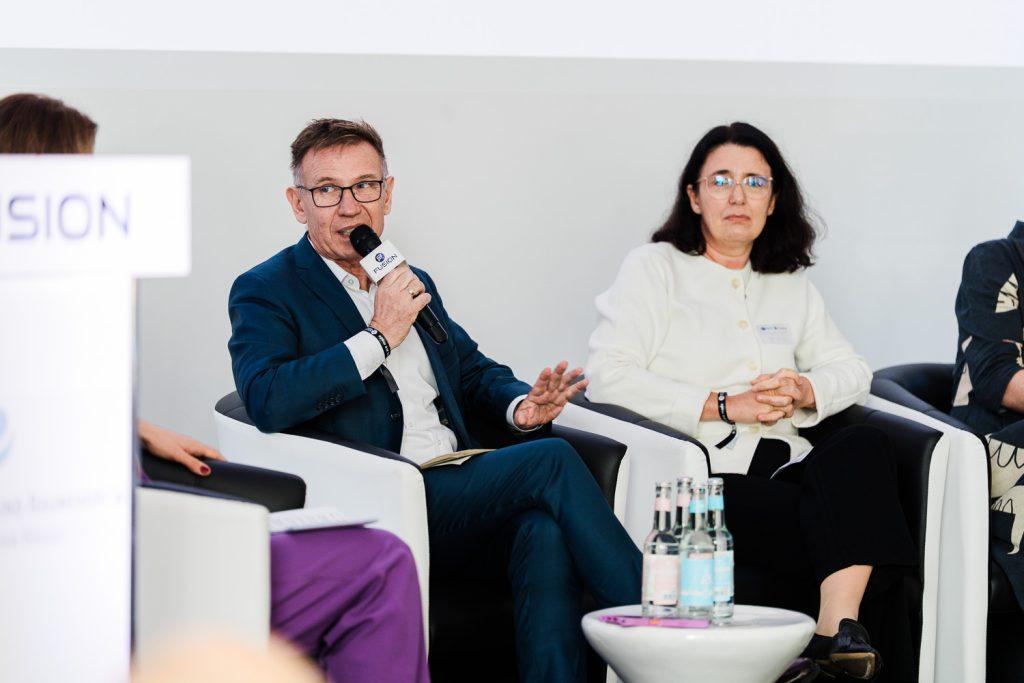
In the panel on the energy transition, too, the discussion shifted surprisingly quickly away from technology.
Dr. Arwen Colell of decarbon1ze.com, Dr. Isabelle Canu of the GET Fund, Lucie Töpfer of Pyropower, and Carsten Schöning—moderated by Annett Möller—discussed primarily regulatory frameworks, grid infrastructure, financing, and predictability.
The panelists viewed basic technological feasibility as less of a bottleneck. Rather, projects with long lead times are problematic if regulatory or economic conditions change during their development. Töpfer pointed out that lead times can sometimes range from 12 to 18 months.
Canu revisited the concept of “venture clienting.” The government could act as a first customer, thereby not only providing funding but also offering young companies real-world references and market access.
A remarkable pattern thus emerged: In both deep tech and the energy transition, the primary call was not for even more research. Rather, the focus was on bringing existing technologies to real-world applications more quickly.
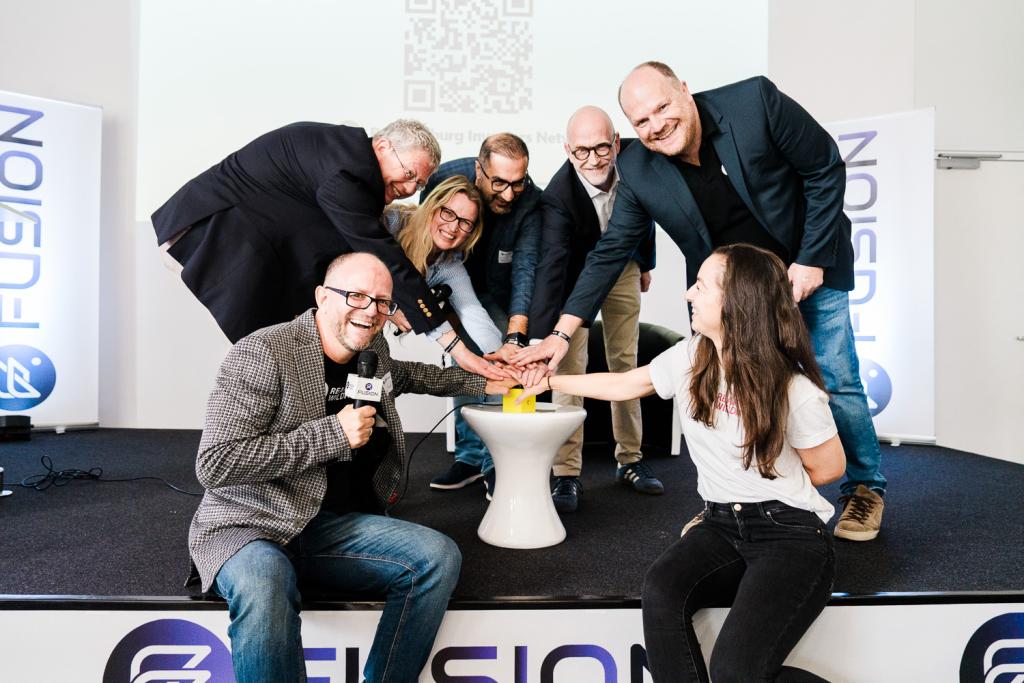
The Brandenburg Investors Network is creating something new right now
The official launch of the Brandenburg Investors Network(BIN) demonstrated that “Connecting the Dots” was meant to be more than just a conference motto.
The new network aims to bring together startups and ecosystem partners with active and prospective business angels. Special attention is given to individuals who are looking to invest in startups for the first time and need support with their initial deals.
In the long term, the goal is to build a community of around 150 active investors. The initiative seeks to deliberately connect academia, public capital, and private entrepreneurship.
In this way, FUSION produced at least one immediately visible result: While discussions on stage focused on how to mobilize more private capital for innovation, a network went live at the same time that aims to take on precisely this task.
18 startups showcase what was discussed throughout the day
Amid all the discussion about framework conditions, the actual innovation at FUSION was not to be overlooked.
A total of 18 startups presented themselves on two pitch stages.
At the Reaktor Pitch, six companies from the Reaktor Wildau ecosystem took the stage: AURY, DECD, PLACED, PYURE, MOVOLTA, and TOYS RELOVED. The spectrum ranged from digital health solutions to AI in recruitment and sustainable digital marketing, to solar-hybrid systems for refrigerated trailers and a circular economy for toys.
AURY is working on digital therapeutic support, while DECD focuses on personalized patient education for people with cardiovascular diseases. PLACED uses AI agents to make recruitment more efficient. PYURE aims to make the carbon footprint of digital advertising measurable and optimizable. MOVOLTA equips refrigerated trailers with solar modules and power electronics, while TOYS RELOVED aims to create a circular economy for used toys using automated object recognition.
The second stage was dedicated to the STAR*PARADE. There, the thematic breadth of the ecosystem became even more apparent.
AIYU, KI-Marketingmitarbeiter.de, and REYO addressed various aspects of AI-powered business processes. PraxiOps and Cleverano presented applications in healthcare and education. NUWAM, Quasi, and LumaLod represented deep tech and industrial applications. CARLA and iKAUF focused on mobility and retail in rural areas, respectively; Aroundly addressed real-world social interactions; and Sollnaa presented its vision for a European super app.
It was precisely this breadth that brought to light what had previously been discussed in abstract terms: innovation has long been a reality. The crucial question is how to turn it into scalable businesses.
Annett Möller and Deliberate Optimism
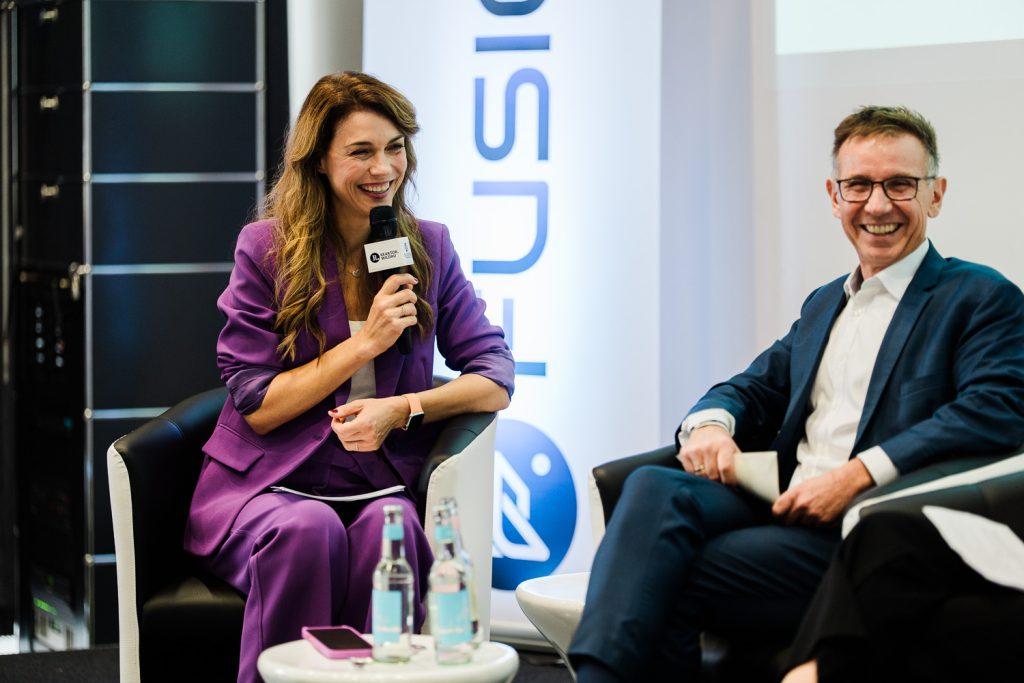
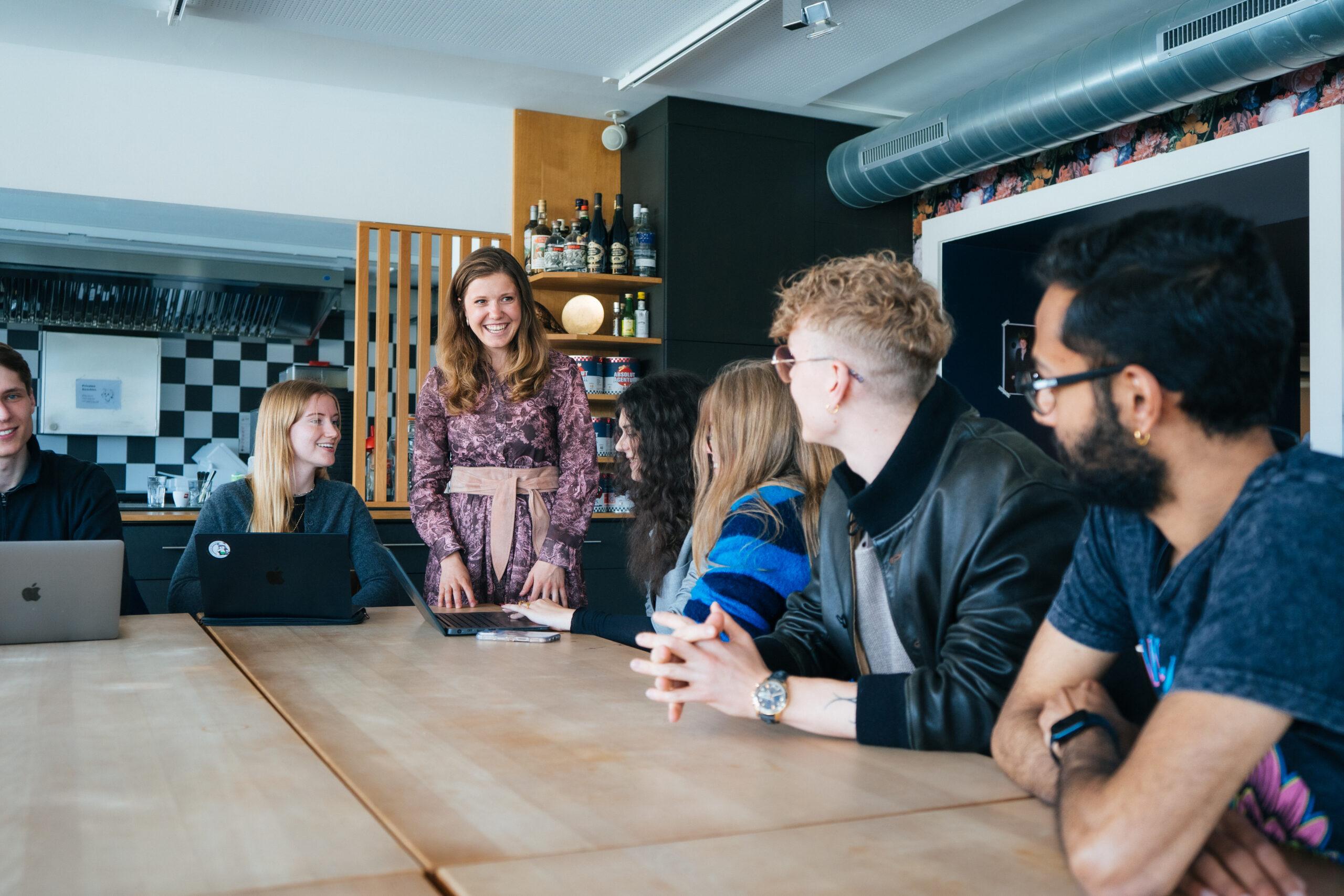
Moderator Annett Möller guided the audience through the day. Right from the start, she countered the prevailing sense of economic crisis and set the tone with the statement: “We want to look ahead with a positive outlook.”
At FUSION, however, this optimism did not mean ignoring problems.
Bureaucracy, a lack of growth capital, slow IP transfer, grid connections, funding criteria, and a lack of predictability were all clearly addressed. What stood out, however, was the repeated effort to steer the discussion away from merely describing problems and back toward the question of concrete solutions.
And perhaps that is precisely why another spontaneous remark by Möller fit the day even better. Amid a stage setup change and technical challenges, she commented: “There’s emotion here, there’s vitality—what we’re doing here isn’t AI.”
At an event where AI almost inevitably cropped up in numerous business models, this served as a fitting reminder: Ultimately, companies are still built by people.
To Wrap Up: Startups Meet Small and Medium-Sized Businesses
In the evening, the circle expanded even further.
At the joint “Meeting of Generations” hosted by FUSION and the Chamber of Commerce and Industry (IHK)—an event focused on business succession—the startup scene and established small and medium-sized enterprises gathered at the Volkshaus Wildau. The focus was on a question that is likely to become relevant for tens of thousands of companies in the coming years: What happens when succession within the family is no longer a given?
Dr. Alexandra Treutler made it clear that successful succession doesn’t begin simply with the search for a buyer. Companies must first become “succession-ready”: distributing responsibility, developing leaders, and creating structures that aren’t permanently dependent on the current owner. Such a process can take three to five years.
New models such as “rollups” were also discussed, in which several companies within an industry are brought together under one umbrella for further development. At the same time, Felix Berghöfer highlighted the psychological dimension of takeovers. Anyone taking over a company must first understand why it works before beginning to fundamentally change it.
And suddenly, the connection to the startup world became obvious.
Small and medium-sized businesses have customers, market knowledge, skilled workers, experience, and existing structures. Startups and a new generation of entrepreneurs bring technologies, digital business models, and new approaches to the table. Business succession can therefore be more than just the transfer of an existing business. It can itself become a tool for innovation.
In the end, “Connecting the Dots” was more than just a motto
After a long day of conferences, what stuck with me was less a single major demand and more a whole series of connections.
Research needs entrepreneurship. Entrepreneurship needs customers. Deep tech needs capital and patience. Capital needs good teams and viable concepts. Startups need established partners. Small and medium-sized enterprises need innovation and successors. And all of them together need places where they can actually meet.
That was the true strength of FUSION 2026.
It did not attempt to treat science, politics, startups, investors, and small and medium-sized enterprises as separate worlds. Instead, it focused on the points of intersection. And many of these points of intersection are currently where the biggest problems in the German innovation system lie.
Perhaps the most interesting finding of the day was therefore that Brandenburg clearly does not suffer from a lack of ideas. Nor is there a fundamental shortage of research, funding programs, or committed entrepreneurs.
The more difficult task is to build functioning chains from these elements: from research to a startup, from a startup to its first customer, from the first customer to a scalable business model, from grant funding to private investment, and finally from a young company to a permanently established small-to-medium-sized enterprise.
This is less spectacular than the next big technology announcement. Economically, however, it is likely to be more decisive.
FUSION 2026 sought to connect precisely these points—or, in other words: “Connecting the Dots.”
And Wildau plans to keep going. At the close of the event, the date for the next edition was already announced: The second FUSION is scheduled to take place on September 16, 2027.
Weren’t you able to attend FUSION yourself but are now curious? You can check out the FUSION 2026 playlist on YouTube here.





Newsletter
Startups, stories and stats from the German startup ecosystem straight to your inbox. Subscribe with 2 clicks. Noice.
LinkedIn ConnectFYI: English edition available
Hello my friend, have you been stranded on the German edition of Startbase? At least your browser tells us, that you do not speak German - so maybe you would like to switch to the English edition instead?
FYI: Deutsche Edition verfügbar
Hallo mein Freund, du befindest dich auf der Englischen Edition der Startbase und laut deinem Browser sprichst du eigentlich auch Deutsch. Magst du die Sprache wechseln?