Tomorrow University: Why a University of the Future Is Coming to Wildau

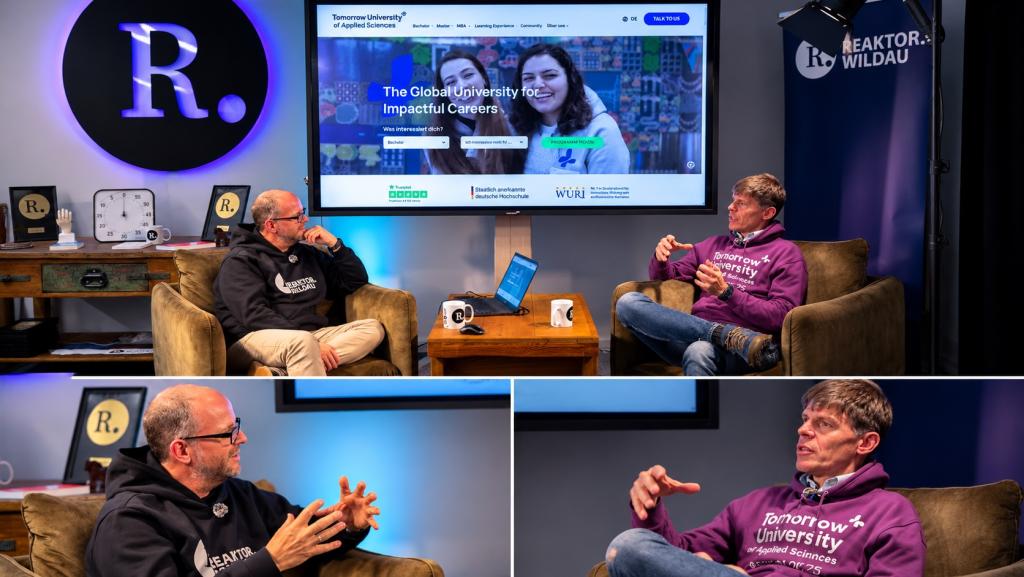
Startbase supports the startup ecosystem centered around Reaktor Wildau—now known as Tomorrow University
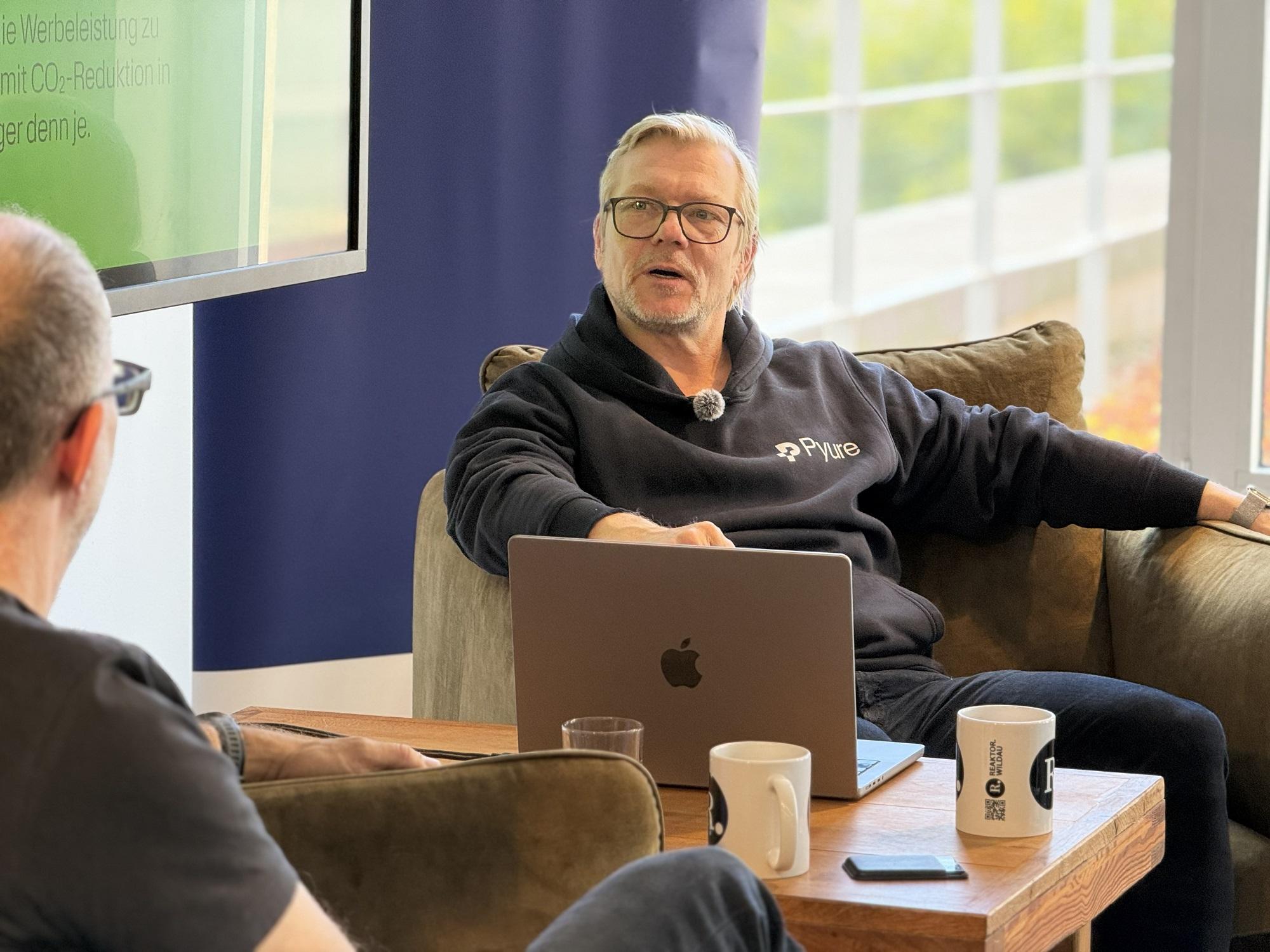
In our exclusive series on Startbase, we feature one of the 14 startups from the second batch of Reaktor Wildau every Saturday. We follow their progress through the accelerator program, talk with the founders about their ideas, business models, and challenges, and show how innovative approaches can lead to successful companies.
But a thriving startup ecosystem consists of more than just its startups. It requires universities, research, experienced entrepreneurs, investors, and people who are willing to break new ground and challenge the status quo.
That’s why, as a special exception today, we’re stepping outside the circle of the batch startups and turning our attention to a special player in the Wildau innovation ecosystem: the Tomorrow University.
This state-recognized, digitally oriented university takes an unconventional approach to education. Instead of traditional lectures and rote learning, the focus is on personal goals, practical challenges, and collaborative learning. By establishing itself in Wildau, Tomorrow University is not only bringing new momentum to higher education in the region but is also developing AI-powered technologies here that will benefit other educational institutions in the future.
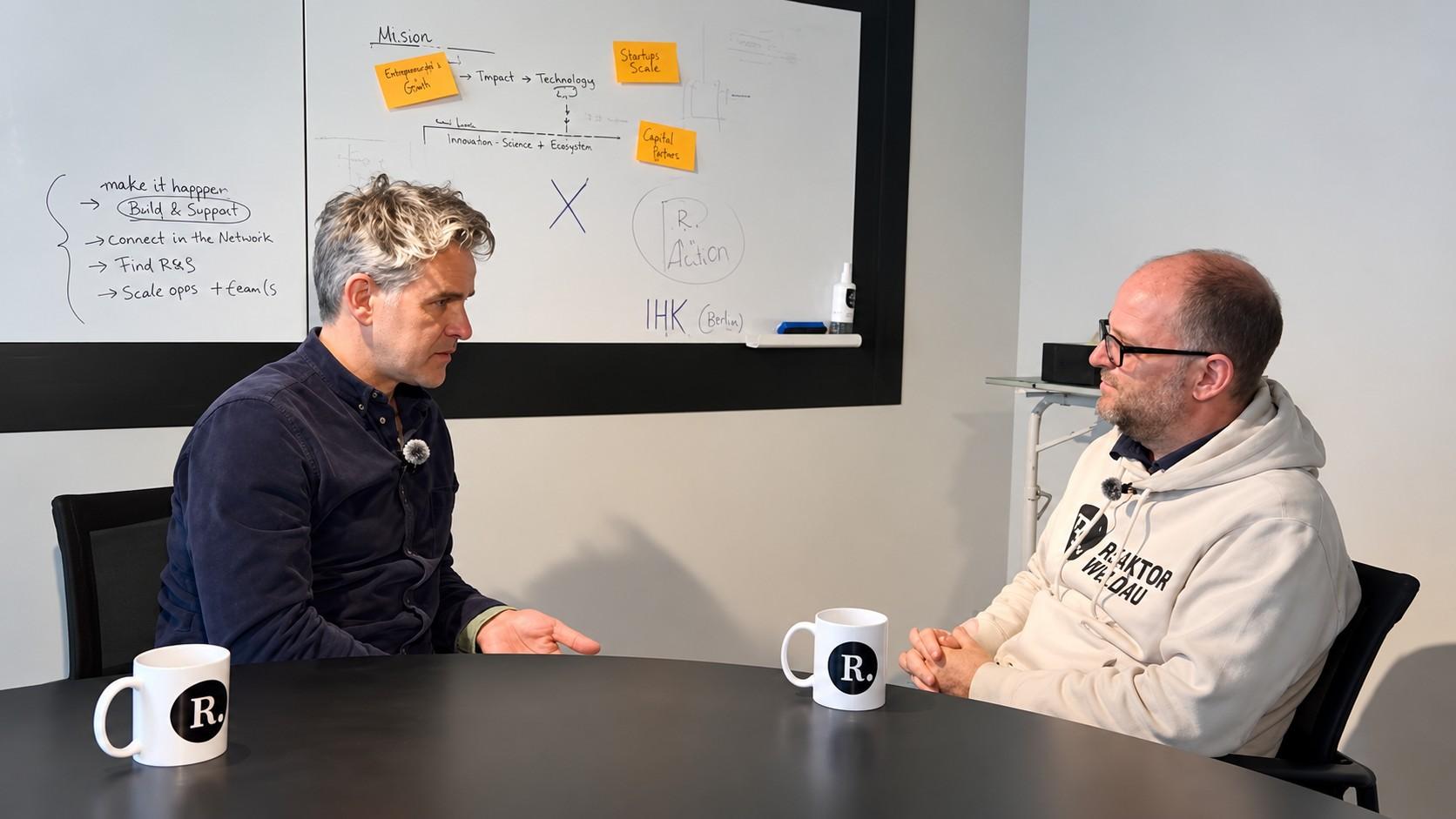
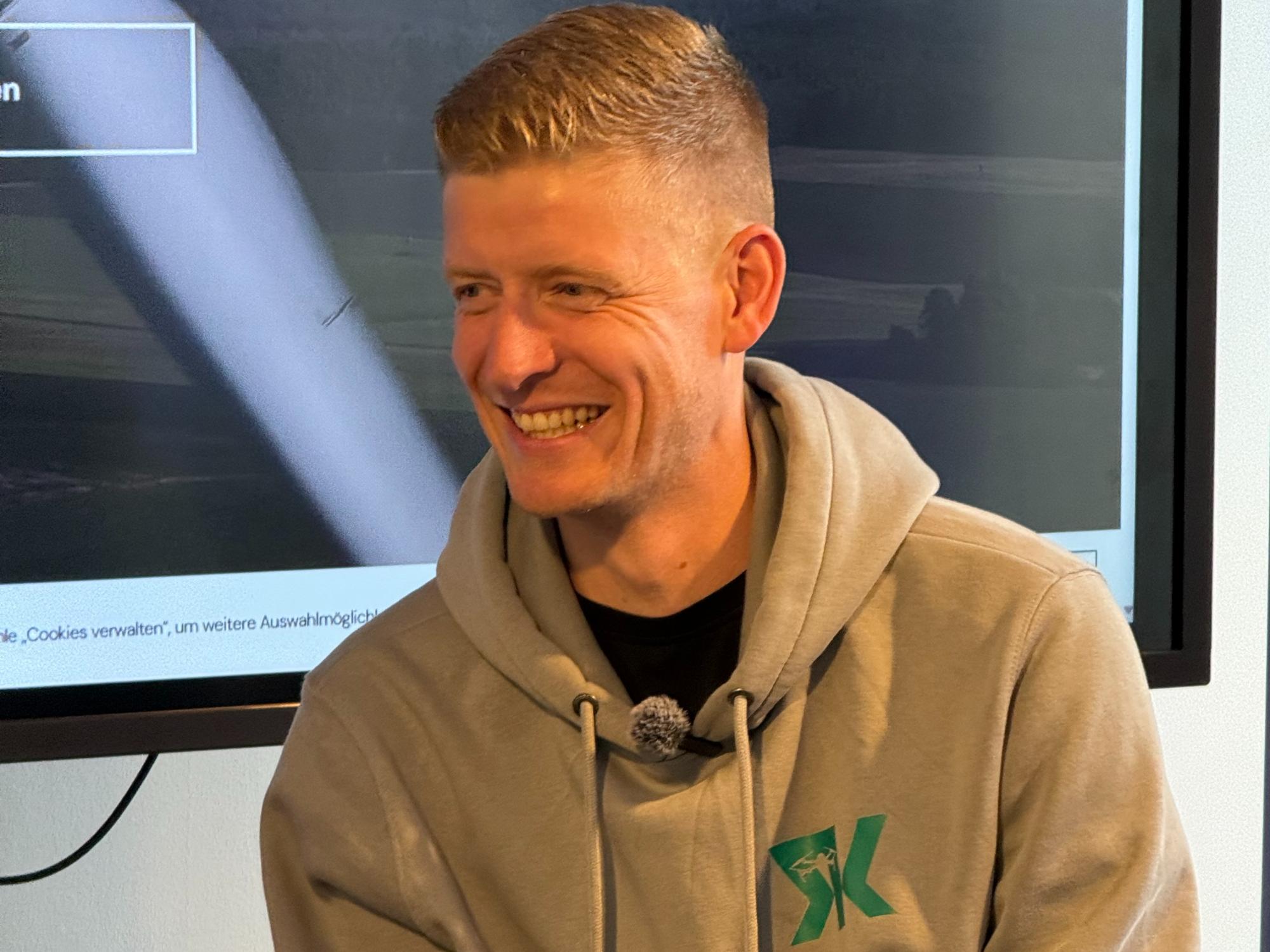
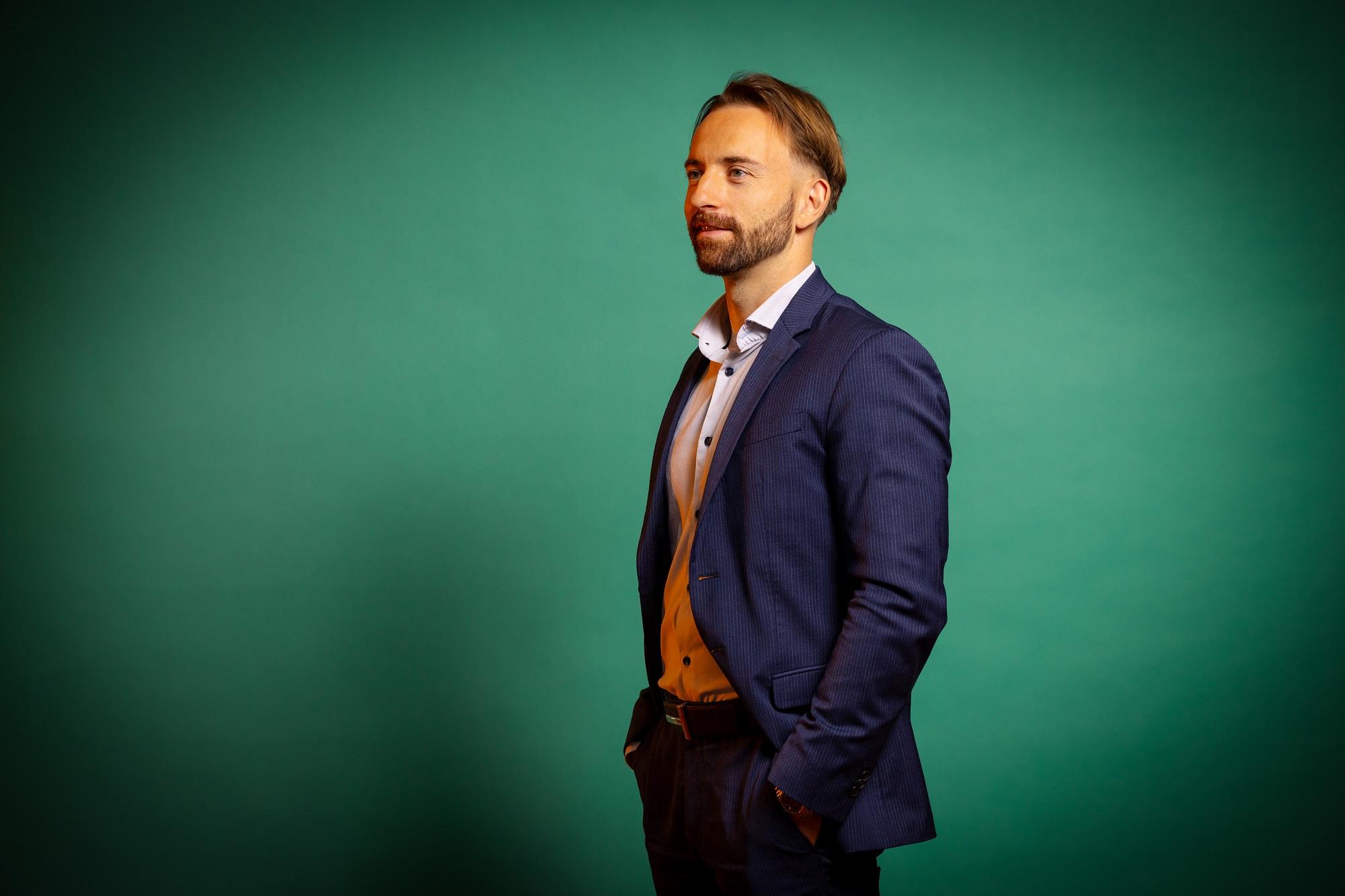
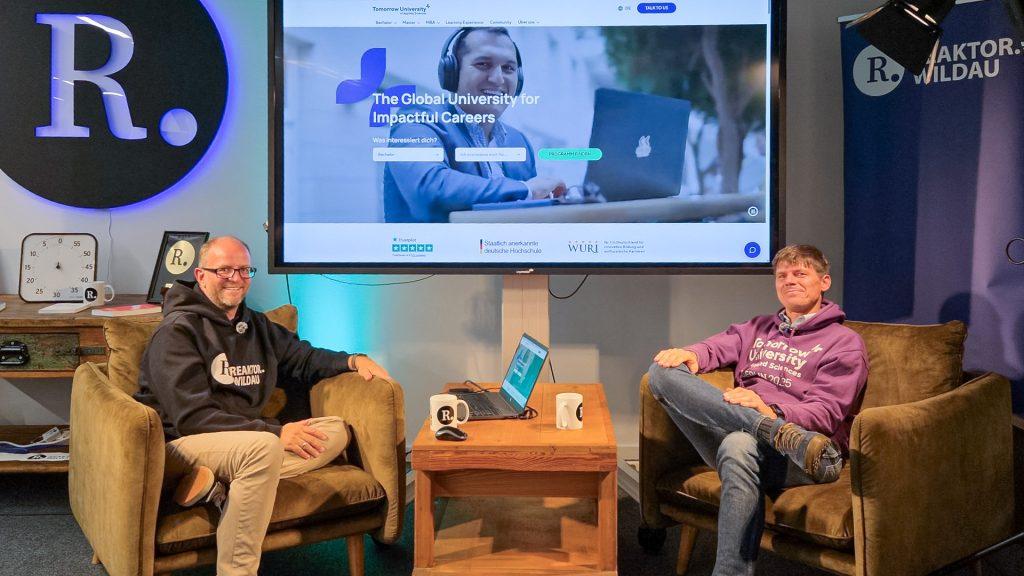
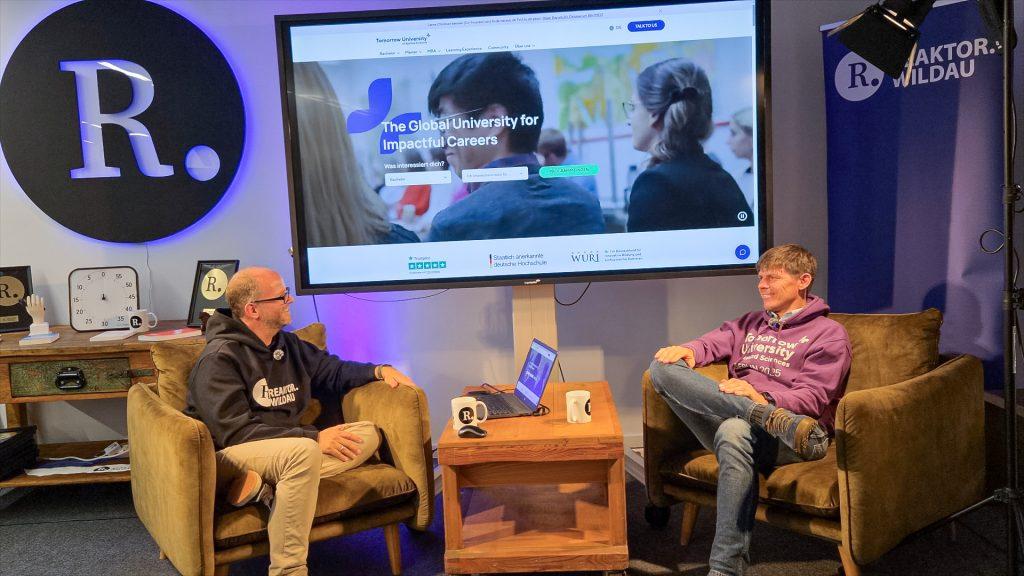
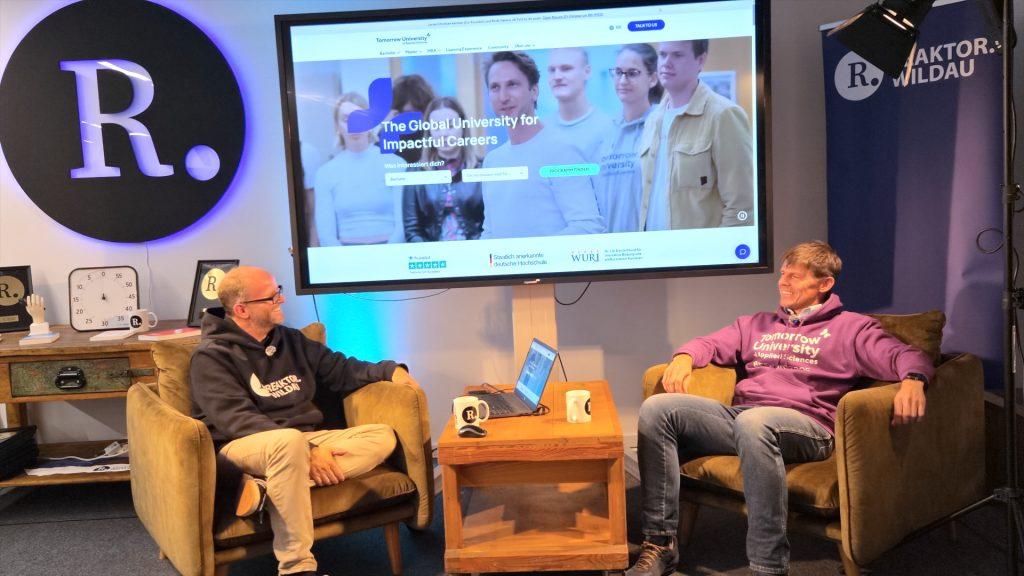
Reaktor CEO Rafael Kugel spoke with Tomorrow University founder Christian Rebernik about why a college dropout would found his own university, how education can work in the age of AI, and what opportunities arise from collaborating with Wildau’s startup ecosystem.
From College Dropout to University Founder
Christian Rebernik is not a typical university founder. He dropped out of his own business studies program because working on his first company took up more of his time than lectures and exams. As early as 1999, he founded an internet agency and developed digital solutions for large companies. Later, at bwin, he witnessed the company’s growth from around 30 to 3,000 employees and, as managing director and CTO, helped build the digital bank N26. He also contributed to the development of a digital health record system in Germany.
A common thread running through these career stages is the effort to fundamentally transform established structures using digital technologies. Banking, healthcare, and finally higher education—all sectors that are heavily regulated and whose traditional processes change only slowly.
The impetus to found Tomorrow University came during the pandemic. Rebernik was watching one of his children take part in a digital school class. A teacher spent an entire hour lecturing on Berlin’s history, while his son’s interest waned. For Rebernik, that was a pivotal moment. The world had changed fundamentally due to digitalization and the internet, yet teaching still largely followed the same principles as it had decades earlier.
Together with his co-founder Thomas, he therefore began to delve deeply into the question of how people actually learn and how scientific insights into successful learning can be translated into a modern higher education model.
Learning by Solving Problems
At the heart of the pedagogical concept are three principles: application-oriented learning, social learning, and individualization.
The first principle is implemented at Tomorrow University through what is known as challenge-based learning. Students tackle concrete challenges, develop solutions, and immediately apply theoretical concepts. For example, students studying business models do not merely analyze abstract case studies but develop a business model for an industry or project that personally interests them.
The results of these projects form the basis for performance evaluation. What matters is not whether someone can reproduce knowledge in an exam, but whether they can actually apply the relevant skills.
This also involves skills that are becoming increasingly important in a work environment shaped by artificial intelligence: problem-solving, critical thinking, communication, collaboration, self-management, and adaptability.
The Personal Mission as a Starting Point
What is particularly unusual is the program’s consistent alignment with students’ individual goals. The process begins with what is known as “Mission Identification.” Students explore the question of what they want to achieve in their lives, which values are important to them, and what contribution they would like to make.
Relevant competencies are derived from this personal mission, and course content is adapted accordingly. Projects are aligned, as much as possible, with the students’ professional or personal interests.
The university thus does not view education solely as preparation for a specific profession. Rather, the program is designed to empower students to develop and achieve their own goals.
This also applies to the final theses. Instead of a purely theoretical paper, students can work on a concrete innovation or startup project, develop hypotheses, document their implementation, and reflect on the process from an academic perspective.
Study Online, Learn Together
Tomorrow University is an “online-first” university. It offers bachelor’s, master’s, and MBA programs in fields such as artificial intelligence, entrepreneurship, sustainability, and psychology. The study models are specifically designed for part-time study.
However, this does not mean that students simply watch recorded lectures. The university relies on interactive learning formats, weekly live sessions, and small study groups. Individual courses typically last three to five weeks and are taken sequentially so that students can focus on one challenge at a time.
Another key element is the so-called “Mission Groups.” In these groups, which usually consist of about ten people, students support one another over an extended period, discuss their goals, and help each other when facing difficulties.
The digital program is supplemented by regular in-person events—known as “Emergence Events”—which take place in various European cities. There, students from different degree programs come together for workshops, discussions, collaborative projects, and personal interactions.
In this way, the university combines the flexibility of a digital program with the goal of building long-term personal and professional networks.
At the time of the interview, Rebernik reported more than 1,000 students, around 300 graduates, and a community comprising about 90 nationalities. According to the university, about 17 percent of alumni have started their own businesses. This figure also highlights the educational model’s close connection to entrepreneurship.
Why Wildau?
With its establishment in Wildau, Tomorrow University is taking another step forward in its development. While the university team works internationally and largely in a decentralized manner, Wildau is becoming a physical hub for the further development of digital learning technology.
The location offers an attractive combination of factors for this: proximity to Berlin and BER Airport, a robust scientific infrastructure, technical talent, and a growing innovation ecosystem.
In Wildau, Tomorrow University is working on a project—also funded by the European Union—aimed at eventually making the learning platform, previously developed for its own university, accessible to other universities as well.
This involves far more than just another digital learning platform. One development goal is to use artificial intelligence to support instructors in creating and guiding practice-oriented learning tasks. Another is the development of AI-powered learning assistants that can be made available to students on an individual basis.
Rebernik describes, for example, the idea of a professor’s digital twin that supports students around the clock but does not simply provide them with ready-made answers. Instead, the system is designed to promote independent thinking and problem-solving through targeted questions.
A key challenge is to design the systems to be academically reliable, minimize errors and biases, and comply with the requirements of accredited degree programs.
This makes Wildau a development hub for technologies that have the potential to support not only Tomorrow University but also existing universities.
New Opportunities for the Startup Ecosystem
For Reaktor Wildau, this initiative is particularly interesting because there are numerous points of connection between Tomorrow University’s learning model and the practical work of startups.
The university already collaborates with companies that incorporate real-world problems into its curriculum. In the interview, Rebernik mentions, among other things, challenges in logistics and the transformation of existing business models.
A similar model would also be conceivable for startups from Reaktor Wildau. Young companies could formulate specific challenges that students would work on as part of their projects. These could include questions regarding the development of new business models, the expansion into additional markets, or the implementation of technological innovations.
Depending on the task at hand, such challenges can last from a few weeks to three months. Shorter hackathon formats are also possible.
In their conversation, Rebernik and Reaktor Managing Director Rafael Kugel discuss, for example, a potential challenge centered on the newly founded Brandenburg Investors Network. This could involve developing new digital opportunities for connecting startups with experienced entrepreneurs.
These are still just ideas for a potential collaboration. But it is precisely this connection between scientific education, technological development, and entrepreneurial practice that demonstrates the role Tomorrow University could play in the Wildau ecosystem in the future.
Another building block for Wildau as a hub of innovation
Tomorrow University is not a startup from Reaktor Wildau’s accelerator program. Rather, it is an independent player that adds an important dimension to the regional innovation ecosystem.
With its focus on entrepreneurship, artificial intelligence, and application-oriented learning, new opportunities are emerging to connect talent, startups, companies, and universities.
For Wildau, the university’s establishment is therefore more than just a decision by a higher education institution to choose a new location. It is another step toward an innovation ecosystem in which education, research, and entrepreneurship do not merely coexist but work together to develop new solutions.
“We need to completely rethink education”—Christian Rebernik on Tomorrow University, AI, and the Wildau location
Christian Rebernik lived through the dot-com bubble, helped build N26, and ultimately founded his own university. With Tomorrow University, he aims to transform how people learn and prepare for a world in which artificial intelligence is taking on more and more tasks. In a conversation with Rafael Kugel, founder and managing director of Reaktor Wildau, they discuss entrepreneurship, new learning concepts, the future of higher education, and why Wildau is becoming an important development hub for Tomorrow University.
Watch the interview in the video
From College Dropout to Founder of a University
Rafael Kugel: Christian, you’re the founder of Tomorrow University. But before we talk about the university, I’d be interested to know how you ended up there in the first place. You’ve already done quite a bit in your entrepreneurial career.
Christian Rebernik: I actually started college myself once, but I dropped out. So, strictly speaking, I’m not the ideal candidate to build a university. My background is in software development and solving problems with digital tools. Over the past 20 years, I’ve worked in a wide variety of industries.
Rafael Kugel: Why did you drop out of college?
Christian Rebernik: I’d started studying business and found it terribly boring at the time. At the same time, we’d founded an internet agency where we developed online stores and software. Eventually, I was constantly faced with the decision: Do I go to a client meeting or take an exam? And most of the time, the client meeting won out. After about a year and a half, I decided it no longer made sense to continue that way.
Looking back, though, I have to say that my assessment at the time—that I wasn’t learning anything truly useful at the university—wasn’t entirely correct. Later on, I had to painstakingly teach myself a great many things.
Rafael Kugel: That almost sounds like a classic startup story. You start building a company while you’re still in school, and at some point, the company becomes more important than your studies. When was that?
Christian Rebernik: 1999. We were in the middle of the internet boom back then. Things took off really fast at first. We had major clients in the insurance, banking, and telecommunications industries, and we were sometimes working 80 to 100 hours a week. Then the dot-com bubble burst. Some of our clients went bankrupt and could no longer pay us.
That was a tough experience, but also very instructive. Above all, I decided back then that I didn’t want to sell services permanently. When you sell your time, your business model is always limited by the number of hours you can work. I wanted to develop products that could scale independently of my personal work output.
Rafael Kugel: That’s exactly one of the most important lessons we share with our startups. As long as your business model depends on you personally working every hour, your growth will be limited. At some point, you have to reach the stage where the product functions independently of you.
Christian Rebernik: Exactly. After that, I focused on product development and, among other things, experienced at bwin how a company grows from around 30 to 3,000 employees. That was an incredibly exciting experience. You learn what scaling really means, but also what mistakes you can make along the way.
Rafael Kugel: I think it’s extremely valuable to have experienced what real market success feels like at least once. Many founders have no way of knowing at the beginning whether there’s actually demand for their product. Once you’ve experienced what happens when a product actually finds its market, you have a whole new perspective.
Christian Rebernik: Absolutely. Finding product-market fit is something special. You can develop a good solution to a problem, but then you still have to figure out who your customers are and how to reach them. Not every company manages to take that step.
Is artificial intelligence the next dot-com bubble?
Rafael Kugel: You experienced the dot-com bubble firsthand. When you look at the development of artificial intelligence today, do you see any parallels? Are we in another bubble?
Christian Rebernik: There are definitely parallels. Back then, the internet was what’s known as a general-purpose technology. It fundamentally changed communication, sales, and information gathering. Suddenly, you could send an email practically for free, whereas a letter used to cost money.
With AI, we’re seeing something similar today. Tasks that used to be very time-consuming are suddenly becoming much more affordable. This has enormous economic implications.
But there’s one crucial difference from the early days of the internet: Today, people are already willing to pay for AI. We see this with ChatGPT, but also with companies that use AI in their processes. Customers recognize the value and are willing to pay for it.
Of course, enormous sums are currently being poured into the development of new models. Whether each of these investments will ever pay off is another question. But I don’t believe that AI is just hype. It’s already delivering too many concrete benefits for that.
Rafael Kugel: I also get the impression that AI is penetrating existing business models much more deeply than the internet did back then. During the first internet boom, the focus was often on establishing new distribution channels or making information available online. AI, on the other hand, is changing the actual processes.
Christian Rebernik: That’s true. However, I see a big difference between startups and established companies. Startups can build their business models on AI from the very beginning. Large companies, on the other hand, often try to improve existing processes with AI.
That’s not the same thing. If you really want to transform an organization, it’s not enough to simply provide employees with new tools. You also have to change roles, processes, and the entire organization. And that’s exactly what many companies find difficult.
How did you come up with the idea of founding your own university?
Rafael Kugel: So you dropped out of college, developed software on your own, experienced the growth of large companies, and later helped build N26. And then you decided to found a university. How does something like that happen?
Christian Rebernik: I actually did quite a bit in between. At N26, I was CEO and CTO and learned how to build a digital bank in a highly regulated environment. Later, I worked on a digital health record project together with Allianz and numerous health insurance providers.
It was always about bridging two worlds: the possibilities of digital technologies and the requirements of established, regulated systems.
The actual impetus for Tomorrow University came during the pandemic. I have three children, and they were all at home at the time. One of my sons was in a history class about Berlin. It’s actually an incredibly fascinating topic. But the teacher just talked for an hour, and my son could barely stay awake.
That’s when I thought: This can’t be right. Over the past 20 years, we’ve digitized banking and healthcare, but our schools basically still operate the same way they did when I was in school.
Rafael Kugel: Except that back then we still had to sit on uncomfortable wooden chairs.
Christian Rebernik: Exactly. And at the same time, the world has completely changed. Back then, I had to go to a library, look for books, and acquire knowledge that I could later recall by heart. Today, virtually all knowledge is available on our smartphones. And with AI, access will become even easier.
That’s why we have to ask ourselves what skills people actually need today. Is memorization really still the key? Or do we need to learn in a completely different way?
I then met my co-founder Thomas, who comes from the education sector and knew the challenges facing existing universities from the inside. Together, we delved deeply into learning research and considered how we could use it to develop a new model for higher education.
Three Principles for a New Way of Learning
Rafael Kugel: What are the most important findings from this learning research? What exactly do you do differently?
Christian Rebernik: For us, three things are crucial. The first is application-oriented learning. I don’t just memorize theory; instead, I work on a concrete challenge. I immediately apply what I’ve learned, develop solutions, and may even be able to pass on my knowledge to others.
The assessment then isn’t based on whether I can recite something from memory, but on what skills I’ve actually acquired.
Rafael Kugel: That reminds me of my own school days. I attended a Waldorf school, and we once had a project with a partner school in England. They wanted to build a school building, and our task was to survey the property and draw up a site plan.
So we walked across the site with a theodolite and suddenly understood why we need sine and cosine. We had a concrete goal and had to acquire the knowledge to achieve it.
That’s something that’s stuck with me to this day. It’s completely different from a formula you memorize for a test and then forget afterward.
Christian Rebernik: That’s exactly the point. You’re not just learning math. You’re learning to solve problems, collaborate with others, communicate, and combine different skills.
The second principle is social learning. We humans are social beings and learn particularly well with and from one another. When I explain something to others, I often realize for the first time where I haven’t fully understood it myself.
That’s why we deliberately organize learning as a collaborative process.
And the third principle is individualization. People are different. They have different interests, abilities, and goals. Why should everyone learn exactly the same thing and be tested in the same way?
We therefore strive to align the curriculum as closely as possible with students’ individual goals.
“What do you actually want to do with your life?”
Rafael Kugel: How does this individualization work in practice?
Christian Rebernik: For us, it starts with what we call “Mission Identification.” Right at the beginning of their studies, students reflect on what they actually want to achieve, what values they hold, and what contribution they’d like to make.
Rafael Kugel: Do you mean what they want to achieve during their studies, or in life itself?
Christian Rebernik: In life. That’s the crucial question. Based on that, we consider what competencies someone needs to achieve their goals. We then tailor the course content and challenges accordingly.
For example, if you’re tasked with developing a business model and you’re interested in the energy sector, then you’ll develop a business model for that sector. Other students work on the same skill set using completely different topics.
Rafael Kugel: I find that remarkable. I’ve taught entrepreneurship at a university in Berlin myself and asked students in their upper semesters what they actually want to do with their lives.
For some, that was an incredibly difficult question. In some cases, they had never seriously thought about it before. And you ask exactly this question right at the very beginning.
Actually, this should be done much earlier—perhaps even in school. Because when I know what I want to achieve, I have a completely different motivation to learn.
Christian Rebernik: Absolutely. And of course, this mission can change during your studies. That’s completely normal. But it’s important to have a direction at all.
We also form what we call “mission groups.” These are groups of usually about ten students who support one another throughout their entire degree program. They regularly discuss their goals, progress, and challenges.
They don’t have to be people with the same goals. For example, you might be working on building a startup ecosystem, while I want to transform education. Still, we can support each other, share experiences, and motivate each other to keep at it.
Rafael Kugel: This probably creates networks with a depth quite different from what you find at a traditional university. When I spend years discussing with people what I really want to achieve, a special bond develops.
Christian Rebernik: Exactly. And I believe that universities will need to function much more as networks in the future. It’s not enough to simply impart knowledge and then send students back home.
We want people to not only have acquired skills by the time they graduate, but also to have a network that supports them as they move forward in their careers.
How does the program work in practice?
Rafael Kugel: Let’s say I want to study at your university. How does that work, specifically?
Christian Rebernik: We offer bachelor’s, master’s, and MBA programs, including in the fields of artificial intelligence, entrepreneurship, sustainability, and psychology.
Our programs are generally designed so that students can easily complete them while working. Students use our digital learning platform and have a weekly live session with their cohort.
In between, they can organize their study time flexibly. We deliberately avoid relying on hours-long recorded lectures, opting instead for interactive learning formats and hands-on assignments.
Rafael Kugel: So it’s not just watching a video where you fall asleep after half an hour?
Christian Rebernik: Exactly. It’s about getting actively involved yourself. Our courses typically last three to five weeks and take place one after the other. So you focus on one challenge at a time, rather than having to juggle five different courses simultaneously.
In addition, we hold our so-called “Emergence Events” four times a year. These are multi-day gatherings in various European cities. There, students from different degree programs come together, work in workshops, attend lectures, discuss topics, and, of course, celebrate together.
In addition, students organize local meetups in cities where several of them live.
Rafael Kugel: That sounds almost like a mix of a college, a festival, and an international network.
Christian Rebernik: Yes, and it’s exactly this sense of community that’s incredibly important. When people first think of an online degree program, many assume they’ll be sitting alone in front of their computers. We want to achieve the opposite.
Rafael Kugel: And at the end, do I take a traditional final exam?
Christian Rebernik: No, not in that form. The program is divided into different developmental phases. It begins with personal orientation. After that, skills are developed and then applied in larger collaborative projects.
In the final phase, students complete their thesis. This could be, for example, a startup or innovation project. Students develop a hypothesis, implement their project, document the results, and reflect on the process from an academic perspective.
Rafael Kugel: So the academic work consists of methodically examining, evaluating, and reflecting on my own actions.
Christian Rebernik: Exactly. And at the end, you earn a standard bachelor’s, master’s, or MBA degree.
Success Is More Than Just a Higher Salary
Rafael Kugel: How many students do you have now, and what do your graduates go on to do?
Christian Rebernik: We now have more than 1,000 students and about 300 graduates. We also conducted an alumni survey. It showed that about 17 percent of our alumni start their own businesses.
Many others advance in their careers or take on leadership roles.
But for us, another question is particularly important: Are our graduates actually doing what interests them and what they want to achieve?
We don’t want to measure success solely by whether someone ends up earning more money.
Rafael Kugel: That brings us to an almost philosophical question: What, in fact, is a successful life?
For some, success means earning a lot of money. For others, it might be important to spend as much time as possible with their family. Still others want to explore the world.
Everyone has their own yardstick. That’s why I think it’s so important to first get to know yourself and figure out what you actually want to achieve.
Christian Rebernik: Exactly. And many of our students describe this process as transformative. It’s not just about building knowledge, but also about growing personally, overcoming challenges, and developing as a person.
That’s not always easy. But for many, that’s precisely where the real value of a college education lies.
Why Tomorrow University Is Coming to Wildau
Rafael Kugel: You’re an international, digitally organized university. Your students and staff are located in a wide variety of places. Now you’ve decided to establish a campus in Wildau as well. Why here, of all places?
Christian Rebernik: Wildau offers a very interesting combination. We have proximity to Berlin and BER Airport, good infrastructure, talented individuals, and an exciting ecosystem.
For us, this also marks a new step in our development. Over the past few years, we’ve built our own digital learning platform and demonstrated that our university model works.
Now we want to make this technology available to other universities in the future.
To that end, we’re working on an exciting project here in Wildau that’s also funded by the EU. Here, our software developers are exploring how we can further develop our technologies so that other universities can benefit from them as well.
Rafael Kugel: So you’re developing a kind of white-label solution for other universities here?
Christian Rebernik: Exactly. We’re focusing on two key areas. On the one hand, we want to make it easier for other universities to implement challenge-based learning. With the help of artificial intelligence, for example, instructors could be supported in developing high-quality, competency-based learning tasks.
That’s quite challenging, though. Such systems must be reliable, must not provide incorrect information, and must meet the requirements of the respective degree programs.
The second area is individualized learning support. Imagine you’re a professor with 300 students in a lecture. You can’t be there for every single student all the time.
That’s why we’re working on the idea of a professor’s digital twin, who is available to students around the clock.
Rafael Kugel: So, an AI professor I can ask questions anytime?
Christian Rebernik: Yes, but with one important difference: It’s not meant to simply provide ready-made answers. It’s designed to help students arrive at the solution on their own by asking questions.
Of course, we have to take into account issues like AI-induced hallucinations and distortions. But if we succeed, we could significantly improve the individual support we provide to students.
Rafael Kugel: I think Wildau is a pretty good location for this. We’re situated here in the triangle between Adlershof, BER, and Tesla; we’re close to Lusatia with its energy and mobility issues, and at the same time, we have a strong scientific infrastructure.
Add to that the water, the forests, and Brandenburg’s quality of life. I always say that Wildau is still a bit of a diamond in the rough, but with enormous potential.
Christian Rebernik: I see it similarly. It’s a really good combination of talent, infrastructure, and a manageable yet exciting ecosystem. And you can sense here that something is taking shape.
When students work on the problems faced by startups
Rafael Kugel: I also see immediate opportunities for collaboration there. At Reaktor Wildau, we mentor startups facing very specific challenges. Couldn’t we link these tasks to your challenges?
Christian Rebernik: Absolutely. We’re already doing that with companies. One example is DPD, which is exploring how logistics can be made more sustainable and efficient.
Our students then tackle these real-world problems and develop potential solutions. This is beneficial for both sides. The companies gain new perspectives, and the students work on actual challenges.
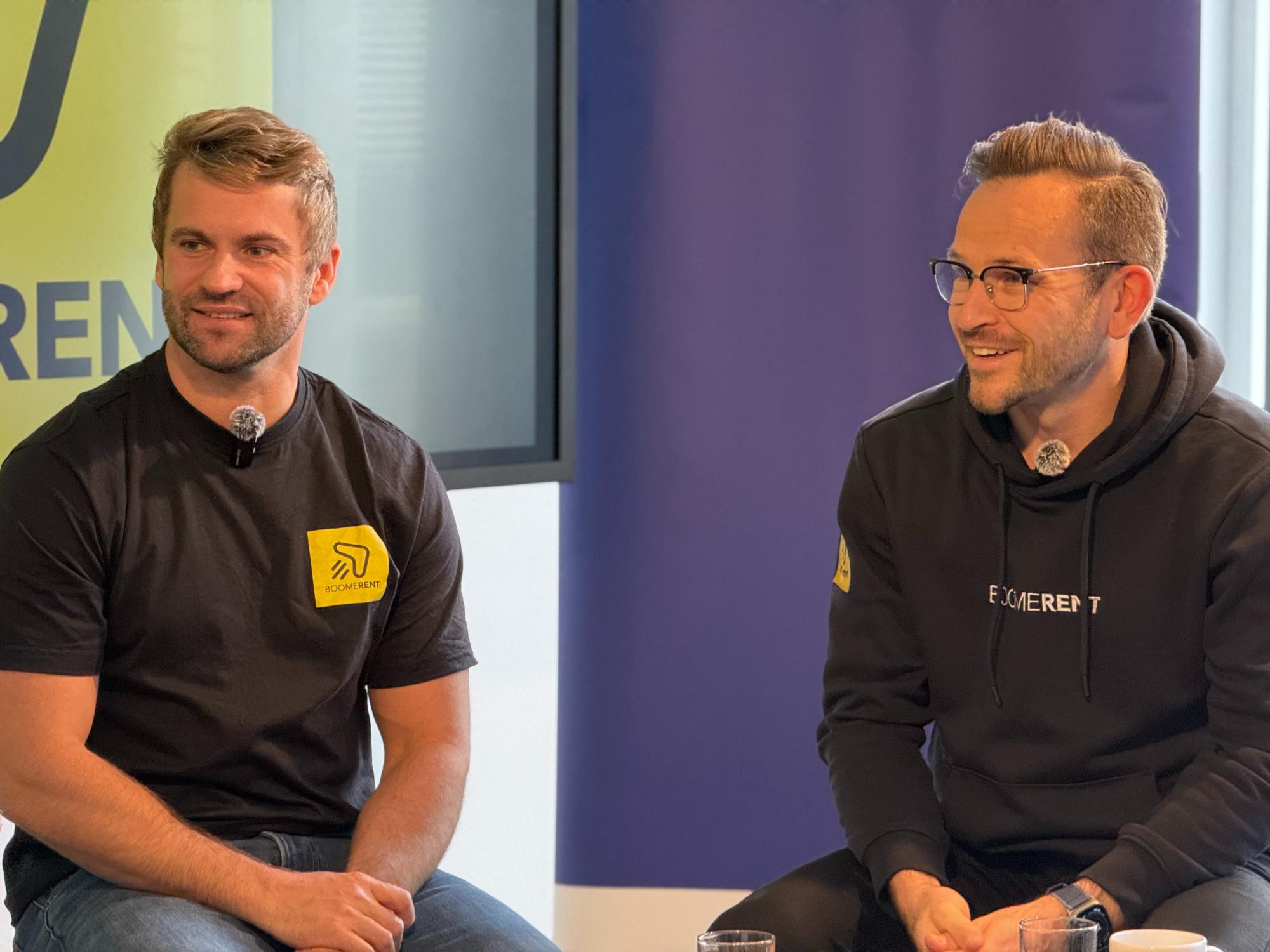
Rafael Kugel: If, for example, one of our startups—like Boomerent or MOVOLTA—wants to submit a challenge, how would that work?
Christian Rebernik: It’s best for the founders to speak with us directly. Then we’ll work together to identify the specific problem at hand, determine how to narrow it down effectively, and figure out how the students could tackle it.
The challenges can vary widely. They might involve adapting an existing product for a new market, identifying new use cases, or further developing a business model.
Rafael Kugel: And how long does something like that take?
Christian Rebernik: That depends on the task at hand. Shorter challenges can last three weeks; larger projects can take up to three months. We also host hackathon-style events that last just one day. Even in those, interesting prototypes can emerge.
Rafael Kugel: I find that particularly exciting for startups. Three weeks is a manageable timeframe in which to tackle a specific problem.
We’ve also just launched the Brandenburg Investors Network. The goal is to bring experienced entrepreneurs together with startups.
In Brandenburg, there are many people who have built businesses over decades, have extensive networks, and may have since handed over their companies. We want to encourage these people to collaborate more with startups.
Could we develop a challenge based on this? For example, the question of how to reach these people, connect them with one another, and create suitable formats for collaboration?
Christian Rebernik: Yes, I can definitely see that happening. For example, one could develop a prototype for a digital platform where these people can find each other, network, and communicate with one another.
That would be an exciting challenge for students, precisely because they could solve a real-world problem.
Rafael Kugel: That’s exactly the kind of connection we want to create here. It’s not just about mentoring startups, but about building an ecosystem where universities, companies, investors, and founders work together.
What skills do people need in the age of AI?
Rafael Kugel: If we look again at the future of education: Artificial intelligence is becoming increasingly capable of retrieving and processing knowledge. We really need to ask ourselves what will particularly set us apart as humans in the future.
Christian Rebernik: Exactly. The skills we need are changing. It’s less about memorizing as much knowledge as possible and more about being able to solve problems.
Critical thinking, the ability to learn, adaptability, communication, collaboration, and self-management are becoming increasingly important.
Incidentally, this applies not only to people but also to organizations. In the past, you could learn a trade and use the same skills for decades. Today, the world of work is changing much faster.
That’s why universities themselves must remain adaptable.
Rafael Kugel: I believe we must not forget art, culture, and creativity in this context. Especially as AI takes on more and more tasks, the skills that go beyond mere knowledge processing become particularly interesting.
Christian Rebernik: Absolutely. For example, we have a student from Indonesia who is a musician and is studying AI here. He uses artificial intelligence to further develop his music and express himself artistically.
We also have a doctor who is studying AI. I find combinations like these incredibly exciting. It’s about combining new technologies with one’s own skills and interests.
A New Network for Wildau
Rafael Kugel: One final question: How can people from our ecosystem get involved with you? For example, can entrepreneurs or experts also contribute?
Christian Rebernik: Absolutely. In addition to our professors, we also collaborate with many professionals from the field. These can be founders, executives, or experts from various industries.
For example, we host entrepreneurs from the tech industry who share their experiences directly with the students.
This kind of experiential knowledge is incredibly valuable. We’re also, of course, happy to welcome companies and startups that want to present interesting challenges.
Rafael Kugel: That fits very well with our approach at Reaktor Wildau. We’re focused on practical knowledge, not just textbook knowledge. People who have built companies themselves, made mistakes, and found solutions have an incredible amount to share.
That’s why I think it’s great that you’re here in Wildau now. And I have to say: listening to you like this almost makes me want to go back to school myself.
Christian Rebernik: I’m glad to hear that, of course. And we’re also happy to be here. What I find particularly exciting about Wildau is this sense of community. An ecosystem is emerging here where people want to build something together.
You can really feel it, and I think that’s exactly what makes the difference in the end.
Rafael Kugel: Christian, thank you very much for the conversation, and a warm welcome to Wildau.
Christian Rebernik: Thank you very much. I’m looking forward to working with you.





Newsletter
Startups, stories and stats from the German startup ecosystem straight to your inbox. Subscribe with 2 clicks. Noice.
LinkedIn ConnectFYI: English edition available
Hello my friend, have you been stranded on the German edition of Startbase? At least your browser tells us, that you do not speak German - so maybe you would like to switch to the English edition instead?
FYI: Deutsche Edition verfügbar
Hallo mein Freund, du befindest dich auf der Englischen Edition der Startbase und laut deinem Browser sprichst du eigentlich auch Deutsch. Magst du die Sprache wechseln?