PraxiOps: Digital Visibility for Healthcare Professionals—Without a Long-Term Dependence on Advertising

Startbase supports startups from Reaktor Wildau—today: PraxiOps.
In our exclusive series on the startups from the second batch of Reaktor Wildau, we feature one of the 14 participating companies every Saturday. We follow their progress throughout the accelerator program and highlight the ideas, technologies, and business models the founders are using to tap into new markets.
This time, we’re focusing on a topic that’s becoming increasingly important for many medical practices, clinics, and other healthcare professionals: digital visibility. Anyone looking to attract new patients or qualified employees needs to be found online. But building a strong, lasting online presence takes time, requires expertise, and often involves ongoing advertising costs.
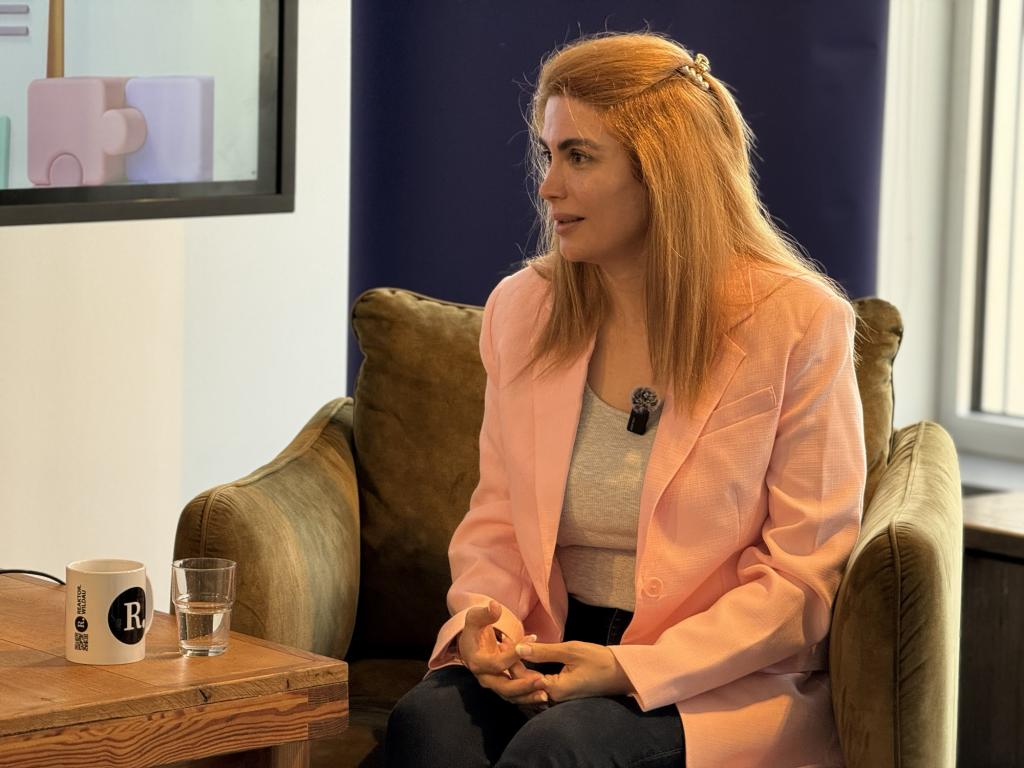
This is exactly where PraxiOps comes in. Founder Fateme Taghiniai and her team are developing an AI-powered platform designed to help medical facilities systematically build their digital reputation and become less reliant on paid advertising over the long term.
Following successful tests with five pilot practices, the startup is poised to take the next crucial step: acquiring paying customers. In a conversation with Reaktor Wildau Managing Director Rafael Kugel, Fateme Taghiniai explains how her experience in software development led to a business model for the healthcare market, why she’s initially focusing on larger facilities, and what role a new co-founder could play in the company’s continued growth.
Visibility Is Becoming a Competitive Factor
For medical practices and clinics, it is no longer enough to simply offer high-quality medical care. Patients research online, compare options, and specifically seek out specialized treatments. At the same time, medical facilities are competing for qualified professionals. Those with little visibility in the digital space find it harder to reach both target groups.
Many facilities are responding to this with paid advertising. But this form of visibility has a drawback: as soon as the advertising budget is reduced, reach can also decline. A sustainable digital presence in the long term, on the other hand, requires continuous work on discoverability, reputation, and communication.
This is where PraxiOps comes in. The startup is developing an AI-powered operating system designed to help healthcare professionals systematically build and improve their digital visibility over the long term. The goal is to support medical practices and clinics in attracting patients and staff without having to rely on paid ads indefinitely.
From Software Development to the Healthcare Market
Fateme Taghiniai is the driving force behind PraxiOps. The founder brings many years of experience as a software developer and engineering manager. Together with her team, she built a technology company in Iran more than ten years ago. At that time, the team developed a payment gateway solution that was later sold to a payment service provider.
With PraxiOps, the founder is now operating in a different market. What remains are her technical expertise and a well-coordinated team whose members have been working together for many years.
The path to the current product involved several stages of development. Initially, the team focused on other AI-based applications before the idea of a specialized platform for the healthcare sector took shape. The key question was how to translate technological possibilities into concrete and enduring customer value.
A Platform for a Sustainable Online Presence
PraxiOps does not see itself as a traditional marketing agency that organizes individual advertising campaigns. Instead, its software platform is designed to continuously support medical facilities in building their digital visibility.
The approach is designed for the long term. Medical practices should not wait to establish their online presence until they urgently need new patients or staff. Rather, the goal is to build a digital reputation over an extended period from which they can benefit in the long run.
The platform is already online and allows interested facilities to register and complete the onboarding process. According to the founder, numerous features have already been integrated and tested with five pilot practices.
These initial customer interactions were particularly important for product development. Taghiniai initially drew on her existing network in the medical field for this purpose. The pilot practices tested the platform and provided feedback on its usability and practical benefits.
For the team, it wasn’t just about whether the software worked technically. It was also crucial to determine whether the developed features actually met a need and could be used in day-to-day practice without major hurdles.
The Business Model: One-Time Setup and Ongoing Subscription
PraxiOps relies on a B2B business model with recurring revenue. Customers first pay for the platform setup and then a regular subscription fee.
The minimum term is six months. After that, customers can cancel their subscription.
From the founder’s perspective, this model aligns with the product’s value proposition. Digital reputation and organic visibility don’t happen overnight. The longer a practice continuously works on its online presence, the greater the long-term benefits are expected to be.
For PraxiOps, this also creates the opportunity to build stable customer relationships and generate recurring revenue. However, the company’s financial success depends on whether the platform actually delivers the promised value and whether customers remain loyal even after the minimum term expires.
The startup has not yet disclosed specific pricing for setup and subscriptions during the interview.
Market entry begins with larger institutions
Following the pilot phase, the focus will shift to acquiring paying customers. According to PraxiOps, the company is already in talks with larger clinics and medical companies, some of which employ more than 50 physicians.
The decision to focus on larger institutions is a deliberate one. In these settings, the need for digital visibility and the organizational benefits of a centralized solution can be particularly significant. At the same time, the decision-making processes are more complex.
Taghiniai estimates that three to four months may pass between the initial contact and a concrete offer. B2B sales in the healthcare sector therefore require patience and a clear approach to the respective decision-makers.
However, the target audience has not yet been definitively defined. In addition to hospitals and medical practices, the team also sees potential among other healthcare professionals, such as providers of medical continuing education and seminars who operate at various locations.
Taghiniai has set an ambitious goal for the next three months: to acquire five paying customers. Equally important to her is their satisfaction. After all, only when customers recognize the long-term benefits can the subscription model become a sustainably growing business.
Wanted: A Co-Founder for Marketing and B2B Sales
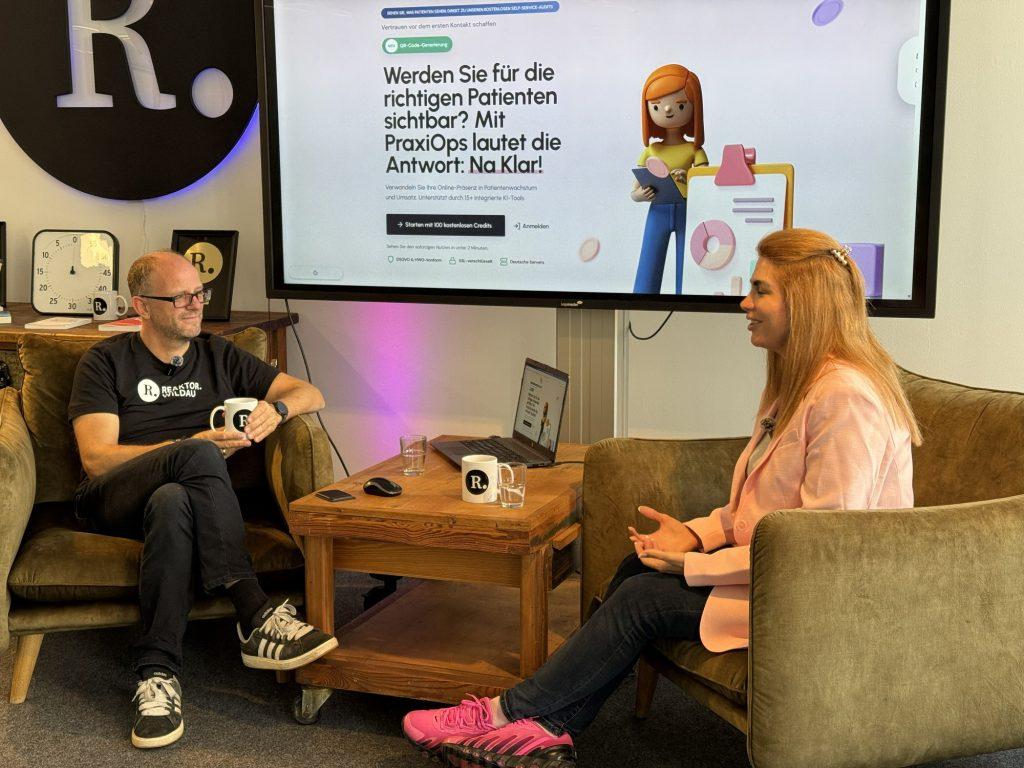
Technologically, the team considers itself well-positioned. The greater challenge now lies on the market side.
That’s why PraxiOps is specifically looking for another person to join the founding team. They aren’t looking for a traditional marketing employee, but rather a co-founder who will help shape the market entry and B2B sales.
Ideally, this person will have experience in the healthcare market, understand the decision-making processes at larger medical institutions, and be able to build long-term customer relationships.
Taghiniai is convinced that such a role requires more than just operational support. A co-founder should take on responsibility, contribute to strategic thinking, and play a lasting role in the company’s development.
First Customers, Then Growth Capital
So far, PraxiOps has been self-funded. For the founder, external capital is a possible next step in the company’s development, but not an immediate requirement.
First, the team wants to prove that the product sells well and that customers are satisfied. Only on this basis will additional capital be raised, if necessary, to accelerate sales, market expansion, and product development.
Taghiniai cites a potential funding range of between 200,000 and 500,000 euros. In her estimation, even 200,000 euros could help secure further development for about twelve months.
In addition to business angels and venture capital investors, the team is also exploring funding opportunities and other support programs for startups.
Reaktor Wildau as Part of the Next Development Step
By participating in the second batch of Reaktor Wildau, PraxiOps has gained access to an environment where the team can network with other founders, experts, and potential partners.
For Taghiniai, this involvement also has personal significance. As a founder who came to Germany, she had to build a new entrepreneurial network. While she already had professional contacts from her previous job as an employee, breaking into the German startup scene was initially a challenge.
Startup hubs and entrepreneurial networks helped her make new connections and feel increasingly confident navigating the ecosystem.
For PraxiOps, a new phase is now beginning in which success will be measured less by new software features and more by customer contracts, customer satisfaction, and recurring revenue.
The technical foundation is in place, the first medical practices have tested the product, and discussions with larger potential customers are underway. The coming months will show whether this will result in a scalable business model.
“We want medical practices to remain visible without having to constantly run ads”
Fateme Taghiniai has developed PraxiOps, an AI-powered platform for digital visibility in the healthcare sector. In a conversation with Rafael Kugel, Managing Director of Reaktor Wildau, she discusses her experiences as a tech founder, her first pilot clients, the challenges of selling to clinics, and her search for a co-founder.
Watch the interview on video
Rafael Kugel: Fateme, it’s great to have you here. You’re the founder of PraxiOps. What exactly does your company do?
Fateme Taghiniai: PraxiOps is an AI-powered operating system—a platform that helps doctors and other healthcare professionals build and improve their digital visibility over the long term. Our goal is to ensure that these practices can be found online, attract new patients and staff, and become as independent as possible from paid ads.
We’re primarily focused on the long-term perspective. Many practices only start thinking about their visibility when they’re in immediate need of new patients or staff. But a digital reputation doesn’t happen overnight. It requires continuous effort. That’s exactly where our platform is designed to help.
Rafael Kugel: So you’re not just looking to run short-term ads, but to build reputation and visibility over the long term. How did you come up with this idea in the first place? What’s your professional background?
Fateme Taghiniai: I originally come from a software development background and also worked as an engineering manager. I’ve always wanted to work with new technologies, which is why I delved deeply into AI. At first, we developed a different product called Searchio. After that, the question arose of how we could bring our technological expertise to a specific market.
We discussed various ideas and explored different areas of application. That’s how PraxiOps eventually came about. Today, we’re convinced that there’s a great need for this solution in the healthcare sector.
Rafael Kugel: When I look at your website, it already seems pretty well developed. How far along are you with the product? Is it finished?
Fateme Taghiniai: I don’t think you can ever really say that a software product is finished. Of course, we’re constantly developing it further. But the platform is already available, our website is online, and people can sign up. We’ve already integrated many features and can guide new customers through the onboarding process.
It was particularly important for us that we were already able to test the product with five pilot practices. These practices tried out the platform and gave us feedback. Now we’re focusing on acquiring our first paying customers.
Rafael Kugel: Five pilot practices provide a solid foundation for this development phase. How did you find these practices, and what did you learn from the tests?
Fateme Taghiniai: At first, I used my own network. I already knew a few doctors who were willing to support us and test the platform. That was very helpful.
As a developer, you have lots of ideas about which features might be useful. But you have to find out whether customers actually need these features. Is there even a demand for them? Do users understand the interface? Can they use the platform easily? You can’t answer questions like these just by sitting at your desk.
The feedback from the pilot practices helped us further develop the platform and better understand what our customers really need.
Rafael Kugel: Now comes the next step: turning the pilot clients into paying customers. How far along are you with that?
Fateme Taghiniai: We’re already in talks with larger companies and clinics. Some of these are facilities with more than 50 doctors. There, the concept of digital visibility is already well-known, and the need is there.
We’ve presented our solution and are now discussing specific proposals. Of course, this is a different process than with a small practice, which might be able to make a decision relatively quickly.
Rafael Kugel: So your sales pipeline is already in place. You just mentioned your team. Are you the sole founder, or are there others working on PraxiOps?
Fateme Taghiniai: We’re a team and have known each other for a very long time. Some of us have been working together for more than ten years. We previously built a startup together in Iran.
Back then, we were active in the banking and payments sector and developed an internet payment gateway. Once we’d acquired enough customers, we were able to sell the product to a payment service provider.
Rafael Kugel: That’s a completely different field from what you’re doing today.
Fateme Taghiniai: Yes, completely different. But back then, we learned how to develop a product together, acquire customers, and build a company. Those experiences still connect us today.
When new opportunities arose through artificial intelligence, we once again brainstormed business ideas together. That led first to Searchio and later to PraxiOps.
Rafael Kugel: So you have a team with a lot of technical experience and have already shown that you can develop a company together. How have you financed PraxiOps so far?
Fateme Taghiniai: So far, we’ve funded everything out of our own pockets. That’s worked well so far. However, we’re now realizing that we need additional expertise.
We’re very strong on the technology side. We can develop software and solve complex technical problems. But now the focus is on successfully bringing our product to market. That’s why we’re looking for someone to support us with marketing and sales.
And we’re not just looking for an employee. We’d like to bring another co-founder onto the team.
Rafael Kugel: So, someone who doesn’t just handle marketing, but who will actually build up the B2B sales operation. If you’re targeting larger clinics, this person will likely need experience with more complex sales processes.
Fateme Taghiniai: Exactly. B2B sales are particularly important to us, and ideally, this person should already have experience in the healthcare industry.
However, we’ve also realized that our target audience may be larger than we initially thought. It’s not exclusively about clinics or doctors’ offices. Other healthcare professionals could also be of interest—for example, people who offer medical seminars and need to be visible in various cities.
We’re still in the process of defining our ideal customer profiles more precisely. That will certainly evolve as we have more conversations with customers.
Rafael Kugel: And this person is actually supposed to come on board as a co-founder—that is, take on entrepreneurial responsibility?
Fateme Taghiniai: Yes. I believe a co-founder brings something different to the table than a regular employee. It’s not just about expertise, but also about commitment. Someone who helps build the company thinks long-term and takes on a different kind of responsibility.
We’d therefore be very excited to connect with people who have experience in B2B sales and can envision working with us to further develop PraxiOps.
Rafael Kugel: What’s your funding strategy for the next steps? Do you plan to continue growing with your own funds, or are you looking for investors?
Fateme Taghiniai: Our plan is to first acquire enough paying customers. We want to demonstrate that there is a market, that customers are using our product, and that they’re satisfied with it.
After that, we can imagine talking to business angels or venture capital investors. But we don’t necessarily want to do a funding round right away, before we have enough customers.
Rafael Kugel: Do you already have an idea of how much capital you’d like to raise later on?
Fateme Taghiniai: We think an amount between 200,000 and 500,000 euros could make sense for us. But we’re flexible.
With additional capital, we could accelerate our development and, above all, invest more in market expansion. We always have to ask ourselves what we can actually achieve with the money.
Rafael Kugel: If I understand you correctly, you first want to prove that your business model works. You’ll acquire your first paying customers, gain experience, and then use additional capital to significantly expand your sales operations.
Fateme Taghiniai: Yes, that’s exactly our strategy.
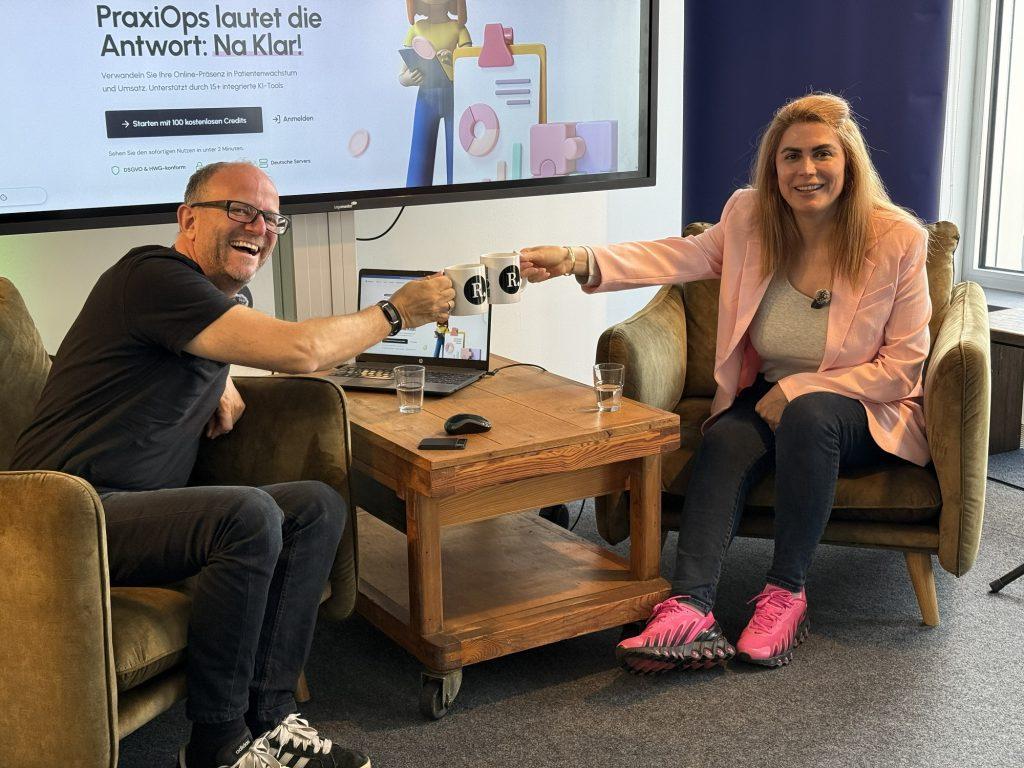
Rafael Kugel: You’re now part of the second cohort at Reaktor Wildau. What are the most important milestones you hope to achieve in the coming months?
Fateme Taghiniai: First of all, we’re very grateful for the support and the environment here at Reaktor Wildau. It’s important for us to be part of a community where we can grow and exchange ideas.
We’ve also secured another support program. But our most important goal right now is really the business itself. We want to acquire customers, understand how satisfied they are with our platform, and figure out how we can retain them in the long term.
In addition, we’re looking into other startup programs and funding opportunities. If other hubs or networks can help us reach new customers across Germany, that’s naturally of interest to us.
Rafael Kugel: Imagine we’re sitting here again in three months, talking about what’s happened in the meantime. How would you measure whether these three months were successful?
Fateme Taghiniai: Definitely by looking at our customers. How many paying customers have we acquired? How satisfied are they? And are we able to keep them with us in the long term?
Those are the most important questions for me. Of course, it would also be nice to establish initial contacts with business angels or perhaps even secure an investment. If, for example, we could raise 200,000 euros, that would give us additional security for at least twelve months.
But for me, the customers come first.
Rafael Kugel: To be more specific: How many paying customers would you consider a success in three months? Five? Ten?
Fateme Taghiniai: I’d say five paying customers would be a good result. Right now, we’re focusing more on larger clinics and medical facilities than on small practices. That’s why even a relatively small number of customers can mean a lot to us.
Rafael Kugel: Five larger clinics in three months is quite an ambitious goal. After all, facilities like that don’t make decisions overnight.
Fateme Taghiniai: That’s true. We’re already noticing that the sales processes are relatively long. It can take three or four months from the first contact to a concrete offer.
That’s also because larger facilities have different decision-making structures. You have to speak with different people and understand what their requirements are. That’s why it’s so important for us to consistently work on these discussions right now.
Rafael Kugel: Let’s talk about your business model again. When a clinic becomes a customer, does it first pay for the platform setup and then a monthly fee? Is that correct?
Fateme Taghiniai: Yes, exactly. We charge a one-time setup fee initially, followed by a recurring subscription.
Our clients initially commit to a minimum of six months. After that, they can cancel the subscription. Of course, we hope they won’t do that because they’ll recognize the value of our platform.
Our approach is based on the idea that visibility is built over the long term. We want our clients to eventually no longer need paid ads. The longer they use our platform, the stronger their digital presence should become.
That’s why we believe a longer-term subscription makes sense.
Rafael Kugel: That means the customer isn’t simply investing in a short-term marketing campaign, but in a digital presence that’s built up over a longer period of time and is intended to have long-term value.
Fateme Taghiniai: Exactly. That’s the idea behind PraxiOps.
Rafael Kugel: Fateme, I find it particularly exciting that you’re already so far along technologically and are now at the point where it remains to be seen how well the business model works in the market. I’m very curious to see where you’ll be in two or three months.
Fateme Taghiniai: Me too. I’m already looking forward to talking about our progress then.
Rafael Kugel: Thank you very much for the interview.
Fateme Taghiniai: Thank you very much. And I think that was one of my first interviews in German. That was quite a challenge!
From a Professional Network to Starting Her Own Business
After the actual interview, Fateme Taghiniai shares a personal experience that shaped her journey as a founder in Germany.
Fateme Taghiniai: When I was working as an employee in Germany, I naturally had professional contacts. But when I started building a business on my own, it was suddenly a whole different story.
At first, I felt like I was all alone. I hardly knew anyone in the startup ecosystem and wasn’t sure exactly who to turn to.
Then I started getting involved with startup hubs and founder networks in Berlin. Step by step, I met new people and built connections. That’s how I eventually got in touch with you all.
It was really hard at first. But the longer I’ve been at it, the easier it’s become. Today, I realize how important this network is for me and for the growth of our company.
Rafael Kugel: That’s an interesting point. Building a company is a major challenge in and of itself. When you also have to build a new network at the same time, it adds another layer of complexity. That makes it all the more wonderful that you’re now part of our ecosystem.
Fateme Taghiniai: Thank you. I’m really happy about it.


Newsletter
Startups, stories and stats from the German startup ecosystem straight to your inbox. Subscribe with 2 clicks. Noice.
LinkedIn ConnectFYI: English edition available
Hello my friend, have you been stranded on the German edition of Startbase? At least your browser tells us, that you do not speak German - so maybe you would like to switch to the English edition instead?
FYI: Deutsche Edition verfügbar
Hallo mein Freund, du befindest dich auf der Englischen Edition der Startbase und laut deinem Browser sprichst du eigentlich auch Deutsch. Magst du die Sprache wechseln?