ToysReloved: How Two Founders Are Reinventing the Secondhand Toy Market with AI

ToysReloved: How AI Is Bringing Millions of Unused Toys Back into Circulation
Millions of toys lie unused in children’s rooms, basements, and attics. Yet many of them are still in perfect condition, high-quality, and far too good to throw away. The startup ToysReloved, from Batch #2 of Reaktor Wildau, aims to change exactly that—and is building an AI-powered infrastructure to identify, evaluate, refurbish, and reintroduce used toys to the market through various sales channels.
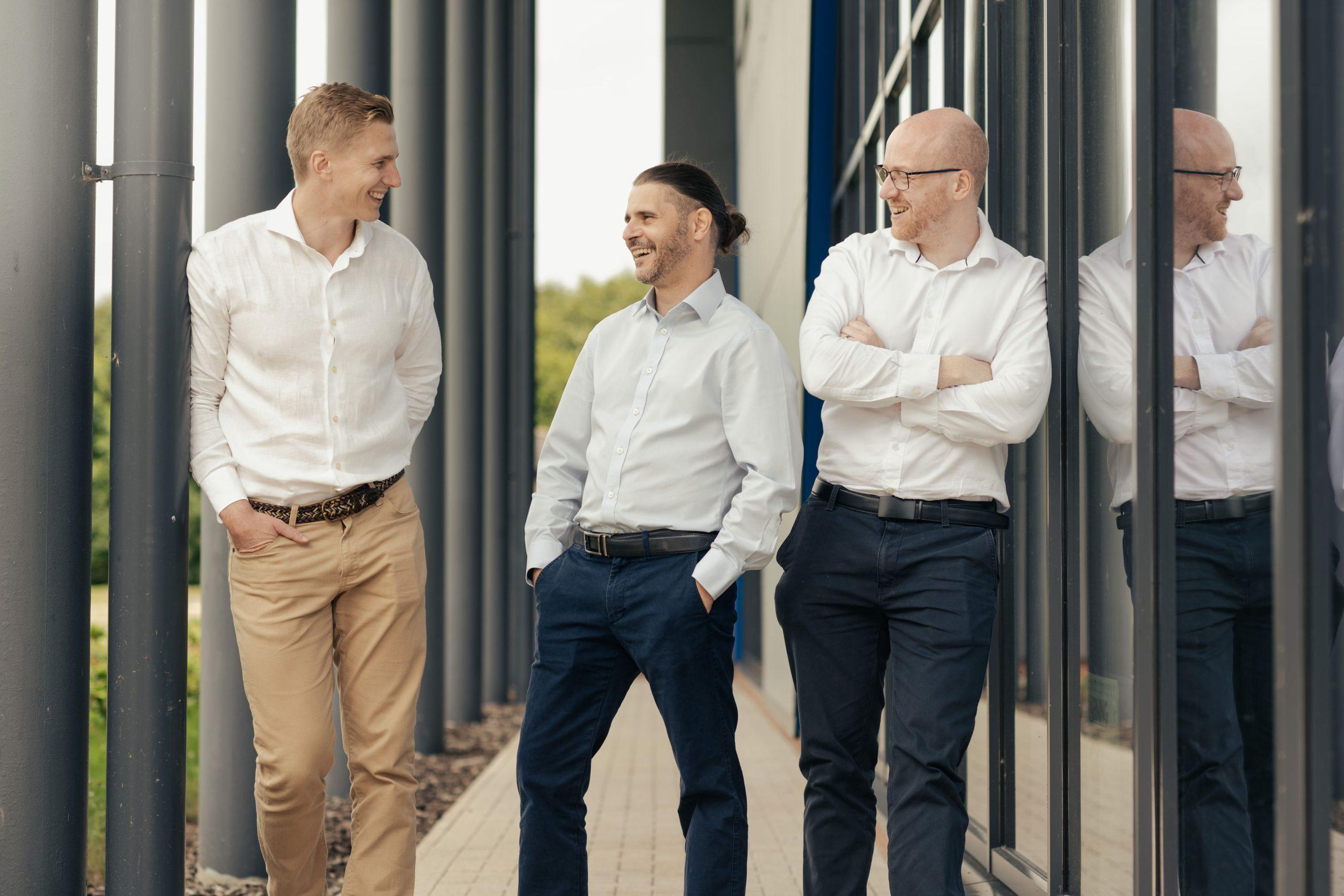
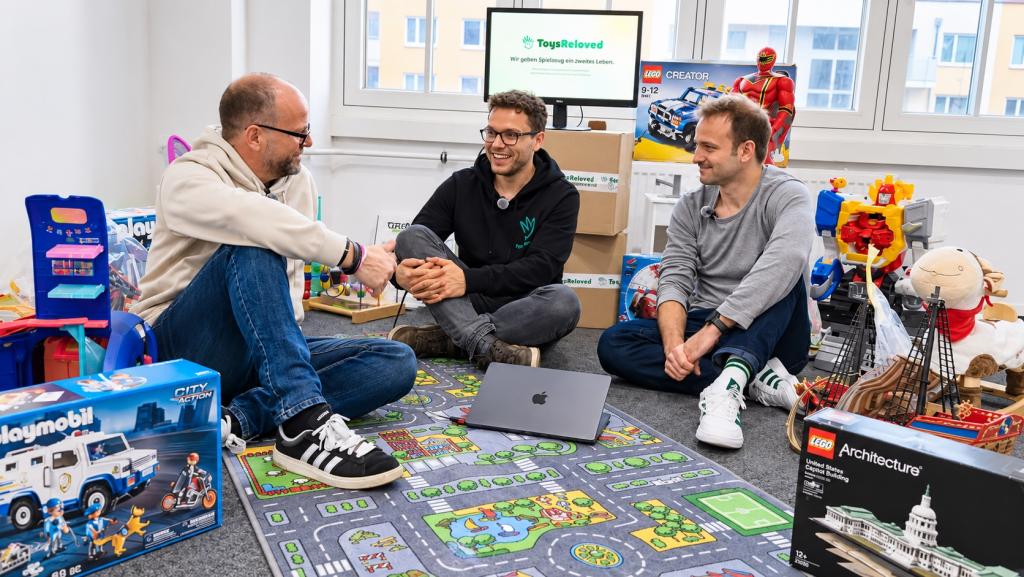
For our Startbase series, we’re visiting founders Bennett Görlitz and Sascha Müller at their newly occupied warehouse and office space. Amid toy shelves and shipping boxes, we talk about how their business idea came to be, artificial intelligence as a key to success, building a scalable business model, and the challenges they’ve faced on the journey from their first market test to becoming a growing company.
With our Startbase series, we provide insights into startups from the Reaktor Wildau ecosystem. We present their business models, tell the stories of the people behind the ideas, and speak openly about successes, challenges, and the next steps on their entrepreneurial journey.
In the following article, we introduce ToysReloved and its business model. In the interview that follows, the founders explain in detail how they plan to transform a massive, largely untapped market.
A Huge Market That Hardly Anyone Has Tapped Into Yet
Anyone with children knows the problem: toy boxes keep filling up, even though interest in many toys has long since waned. What was dearly loved yesterday now lies unused in the closet. Eventually, a lot of it ends up in the basement or the attic—often with the thought that it might come in handy again later.
The founders of ToysReloved saw this not only as a sustainability issue but also as a business opportunity. They estimate that around 40 million toys are thrown away every year in Germany alone. The number of toys that aren’t thrown away but remain unused indefinitely is likely even greater.
Yet there’s no shortage of ways to sell used items. Platforms like eBay or classified ads have long been established. The real problem lies elsewhere: Parents simply don’t have the time to photograph every single toy, describe it, research a price, negotiate with potential buyers, and finally organize shipping.
This is exactly where ToysReloved comes in. The company handles the entire process and turns unused toys back into marketable goods.
From Personal Experience to a Scalable Business Model
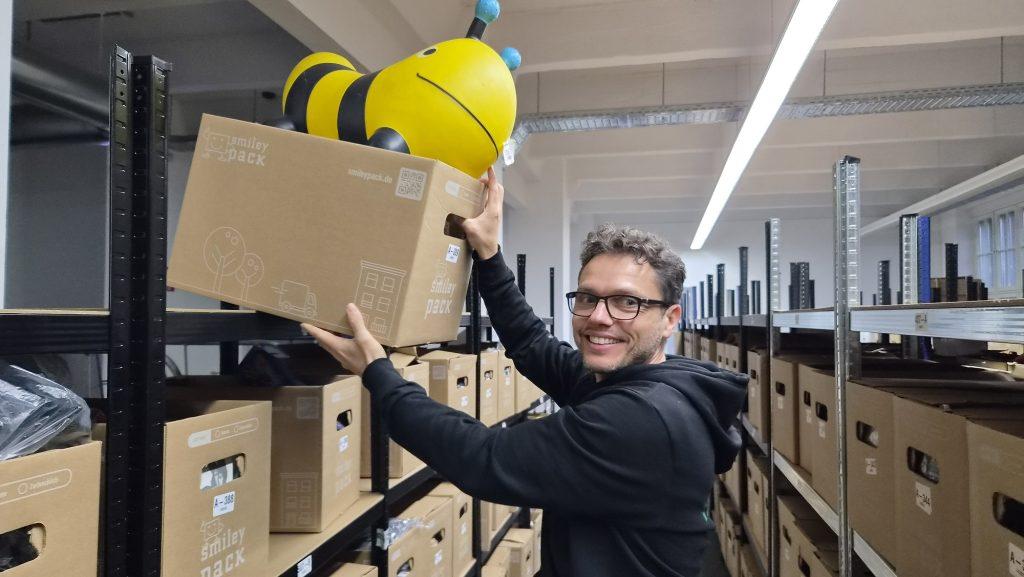
The idea arose from an everyday experience. The founders, too, had accumulated items at home that they didn’t have time to sell. Conversations with friends and colleagues quickly revealed that families with children, in particular, face a significant problem. New toys are constantly being added, while older toys are often only interesting for relatively short developmental phases.
This observation gave rise to a business idea. The founders analyzed the market, tested their assumptions, and started with a simple pilot. Using a WhatsApp group, they organized their first toy collection drives and sales—still without their own platform or sophisticated technical infrastructure.
The test worked. This made it clear that there was both supply and demand.
The actual build-out phase began in April 2024. In November 2024, ToysReloved went live. Since then, the team has been gradually developing the technical and operational foundations for a scalable business.
The two founders already had the necessary background. Bennett had previously worked in management consulting at EY and subsequently helped shape idealo’s business development and international expansion for several years. Sascha studied business informatics and also worked at idealo for many years, including in business development and the establishment of organizational structures. The two have known each other for more than 13 years.
Artificial Intelligence Makes the Business Model Viable
The key difference from earlier approaches lies in the use of artificial intelligence.
This is because used toys pose a particular challenge. Unlike standardized new merchandise, they often arrive without original packaging, an item number, or a barcode. Products must first be identified, checked for completeness and condition, evaluated, and described for sale.
What used to require numerous manual steps can now be partially automated.
ToysReloved uses AI for product recognition, classification, creating sales descriptions, image processing, and price determination, among other things. Automated price agents help research market values. The data obtained is then fed back into improving the processes.
This is particularly relevant because the value of used toys can fluctuate significantly. Some products lose value quickly, while others become sought-after collector’s items. In particular, LEGO sets that are no longer available can fetch significantly higher prices than they originally cost.
The challenge lies in reliably identifying these values while keeping the costs of processing each individual item low.
The founders are therefore pursuing a consistent “AI-first” approach: technology should not only simplify individual work steps but also make the entire value chain more efficient.
A business model without traditional merchandise purchasing
The business model also differs from traditional secondhand goods retail.
Parents can send toys they no longer need to ToysReloved. The company also offers a pickup service in certain regions. The items are inspected, cleaned, appraised, and then sold through the company’s own platform as well as external marketplaces.
This is essentially a consignment model. According to the founders, the items are purchased immediately before resale. After the sale, the original owners receive a share of the proceeds, which they can have paid out, donate, or use as a bonus toward a future purchase at ToysReloved.
At the same time, this provides buyers with a quality guarantee: the items offered are professionally inspected, their condition is transparently described, and they are cleaned before resale.
The company thus fulfills a role that is largely absent from traditional private secondhand marketplaces.
Eight sales channels and a growing in-house store
ToysReloved now sells its products through eight sales channels. These include eBay, Kleinanzeigen, Amazon, refurbed, and its own online store.
The development of its own sales channel is particularly interesting: According to the founders, more than 60 percent of sales now come from their own platform.
Nevertheless, connecting to external marketplaces remains strategically important. It allows the company to offer a wide variety of toys exactly where the right buyers can be found.
After all, there’s one thing the founders want to avoid at all costs: a massive warehouse full of unsold items.
As a result, inventory turnover is one of the company’s key performance indicators. In the medium term, ToysReloved aims to sell more than 60 percent of the merchandise listed within 90 days.
From the First Market Test to Its Own Logistics Facility
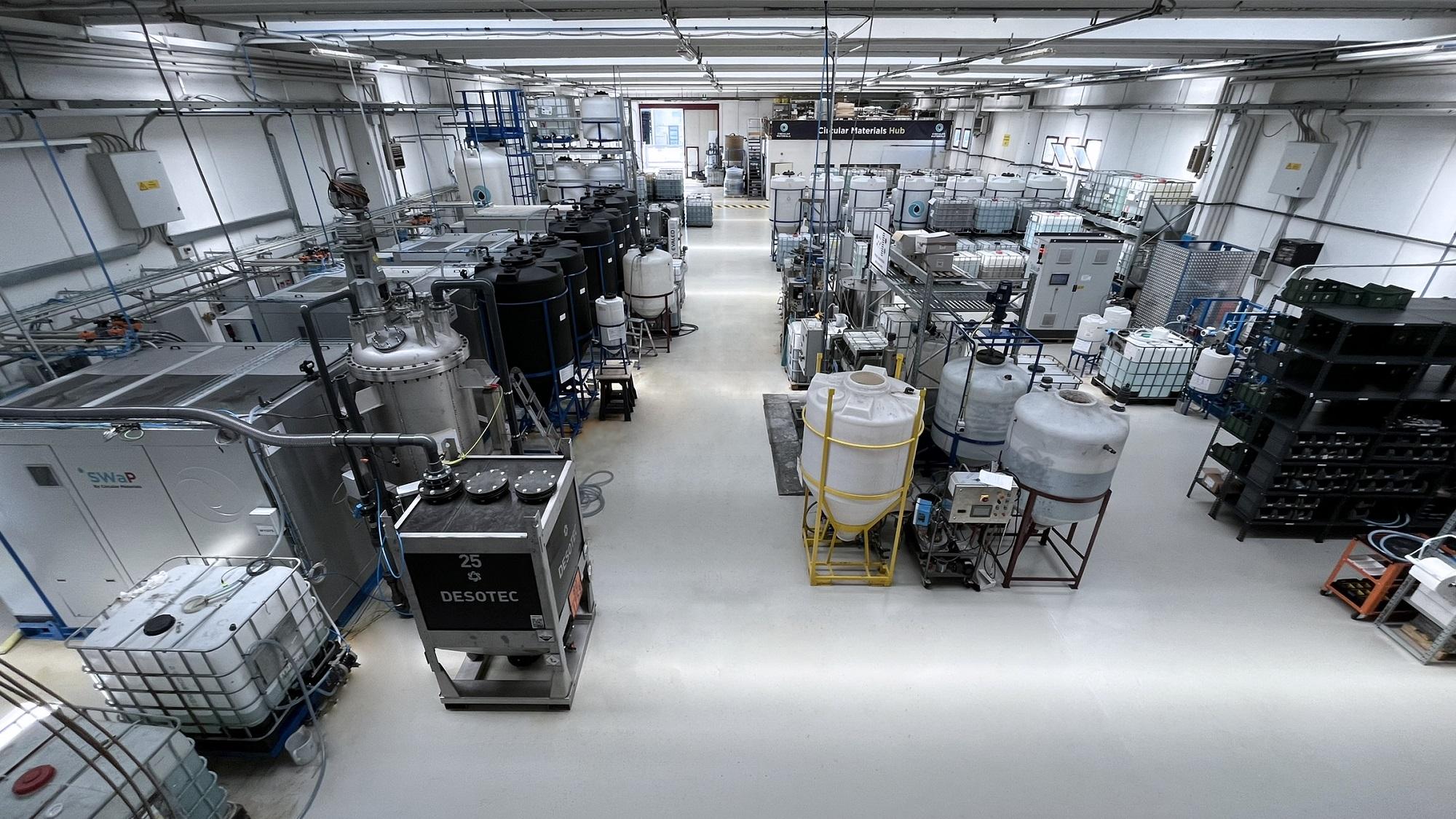
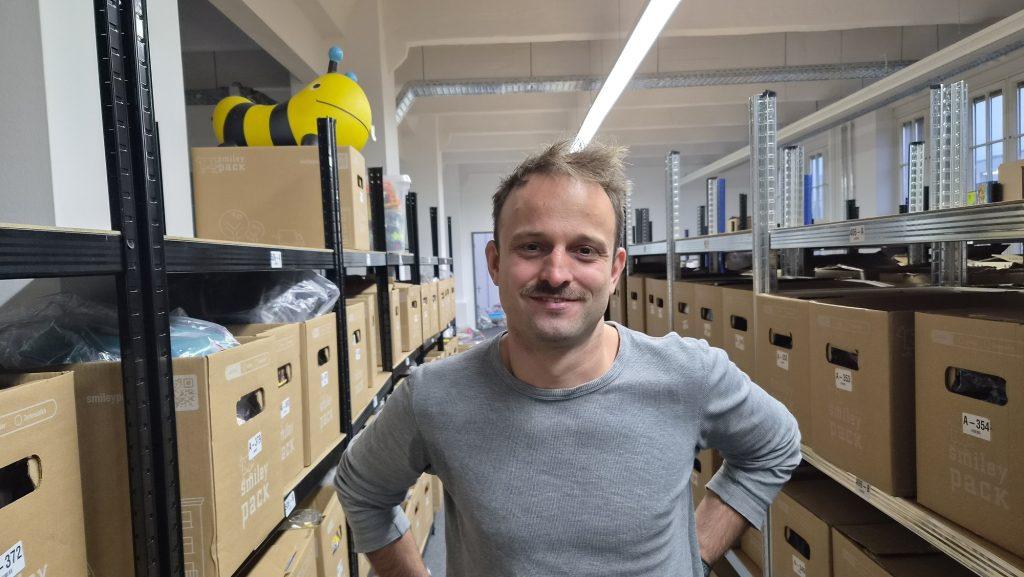
During our visit for the Reaktor Startbase series, ToysReloved had just moved. Three days earlier, the team had moved into its new warehouse and office location.
The larger space now provides the foundation for the next phase of growth. Here, incoming toys are received, sorted, inspected, cleaned, stored, and prepared for shipment. There are also office workstations and space for further expansion of operational processes.
Twelve people now work for the company, equivalent to about seven full-time positions. In addition to the founders, the team includes developers and staff in merchandise handling, among others. A third co-founder recently joined the company.
The move took place just before the crucial Christmas shopping season. The goal was ambitious: a maximum of one and a half days of downtime. According to the founders, this goal was achieved.
The additional capacity is urgently needed. ToysReloved has already acquired several thousand customers, and the business model is showing early signs of repeat business. According to the founders, about one in three customers who have sent in toys has already returned more.
Approximately 600,000 euros in capital and experienced business angels
The startup was initially financed with the founders’ own funds. Later, business angels came on board, contributing not only capital but also entrepreneurial experience and contacts.
ToysReloved is now supported by 15 business angels. According to the founders, these include experienced executives and entrepreneurs from well-known consumer goods and digital companies, as well as from the idealo network.
In May 2026, another round of financing was completed with the participation of the Berlin Angel Fund. According to the startup, it has raised a total of approximately 600,000 euros.
The capital was primarily invested in building the platform, the technical infrastructure, marketplace integrations, and operational processes.
For the coming year, the founders are planning another round of equity financing to continue their growth.
When Old Toys Give Rise to New Possibilities
ToysReloved’s vision goes beyond simply trading in used toys.
The company aims to create an infrastructure that is also available to daycare centers, schools, foundations, and other organizations. Toys that are no longer needed could be collected there, sold through ToysReloved, and the proceeds used for social causes.
In this interview, the founders discuss a new partnership with a children’s organization through which toy donations will be collected and repurposed in the future.
This combines the business concept with an additional social benefit: unused items are turned into funds for new projects.
The Next Challenge Is Scaling
ToysReloved is now entering its next phase of development. The company aims to more than double its revenue compared to last year, significantly increase the number of toys processed weekly, and further accelerate inventory turnover.
The real key to this lies not solely in hiring additional staff or expanding warehouse space. The founders are counting on their systems to learn with each new item and their processes to become increasingly efficient.
The more toys are identified, evaluated, and sold, the better the database becomes. This is expected to generate economies of scale that will make the business model economically attractive in the long term.
ToysReloved thus exemplifies how artificial intelligence can not only digitize an existing market but also open it up to a scalable business model in the first place. An everyday challenge faced by families is giving rise to a technology-based infrastructure that combines economic opportunities, resource conservation, and social benefits.
And perhaps that is precisely the most exciting prospect: Not every new startup has to invent a new product. Sometimes it’s enough to find a completely new way of dealing with things that have long been around.
“We’re building the infrastructure for used toys”—How ToysReloved Plans to Tap into a Huge Market with AI
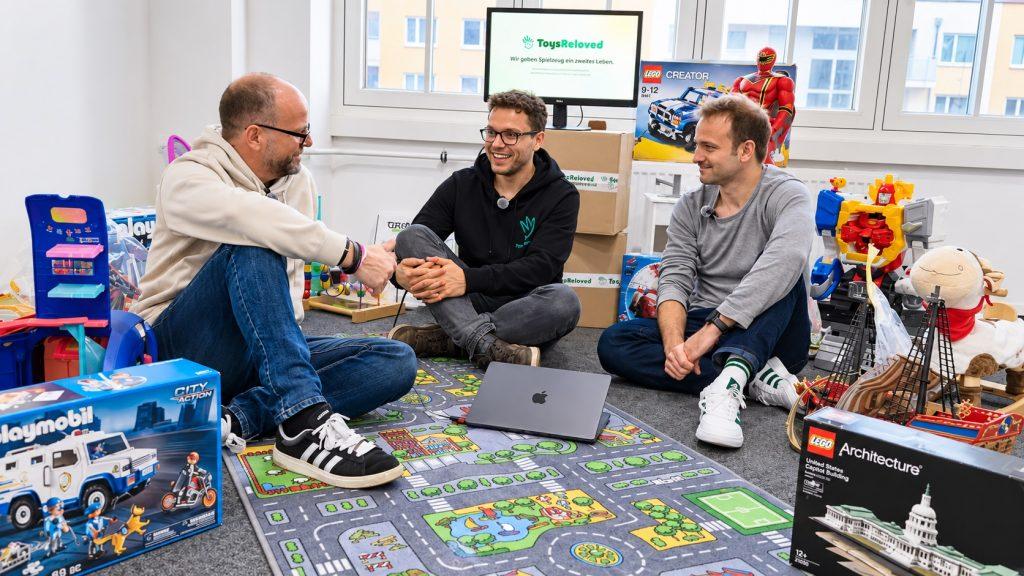
Selling toys without having to take photos, write ads, or negotiate with buyers? That’s exactly what ToysReloved makes possible. Founders Bennett Görlitz and Sascha Müller from Batch #2 of Reaktor Wildau have developed a business model that combines artificial intelligence with professional logistics and the growing secondhand market. Rafael Kugel visited the two at their newly occupied warehouse and office location. A conversation about unused treasures, AI as an economic game-changer, experienced business angels, and the challenges of building a scalable company.
The interview in video format
Rafael Kugel: Today we’re not at Reaktor Wildau, but visiting ToysReloved. We’re actually sitting here on the floor, on a play mat, and there are tons of toys all around us. I’m here with the two founders, Bennett and Sascha. Tell us: Who are you, and what does ToysReloved actually do?
Bennett: Ultimately, we’re building the infrastructure for used toys. That means we take all the used toys that are lying unused in basements, attics, or kids’ closets and turn them back into marketable goods.
Rafael: So you’re putting toys back into circulation instead of throwing them away?
Bennett: Exactly—that’s our mission. Though it’s not just about toys that would otherwise end up in the trash. Of course, there are also many toys that are actually thrown away. We estimate that’s about 40 million toys a year.
But just as interesting are all the toys that just sit in basements or attics forever. Some parents keep them because they think they’ll be able to give them to their grandchildren someday. Yet they don’t even know if they’ll have grandchildren at all.
There are an incredible number of untapped treasures lying around. People often don’t throw away high-quality toys precisely because they know they’re still in good condition and could last forever. But they still aren’t being used.
Rafael: We have a basement just like that, too. And when I look around here, some of these toys look pretty familiar. How did you come up with the idea to turn this into a business?
Bennett: The idea actually came about because we ourselves had an incredible amount of unused stuff at home. Sure, there’s eBay, classifieds, and plenty of other marketplaces. But we just couldn’t find the time to list everything online, sell it, and then haggle with people.
So we asked friends and coworkers how things were for them. And they said, “Yeah, exactly the same problem. We’re working all the time and just don’t have time for it.”
But for families with children, the problem was even bigger. They told us: “New toys are constantly coming in. Grandparents give gifts, other relatives give gifts, and at some point you have absolutely no idea where to put them all.”
On top of that, there are the short play phases. Especially with young children, interests and abilities change incredibly quickly. They often play with their first toys for only a short time. They might play with LEGO for longer later on, but even there, their stage of life changes at some point.
Then we started taking a really close look at the market, analyzing business models, and examining the different categories. And we realized: This is a huge market; it’s a huge problem, but no one has really solved it yet.
You can only build a viable business model if you solve a real problem. And for parents, this problem is particularly big.
“At some point, you want to bring your own ideas to life”
Rafael: You both have pretty interesting professional backgrounds. Where are you guys actually from?
Sascha: I studied business informatics over ten years ago as part of a dual-track program at idealo. There, I worked my way through various departments and focused particularly on business development.
I witnessed idealo’s growth over many years, from fewer than 200 employees to around 1,300. Of course, that also involved building and developing structures and organizational systems.
At some point, I just felt the urge to do something on my own.
When you work in business development for a long time, you’re constantly evaluating new ideas, developing concepts, and putting things into action. But sometimes you’re no longer involved in the actual implementation at all. And eventually, you want to bring your own ideas to life.
Bennett and I already knew each other from our time at idealo. At some point, we put our heads together, ran the numbers on the idea, and assessed whether it could become a viable business.
I mainly contributed my business and technical background.
Bennett: I’d previously spent four years in management consulting at EY. There, we developed business models, evaluated companies, and worked extensively on business modeling.
After that, I joined idealo and built up the business development team there. Sascha was one of my first colleagues. We’ve known each other for over 13 years now.
I subsequently helped build and scale the international division and held a C-level position for several years.
So we’d both already gained a lot of experience with digital business models, scaling, and corporate development. That naturally helped us think through the ToysReloved concept from a business perspective.
Sascha: What also excited us was the development in the fields of artificial intelligence and automation.
We saw that completely new opportunities were emerging in this area. Our business model is incredibly complex, after all. And we were convinced that this complexity could be addressed with a consistent “AI-first” approach.
That was also our motivation for entering the market at exactly this point in time.
“In the past, business models like this failed because of operational costs”
Rafael: Is your business model even economically viable without AI? When I imagine a pile of toys arriving here, I’d first have to figure out what they actually are, whether they’re complete, and what they’re worth. That sounds like an incredible amount of work.
Bennett: That’s exactly the point. There have been business models for used toys in the past—for example, one that was featured on “Die Höhle der Löwen.”
So the problem was recognized earlier on. It’s not exactly rocket science. But those companies ultimately failed because of the operational overhead.
Just imagine: A toy arrives—often without packaging. First, you have to figure out what it even is. Then you have to create a listing, write a description, research the price, and list the product on the marketplaces.
In the past, someone had to do all of this manually. And with so many items, that just isn’t cost-effective.
Today, AI handles a large part of these tasks for us. And that’s exactly why the business model can work now, even though it used to be barely viable economically.
Rafael: So, does that mean the technology is what makes the market viable in the first place?
Bennett: Exactly.
Sascha: It’s also an incredibly data-intensive process. We have a lot of touchpoints where data is generated. And we use this data not only for automation, but also for pricing—and thus for our margin.
Sometimes we receive toys that are worth several hundred or even a thousand euros. It’s an extremely exciting field.
Toy manufacturers are constantly releasing new collections. Many products eventually disappear from the market. But that doesn’t mean they no longer have any value. On the contrary.
We’re familiar with this from Pokémon trading cards, where individual cards can be worth several thousand euros. Such treasures also exist in the toy industry.
And that’s where artificial intelligence helps us identify these values.
Rafael: So you don’t just use AI for identifying and describing the toys?
Sascha: No, not at all. AI is actually everywhere in our company.
We use it for creating text, for campaigns, for photo editing, and, of course, for price determination. We have price agents that conduct automated research.
For us, “AI-first” doesn’t mean just using a little bit of AI here and there. From the very beginning, we’ve structured the entire company with the goal of automating as many processes as possible.
Without these capabilities, we probably wouldn’t be able to build the model so leanly or operate it profitably.
From a WhatsApp Test to Our Own Platform
Rafael: When did you actually get started? And how has ToysReloved evolved since then?
Bennett: It basically started in April 2024. We first had a small pilot phase where we tested the idea. We then went live in November 2024.
Of course, we did a lot of groundwork in the beginning. First, we wanted to figure out whether our business model would even work.
So we went out, talked to people, and then created a WhatsApp group. We said: You’ve all told us that you have this problem. So let’s just collect some toys and try to sell them.
It was that simple—no platform, no fancy technology, nothing at all.
And it really worked well. We got toys and were able to sell them.
Then the next step was to think about the whole thing on a more professional and larger scale.
Among other things, we were at the Impact Hub’s Climate Tech Incubator and further developed the business model. After that, we started building the platform.
That was, of course, a lot of work. We had to integrate the various marketplaces, develop our own platform, and build the entire technical infrastructure behind the scenes.
We now sell through eight different channels, including eBay, classifieds, Amazon, Refurbed, and our own store.
Our own online store now accounts for more than 60 percent of our sales.
On top of that, there’s AI-based product recognition, toy classification, and, of course, our warehouse system. We’ve even developed our own ERP system.
We’ve built and continuously improved these foundations over the past two years.
15 business angels and around 600,000 euros in capital
Rafael: How did you finance all of this? Especially when you have to build your own technical infrastructure, that costs a lot of money right off the bat.
Bennett: At first, with our own money. We both invested our own funds.
At some point, of course, that ran out. Then we started looking for business angels. We already had some good contacts and were able to close an initial, smaller round of financing.
In the process, we gained some really great people on board. Among them are former executives from companies like Tchibo, SodaStream, and Haribo. The founder of idealo has also invested in us.
These are people who support us not only financially but also with their expertise.
Rafael: So, truly “smart money.”
Bennett: Exactly. These are people who run workshops with us and who, for example, helped us develop our brand.
We now have 15 business angels on board.
We closed our latest funding round in May, with participation from the Berlin Angel Fund, which is part of the Business Angels Club Berlin-Brandenburg.
In total, we’ve raised around 600,000 euros so far. That allowed us to build the entire infrastructure we have today.
“We moved three days ago”
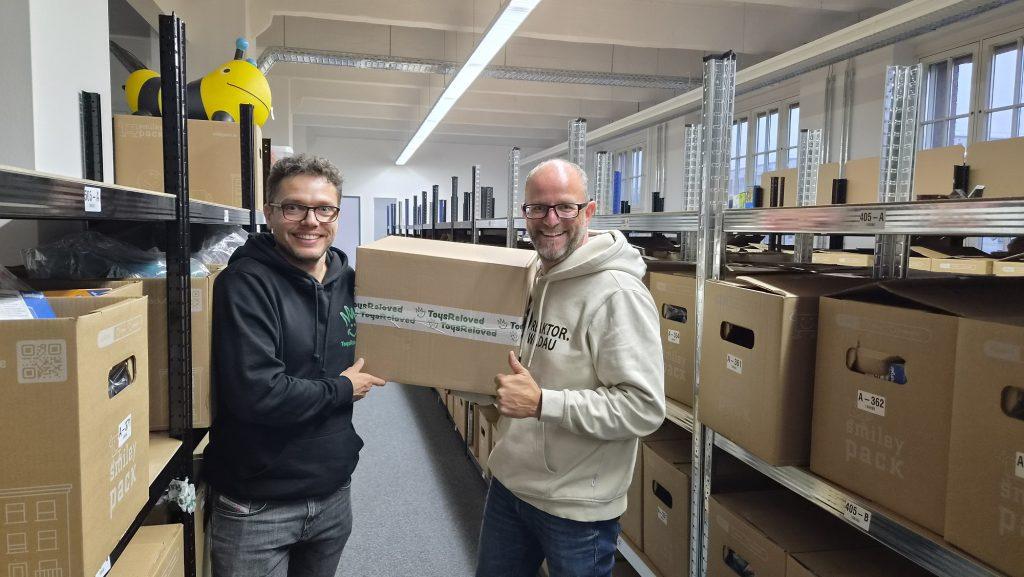
Rafael: Now we’re sitting here surrounded by toys. I even brought you bread, salt, and money for the housewarming—in the form of a pretzel. Where are we, actually?
Sascha: We actually moved just three days ago.
We’ve now found our new warehouse and office location. Here, we have the opportunity to continue growing and reach the next level.
We simply needed more capacity.
Of course, operations are already up and running. Every day, packages go out and toys come back onto the market.
Here you can also see everything we receive: high-quality brand-name toys that we inspect, clean, and then resell.
The major technical challenge is determining a product’s value from unstructured data.
Not every toy has a barcode or an item number. Many arrive without packaging. There are different models and different ways to identify and evaluate a product.
Rafael: You can already see the different areas here. Over there are the shelves with the pre-sorted items that are already online. New merchandise arrives here, gets sorted, and inspected. And then you have your office workstations.
If we meet here again in three months, what will it look like then?
Sascha: I could imagine our content creator studio in this room. (laughs)
But seriously: We’re currently continuing to expand our customer relationships and our various sales channels.
We now have several thousand customers who use our platform to sell or buy toys.
And we’re testing which channels we can use to reach our customers again. After all, our model depends on people coming back to us again and again.
After all, toys are constantly being bought, used, and eventually no longer needed.
“For kids, it doesn’t matter whether the toy is new”
Rafael: Christmas is just around the corner. That must be a pretty exciting time for you.
Sascha: Absolutely. There are over ten million children under the age of 14 in Germany. That’s our target audience.
And what we sell here, of course, are products that bring joy.
It’s also interesting that more than 15 percent of our toys are still in their original, sealed packaging. So we have a mix of new, gently used, and other used items, whose condition we clearly state.
Some products are real collector’s items. A LEGO set from 2006, for example, can be worth many times its original price today.
And it’s exactly these kinds of items that are lying around in kids’ rooms and basements.
Rafael: That means you also have a pretty interesting business model for the parents who drop off the toys. Do you actually buy the merchandise, or do you sell it on consignment?
Bennett: Basically, it’s consignment merchandise.
Legally, it’s structured so that we don’t purchase the toys from the parents until immediately before the sale. Until then, they give them to us to market.
Our business model is based on a revenue-sharing arrangement. So the parents always receive a share of the sales proceeds.
Of course, we try to list the items as effectively as possible on the various marketplaces and get a good price.
Once the toy is sold, parents can have their share paid out, donate it, or use it to make a purchase in our store with a bonus.
And that aligns with our mission: We want to replace as many new items as possible.
It also makes economic sense. Everyone’s talking about rising costs. This is where families can really save money.
We also know from our interviews that it’s not really that important to children whether a toy is new. Adults often think that it is.
What’s important to children is that they can play with it.
Some children have even told us that they specifically ask for used toys because then they can get more LEGO, for example.
In that regard, some children are already more forward-thinking than adults.
Sascha: We’re really seeing a generational shift here.
Secondhand goods have long been established in other product categories. And we believe that will increasingly be the case with toys as well.
But the key is to make the whole process as convenient as possible for people.
For example, we also offer a regional pickup service. A logistics provider comes by with boxes and picks up the toys.
We want to solve the problem holistically—from pickup to refurbishment to sale.
Rafael: This is, of course, a major advantage for sellers. You drop off your toys and don’t have to worry about a thing.
And at the same time, buyers have a guarantee of quality. Someone has professionally checked whether the toy is complete and what condition it’s in.
Sascha: Exactly. That’s an important factor.
Many people still have reservations about buying used toys. We alleviate that uncertainty through our inspection, cleaning, and disinfection, as well as our transparent product descriptions.
“We’d planned a pickup—and suddenly everything arrived via DHL”
Rafael: Looking back on the past two years: What was the biggest challenge? Were there times when you wondered if you’d really be able to crack that nut?
Bennett: There were a few moments.
A good example was our original logistics plan.
We ran a test at the beginning where we picked up toys. The test went well. So we thought: Great, now let’s scale up the pickup service.
We placed ads and wanted to expand the operation. But then, suddenly, hardly anything came in.
So we thought about what we could do differently.
We then said: “Why don’t we just give people a DHL label? Then they can send their toys to us from anywhere in Germany.”
We hadn’t tested that at all before.
And suddenly, an incredible amount of merchandise started coming in from all over Germany.
Our original business plan was entirely focused on scaling up our pickup service. And then we realized that having people send items via package was actually the much better approach.
That was frustrating at first, because we thought we’d already tested the model. But in the end, it was an incredibly important insight.
In the meantime, we’ve even had periods where we turned off our marketing for several months because we were getting too many toys.
Word is spreading among parents now, too.
Sascha: And the customers keep coming back.
We’ve noticed that about one in three customers who’ve sent in toys to us has already sent something in again.
That’s a great sign for us.
Bennett: Especially since this has worked so far largely without any systematic reminders or follow-ups.
Sascha: Exactly. We have the chance to really build a brand here that people associate with something positive.
Of course, marketing is a challenge. Especially when you look at traditional platforms like Google or Meta, you’re competing with a lot of other companies for attention.
That’s why we’re also looking for other ways to attract customers.
Classifieds, for example, is an important channel for us. We got involved there early on as an integration partner and automated the management of our listings.
If you’re listing thousands of items on Kleinanzeigen, you can’t assign an employee to manually process every single listing.
These are exactly the processes we need to solve technically.
Bennett: And at the same time, of course, we have to ensure that the merchandise is resold as quickly as possible.
After all, we don’t want to build a massive Amazon-style warehouse where more and more toys just pile up.
That’s why we’ve gradually connected to additional marketplaces—first eBay, then Kleinanzeigen, and later other partners like Amazon and Refurbed.
We have to sell where the demand is.
The moments when all the hard work pays off
Rafael: What’s been your biggest moment of success so far? A real “champagne moment” where you thought, “How awesome is this?”
Bennett: There have actually been a few.
The partnership with refurbed, for example, was one of those moments.
When an established platform—one known primarily for smartphones and tablets—reaches out to you and says, “Let’s build a new category together”—that’s really something special.
That was truly a great moment.
Sascha: It also showed us that the market is waiting for this kind of infrastructure.
There isn’t really an established professional supply chain for used toys yet.
And we were surprised ourselves at how cooperative the various partners are when they see that we’re building this infrastructure.
Bennett: Another important point is our business angels.
When you have people on board who have already led or built large companies and who believe in your idea, that naturally gives you a huge boost.
And these people really get involved.
Another great example is our partnerships with social organizations.
We’ve just agreed to a new partnership with a children’s organization. The idea is that the organization collects donated toys and we handle the sales.
So instead of donating money, people can donate their unused toys.
We sell them, and the proceeds go back to the organization, which can then use them to support children.
That’s exactly the kind of infrastructure we want to build.
We want to make it as easy as possible for daycare centers, schools, foundations, and other organizations to use used toys as a resource.
Rafael: So it’s not just a platform for sales, but also an infrastructure for partners who don’t want to engage in sales themselves.
Bennett: Exactly.
We don’t want to do everything ourselves.
There are already organizations that enjoy a high level of trust among parents. Why should we try to rebuild that trust from scratch everywhere ourselves?
Our partners collect the toys, we handle the marketing, and the proceeds go back to them.
Whenever a partnership like this comes together, it’s always a really great moment for us.
“We want to more than double our revenue”
Rafael: If we meet here again in three months: What would need to have happened by then for you to say it was a real success?
Bennett: First of all, we want to more than double our revenue compared to last year.
We’re currently on the right track and are about 100 percent ahead of last year.
However, November and December of last year were already very strong. Doubling that again now is, of course, a real challenge.
A second major goal is the efficiency of our processes.
We want to put significantly more toys online every week without having to hire proportionally more staff to do so.
Our two key metrics are processing speed and sales conversion.
We’re aiming for a sell-through rate of more than 60 percent within 90 days.
That’s certainly an ambitious target.
If we achieve this, we’ll have a fast inventory turnover and won’t have to keep expanding our warehouse space.
And, of course, we’ll then also have the first positive signs for our next funding round.
Sascha: The exciting thing is that our technical model can improve with every additional item.
Every new price determination, every product identification, and every additional process provides us with data.
When we meet again in three months after the holiday season, we’ll have gained significantly more experience.
We can feed errors back into the systems, improve quality, and further optimize our processes.
This means that as volume increases, we can achieve economies of scale—not only in handling but also in the quality of our processes.
That’s exactly what we want to demonstrate in the coming months.
A lean team with big plans
Rafael: How many people are you actually down to now?
Bennett: We’re a team of twelve people, which is equivalent to about seven full-time positions.
So we’re still very lean.
We have two people in development, the two of us as founders, and a total of six employees in the warehouse, which amounts to about three and a half full-time positions.
We’ve also just added a third co-founder.
Rafael: That’s a pretty lean organization for what you’ve built here.
And I find it remarkable that you managed to move into this new space while business was still running.
Bennett: We absolutely wanted to have moved by November 15, because that’s when our peak season begins.
We handle a huge volume of shipments during that time, and we can’t afford to make any major mistakes.
Our goal was therefore to limit the disruption to operations to a maximum of one and a half days.
And we actually managed to do that.
Rafael: Then I’m really curious to see what things will look like here in three months, once all the processes have settled in.
I think that’s a crucial point: Once the engine room is running reliably, you can focus on growth, partnerships, and the next steps with a whole new level of confidence.
Thank you both very much for this fascinating conversation. I look forward to seeing you again in three months at the latest.
Bennett: You’re very welcome. Thank you so much!
Sascha: Thank you!
The interview was conducted by Rafael Kugel from Reaktor Wildau. The transcript has been edited for clarity and abbreviated for publication.





Newsletter
Startups, stories and stats from the German startup ecosystem straight to your inbox. Subscribe with 2 clicks. Noice.
LinkedIn ConnectFYI: English edition available
Hello my friend, have you been stranded on the German edition of Startbase? At least your browser tells us, that you do not speak German - so maybe you would like to switch to the English edition instead?
FYI: Deutsche Edition verfügbar
Hallo mein Freund, du befindest dich auf der Englischen Edition der Startbase und laut deinem Browser sprichst du eigentlich auch Deutsch. Magst du die Sprache wechseln?